
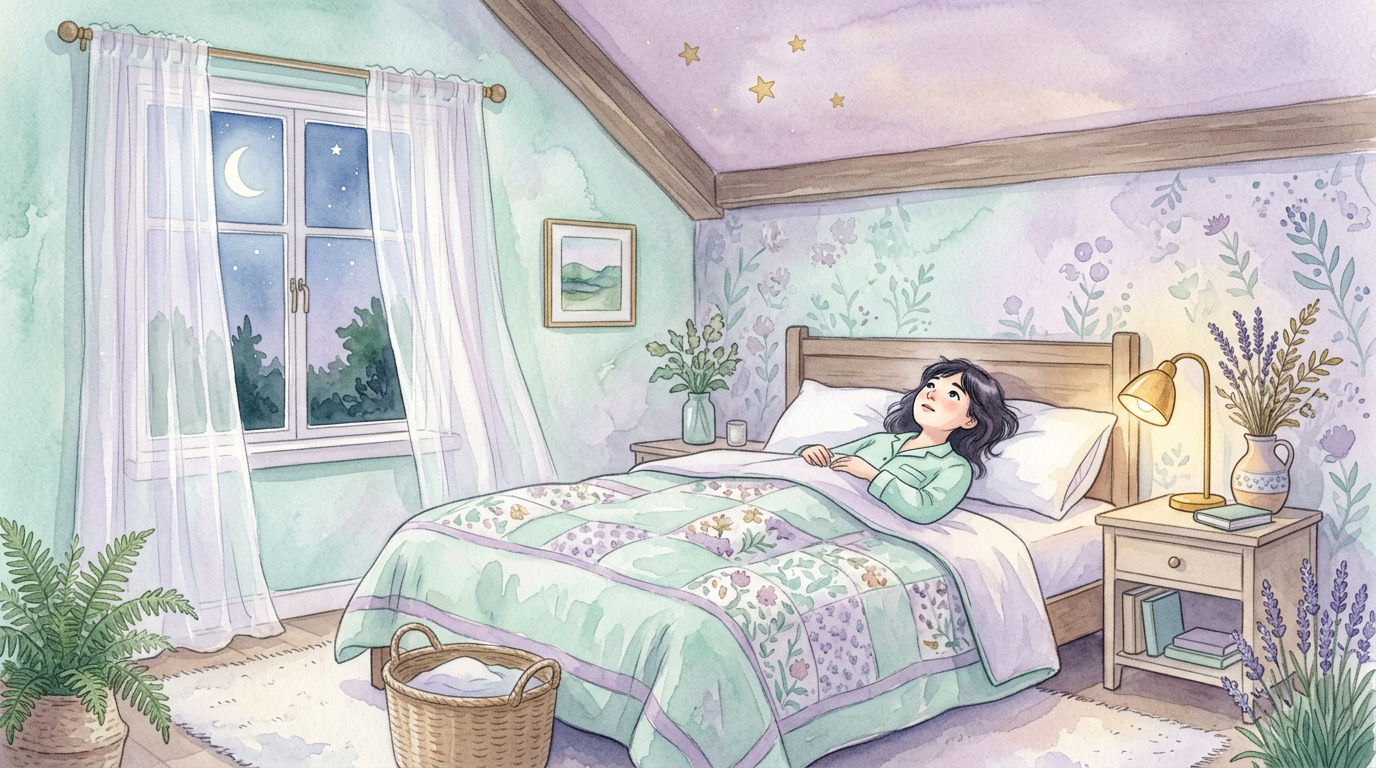
You wake up at 3 a.m. for no obvious reason, stare at the ceiling, and suddenly your brain is running a full audit of every awkward thing you've said since 2017. Relatable? Very. Random? Not even a little — according to Matthew Walker's Why We Sleep (Scribner, 2017) and research on your body's cortisol rhythm, there's a surprisingly tidy biological explanation for this.
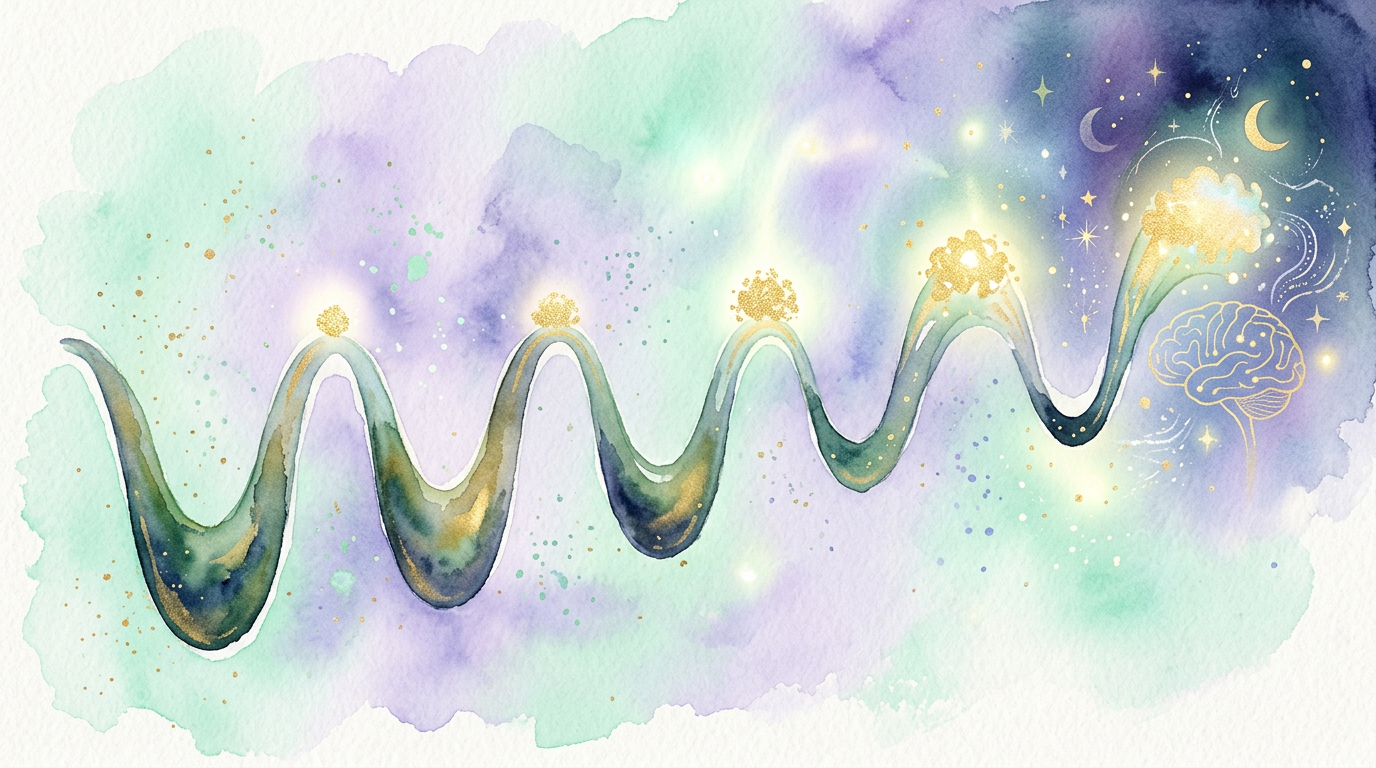
So why does it keep happening at the same time?
Here's the short answer: your sleep architecture changes as the night goes on. As Matthew Walker documents in Why We Sleep, sleep runs in roughly 90-minute cycles — and the balance inside those cycles shifts as the hours pass. Early in the night, your cycles are heavy on deep, slow-wave sleep. But in the second half of the night, the scales tip toward lighter sleep and REM. That means by the time 3 a.m. rolls around, you're naturally cycling through much shallower sleep stages — stages where any small disturbance (a noise, a dream, a full bladder) can nudge you all the way into wakefulness. You're not broken. You're just in the light end of the pool.
And then your stress hormone shows up, uninvited
Here's where it gets a little spicy. Research by Angela Clow, Frank Hucklebridge, and colleagues on what's called the cortisol awakening response documents that cortisol — your body's primary alerting hormone — follows a circadian rhythm, rising in the hours before your natural waking time. In other words, your body starts ramping up its "time to get going" signal well before your alarm. If your body expects you to wake around 7 a.m., that cortisol climb can be underway in the early morning hours. Combine a rising alerting hormone with the lighter sleep stages Walker describes, and you have a very tidy recipe for lying awake at an inconvenient hour with an inconveniently active brain.
Okay but why does 3 a.m. feel so eerie?
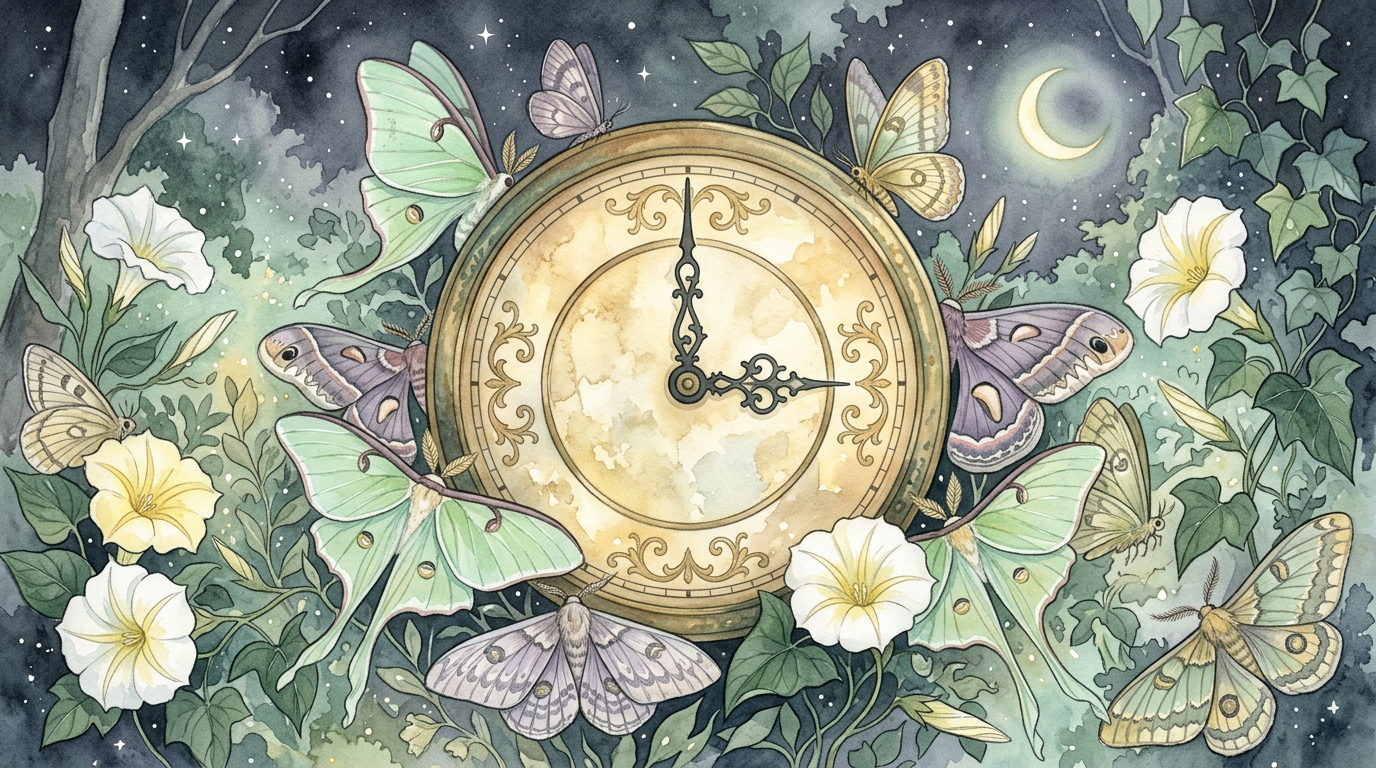
This is where we leave biology and step into folklore — and we're labeling it clearly as exactly that. Western tradition has long called the deep middle of the night the "witching hour," a time associated with supernatural activity and general spookiness. The Encyclopaedia Britannica documents this folkloric tradition, and Shakespeare himself gave it a memorable line in Hamlet: "the very witching time of night." The specific hour has shifted across different tellings and traditions, but the core idea — that the darkest, quietest stretch of night carries an uncanny charge — shows up consistently in Western literary and folk history. It's a compelling cultural frame. It is, to be clear, folklore, not a forecast.
The real reason 3 a.m. feels ominous is probably simpler: you're in light REM sleep, your cortisol is already climbing, your defenses are down, and the house is completely silent. Your brain is primed to notice everything. Of course it feels like something.
What can you actually do about it?
The biology here is mostly working as designed — lighter sleep in the early morning hours is normal, per Walker's account of the sleep cycle. But if the wakeups are frequent or distressing, that's worth attention. For now, knowing that your 3 a.m. brain spiral has a physiological explanation (and a very long folkloric history) might at least make it feel a little less personal. Your body isn't betraying you. It's just doing its thing — on a schedule Shakespeare would have found very dramatic.
- Matthew Walker, Why We Sleep (Scribner, 2017) — the roughly 90-minute sleep cycle and the shift toward lighter sleep and REM in the second half of the night.
- Angela Clow, Frank Hucklebridge, et al. — research on the cortisol awakening response and the circadian rhythm of cortisol rising in the hours before natural waking.
- Encyclopaedia Britannica; William Shakespeare, Hamlet — the literary and folkloric origin of the "witching hour," presented as cultural tradition and historical record, not established fact.
This article is offered for cultural reflection and general interest only, not as medical advice or prediction of any kind.
Your birth chart can reveal a lot about your natural energy cycles. Explore your cosmic blueprint on Lunaple — it's a fun place to start.
Read My ChartFor entertainment purposes only. Not a substitute for professional, medical, legal, or financial advice.
← Back to the Journal