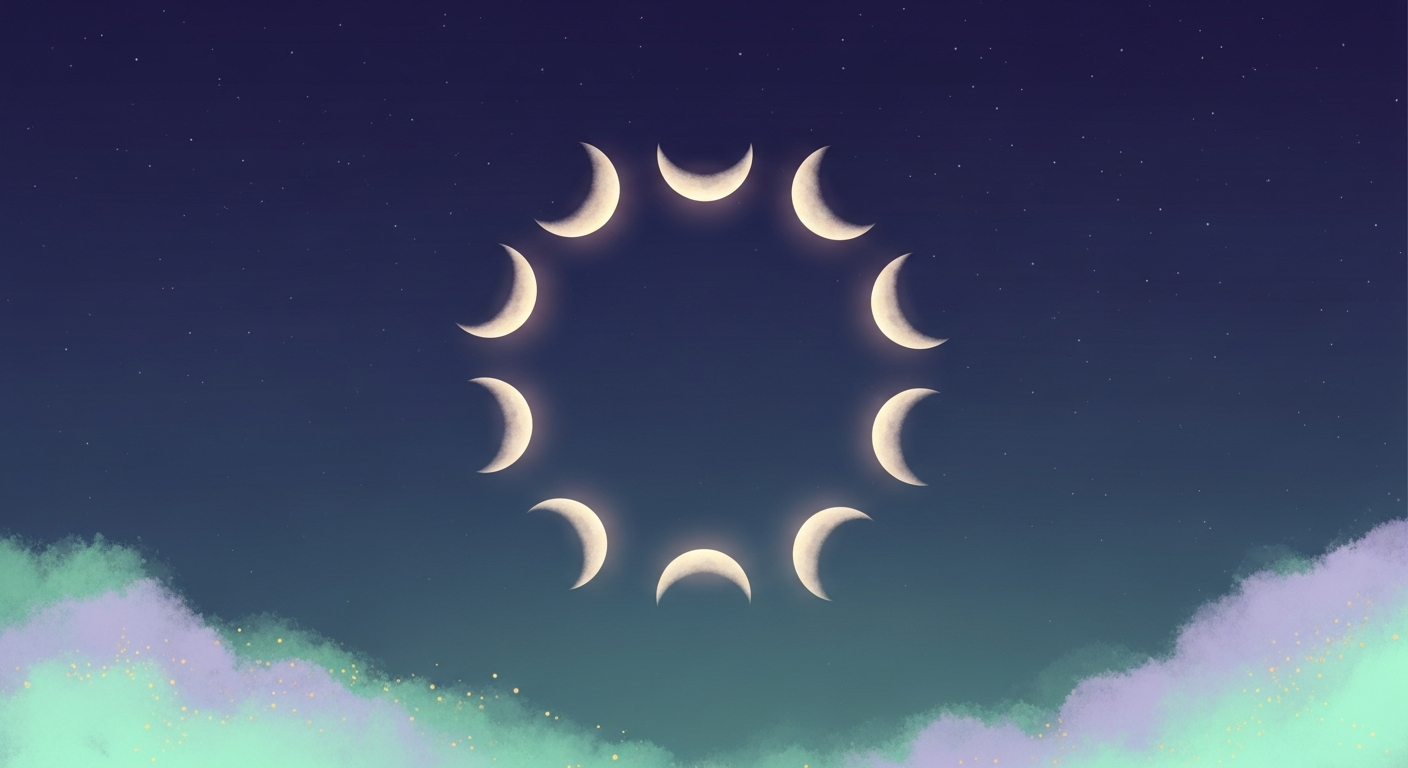
According to NASA, the Moon completes one full cycle of phases roughly every 29.5 days — and humans have been tracking that rhythm, naming it, and reading meaning into it for as long as we've had eyes to look up. Here's what's actually happening up there, and the rich cultural layer we've wrapped around it.
Wait, what's actually happening with the Moon?
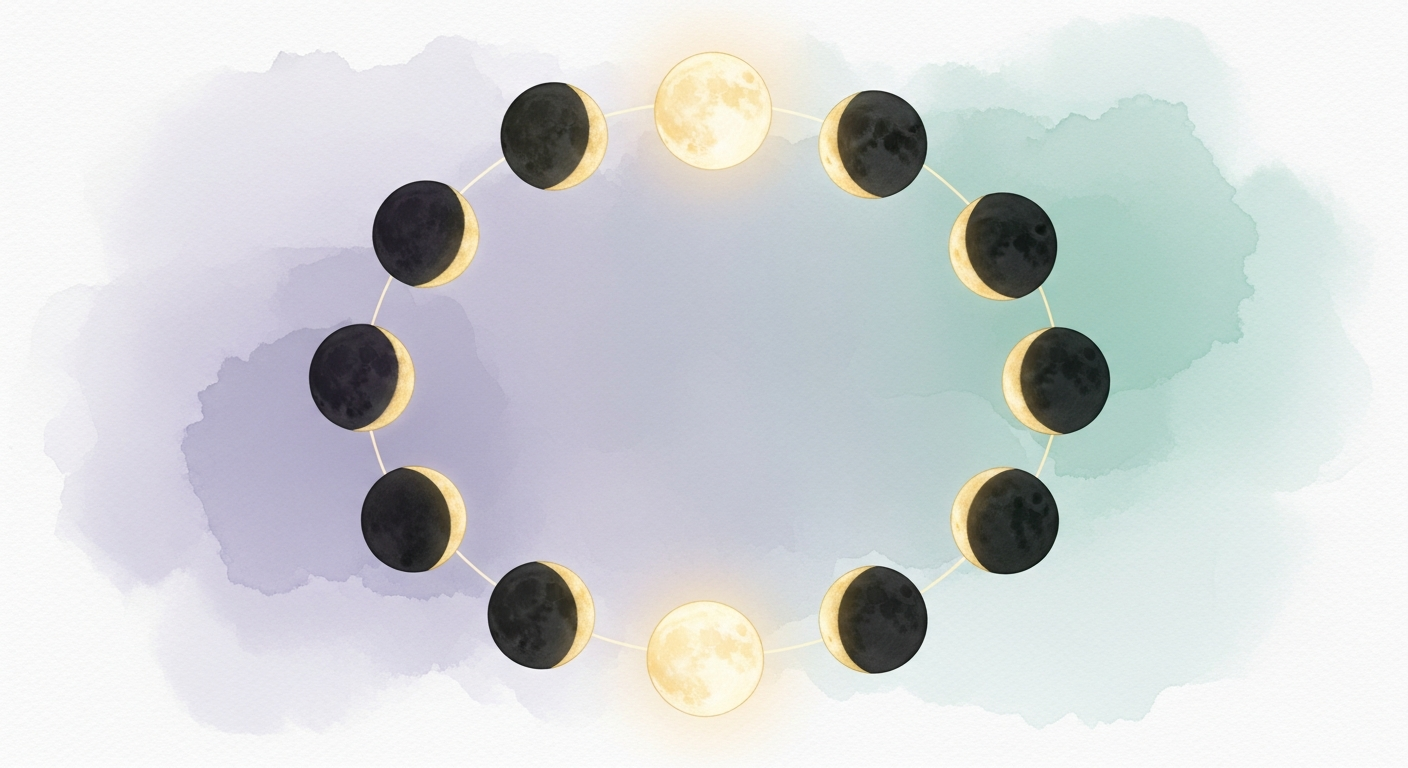
The Moon doesn't produce its own light — it reflects sunlight. As it orbits Earth, different portions of its sunlit side become visible to us, creating what NASA describes as the eight distinct phases of the lunar cycle. The whole trip — from one New Moon to the next — takes approximately 29.5 days, a period NASA calls the synodic month.
The eight phases, in order, are: New Moon, Waxing Crescent, First Quarter, Waxing Gibbous, Full Moon, Waning Gibbous, Third Quarter, and Waning Crescent. That's it. Clean, repeating, reliable. The universe running on schedule — which, honestly, is more than most of us can say.
So what do the phases actually look like?
- New Moon: The Moon is between Earth and the Sun, so we see none of its lit face. Dark sky, fresh start energy.
- Waxing Crescent: A slim sliver appears on the right side. Growing.
- First Quarter: Half the Moon is lit — exactly halfway to Full. NASA marks this as a quarter of the way through the synodic month.
- Waxing Gibbous: More than half lit, still building toward Full.
- Full Moon: Earth is between the Sun and Moon, and the entire face we see is illuminated. Peak drama.
- Waning Gibbous: The light starts retreating from the left side.
- Third Quarter: The opposite half is now lit — a mirror image of First Quarter.
- Waning Crescent: Down to that last slim sliver before the cycle resets.
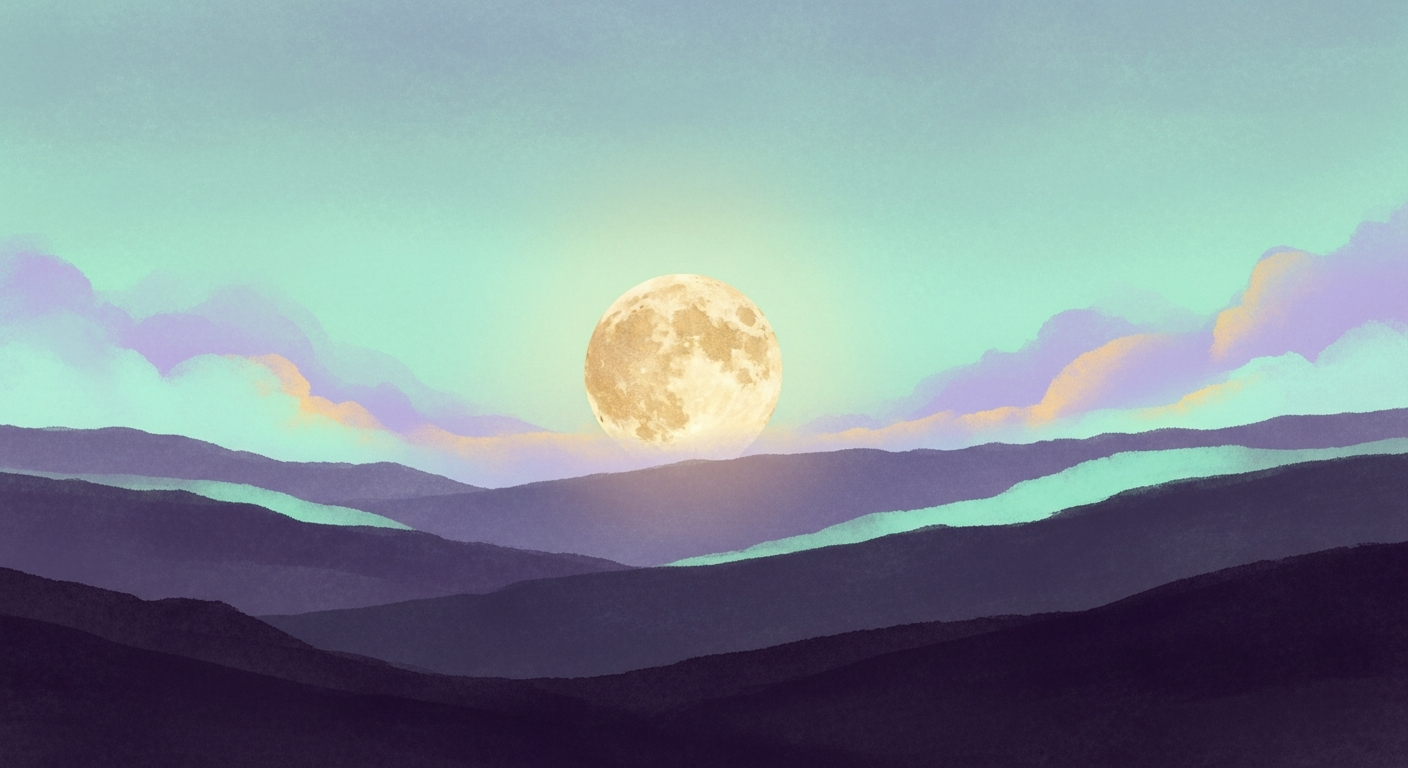
Okay but why does the Full Moon have a name?
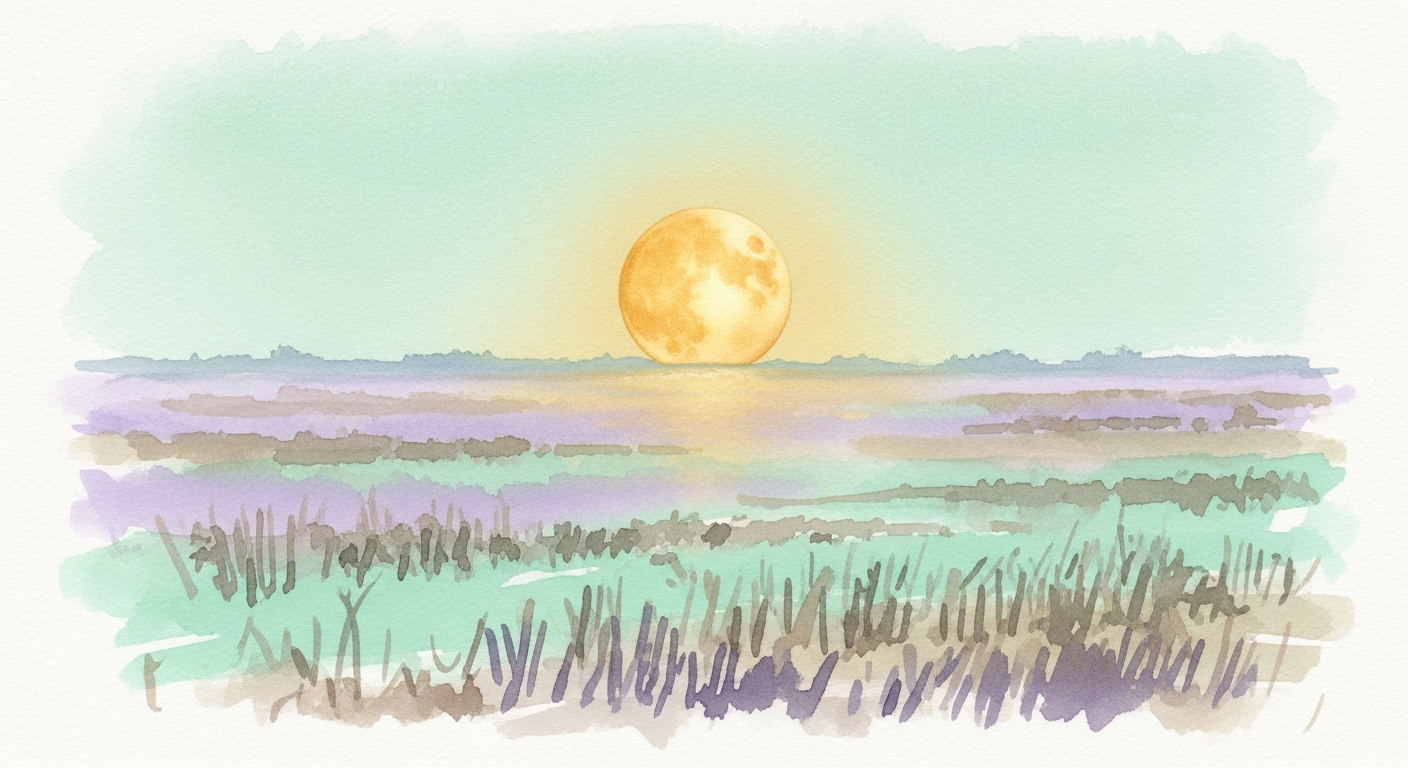
Because humans are poets, that's why. The Old Farmer's Almanac documents a tradition of naming each month's Full Moon — names largely derived from Algonquin traditions and used across North America. These names tied the Moon's cycle to the natural world: the Wolf Moon in January, the Strawberry Moon in June, the Harvest Moon in autumn. Each name was essentially a seasonal calendar — a way to track planting, hunting, and harvesting without a phone app.
The Almanac has compiled these names as a living reference, and they're still widely used today. Folklore and cultural heritage, not astronomy — but that doesn't make them any less worth knowing.
Why do we feel so pulled by this?
Honestly? A 29.5-day cycle that you can watch with your own eyes, month after month, is genuinely grounding. NASA's mechanics give you the what — the geometry of Earth, Moon, and Sun doing their thing. The Algonquin-derived names the Old Farmer's Almanac preserves give you the so what — centuries of humans deciding this mattered, marking it, building meaning around it.
Whether you're tracking the lunar cycle for gardening, for ritual, or just because the Full Moon makes your group chat chaotic, you're participating in something very old. And very real.
- NASA, Moon in Motion / Moon Phases, science.nasa.gov — source for the eight lunar phases and the ~29.5-day synodic month.
- Old Farmer's Almanac, Full Moon Names, almanac.com — source for traditional (largely Algonquin-derived) full-moon names used in North America.
This article is offered for cultural reflection and educational enjoyment, not as prediction or advice.
Lunaple tracks the lunar cycle alongside your personal chart — so you always know what's in the sky and how to work with it.
Explore LunapleFor entertainment purposes only. Not a substitute for professional, medical, legal, or financial advice.
← Back to the Journal