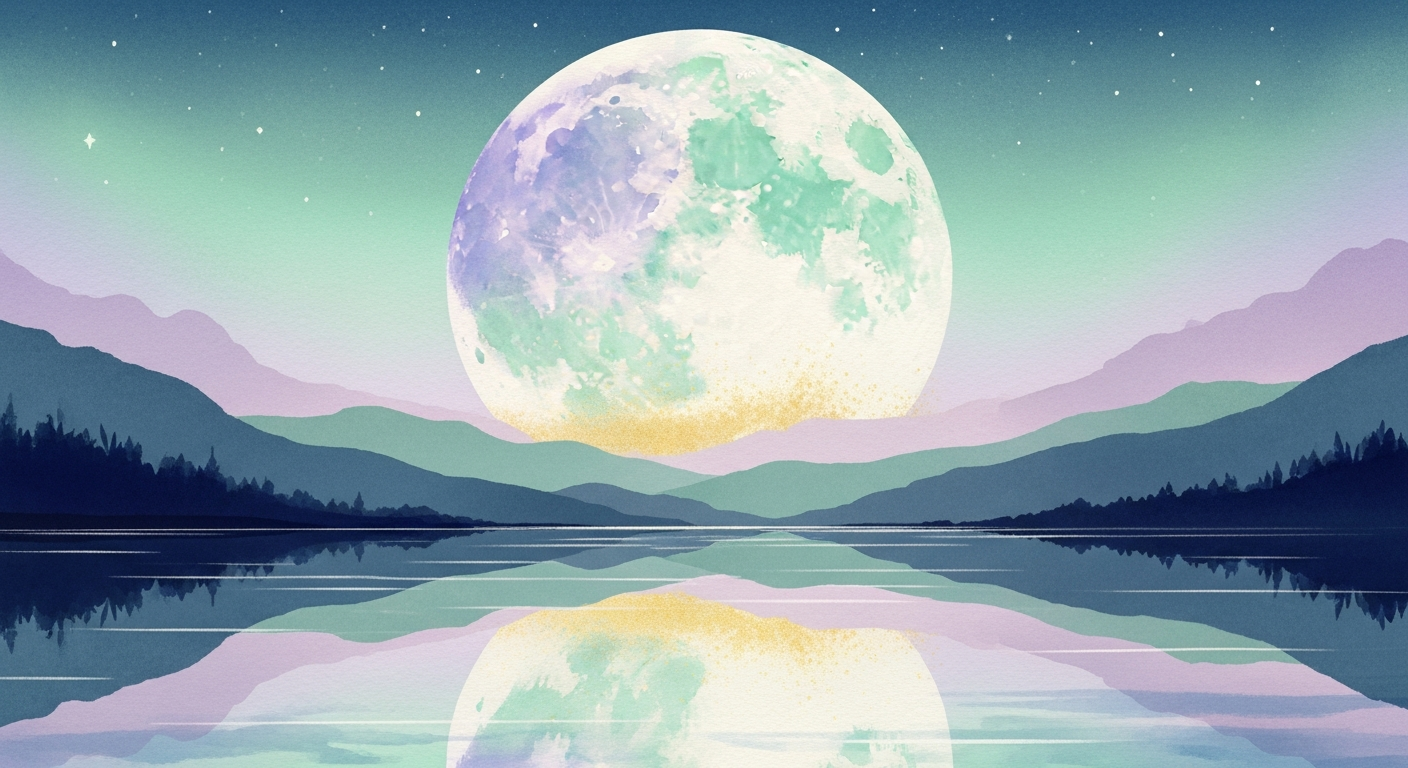
If your feed has been full of full-moon talk lately — moon water on the windowsill, journaling prompts, little rituals to "release what no longer serves you" — you are in very, very old company. Long before it was a vibe, the full moon was a calendar, a clock, and a gathering bell for cultures all over the world.
And here is the part I find genuinely beautiful: people who never met, separated by oceans and centuries, kept arriving at the same handful of ideas. Let things go. Give thanks. Come together. Let me walk you through five real traditions, and then the thread that runs quietly through all of them.
Hindu Purnima: the day for fresh starts
In Hindu tradition, each full moon is Purnima, considered an auspicious time for new beginnings — a kind of clean slate. Many devotees observe a fast from sunrise to moonrise and offer prayers to the moon. The most beloved of these is Guru Purnima, the summer full moon set aside to honor teachers and mentors — the people who hand us a bit of light to walk by. On that day, people meditate, give to others, and even begin new spiritual learning.
Buddhist Uposatha: the moon as a holy day
Across Buddhist communities, full-moon days are sacred. They are called Uposatha — a word that comes from a root meaning "to fast" — and in Sri Lanka each one is a Poya day, when practitioners visit the temple and keep extra precepts. The most important of all is Vesak, the May full moon marking the Buddha's birth, awakening, and passing. There are thirteen or fourteen of these holy moons a year, regular as breathing — built-in pauses to reflect and reset.
Wiccan Esbat: gratitude under the brightest light
In Wicca and modern Pagan practice, the full-moon gathering is called an Esbat — from a French word meaning, charmingly, "to frolic joyfully." Practitioners cast a circle and treat the full moon as the time when the Goddess's energy is at its peak. The heart of it is reflection: looking back on what changed over the past lunar month, naming what you hope to change by the next one, and giving thanks. If "set an intention under the full moon" sounds familiar, this is one of its modern roots.
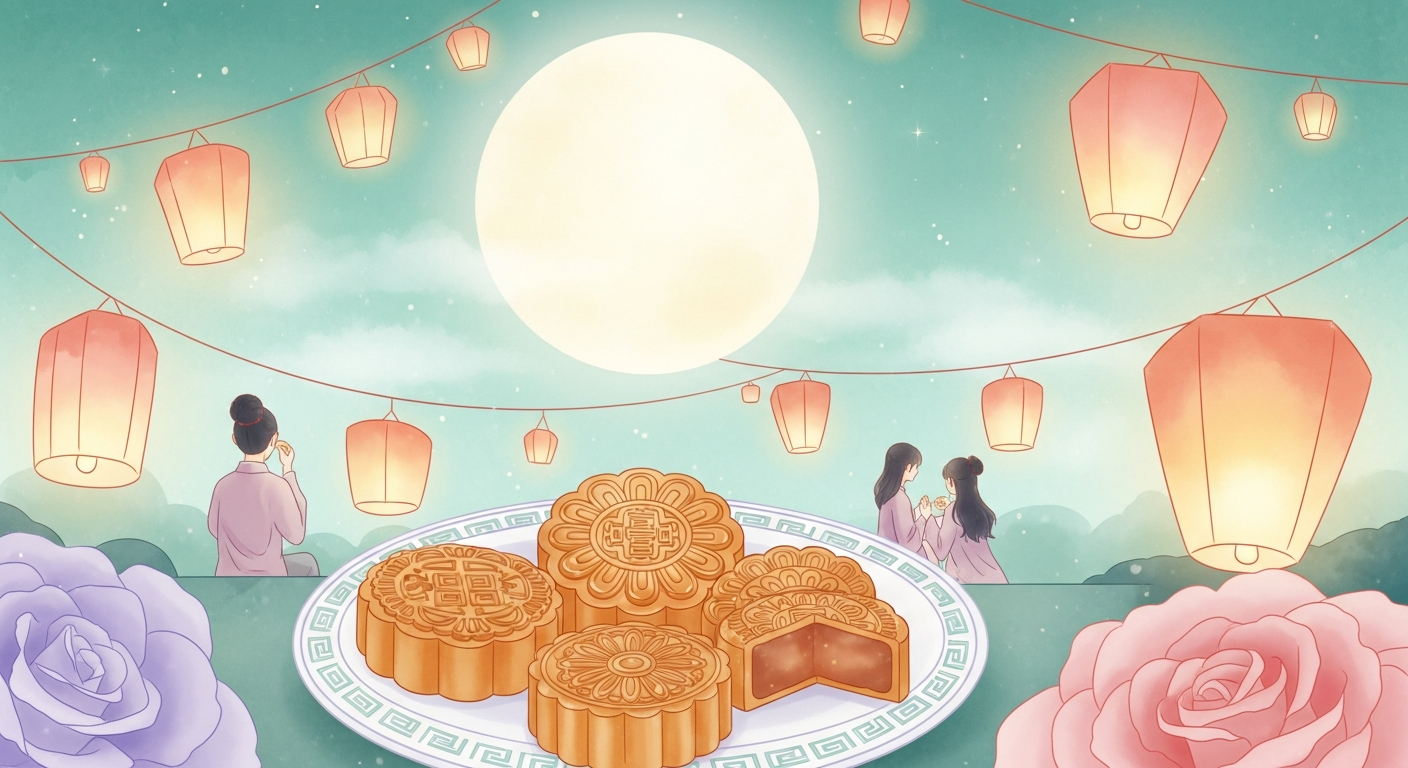
Chinese Mid-Autumn Festival: the moon as family
In China, the autumn full moon brings the Mid-Autumn Festival, celebrated for over three thousand years. Here the full, round moon is a symbol of reunion — of family made whole again. People gather outdoors to watch the moon and share mooncakes, sometimes called "reunion cakes," whose round shape stands for completeness. The eldest in the home traditionally cuts one and gives a piece to everyone, so the whole family is included.
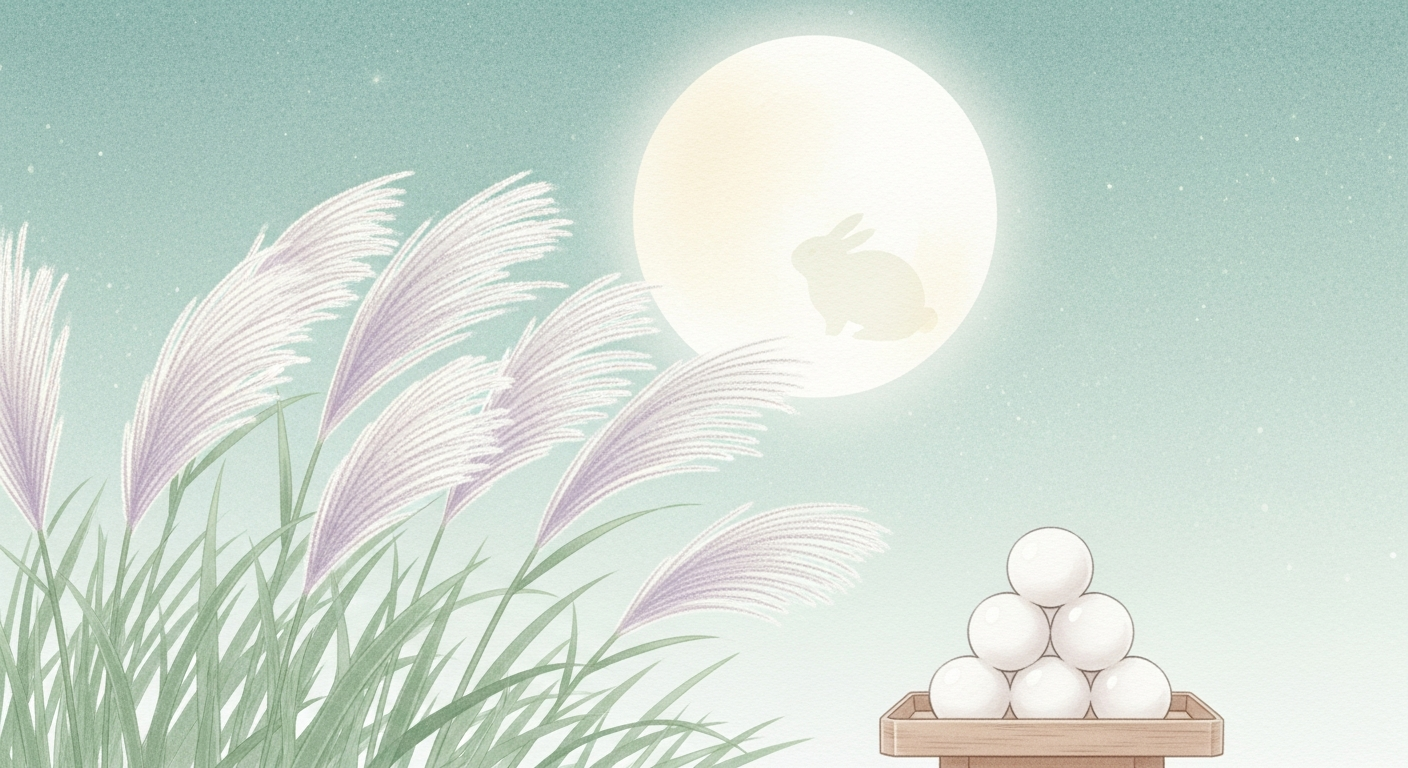
Japanese Tsukimi: a quiet thank-you to the harvest
Japan's Tsukimi — literally "moon-viewing" — grew from that same autumn moon over a thousand years ago. It began as elegant moonlit gatherings for poetry and music, then became a festival of thanksgiving for the harvest. Families display silvery pampas grass and offer round white tsukimi dango (rice dumplings) to the moon. And where Western eyes see a "man in the moon," Japanese tradition sees a rabbit pounding rice cakes — proof that even what we imagine up there is shaped by where we stand.
What they share
Five traditions, five continents' worth of distance, and look how they rhyme. Almost every one of them is built around release — fasting, reflecting, marking an ending so a beginning can come. Almost every one carries gratitude — for teachers, for the harvest, for simply being held by the turning of things. And nearly all of them are about gathering — a temple, a circle, a table, a family made round again under the same light.
That is the quietly comforting truth underneath the trend. When you pour your moon water or scribble a full-moon intention, you are not doing something new and you are definitely not doing it alone. You are joining a very long, very human habit of looking up at the same bright thing and deciding, together, to let go, give thanks, and draw closer. Whatever the moon is doing tonight — go look at it.
Your daily horoscope is a little moment of reflection, wherever you are in your cycle.
Today's HoroscopeFor entertainment purposes only. Not a substitute for professional, medical, legal, or financial advice.
← Back to the Journal