
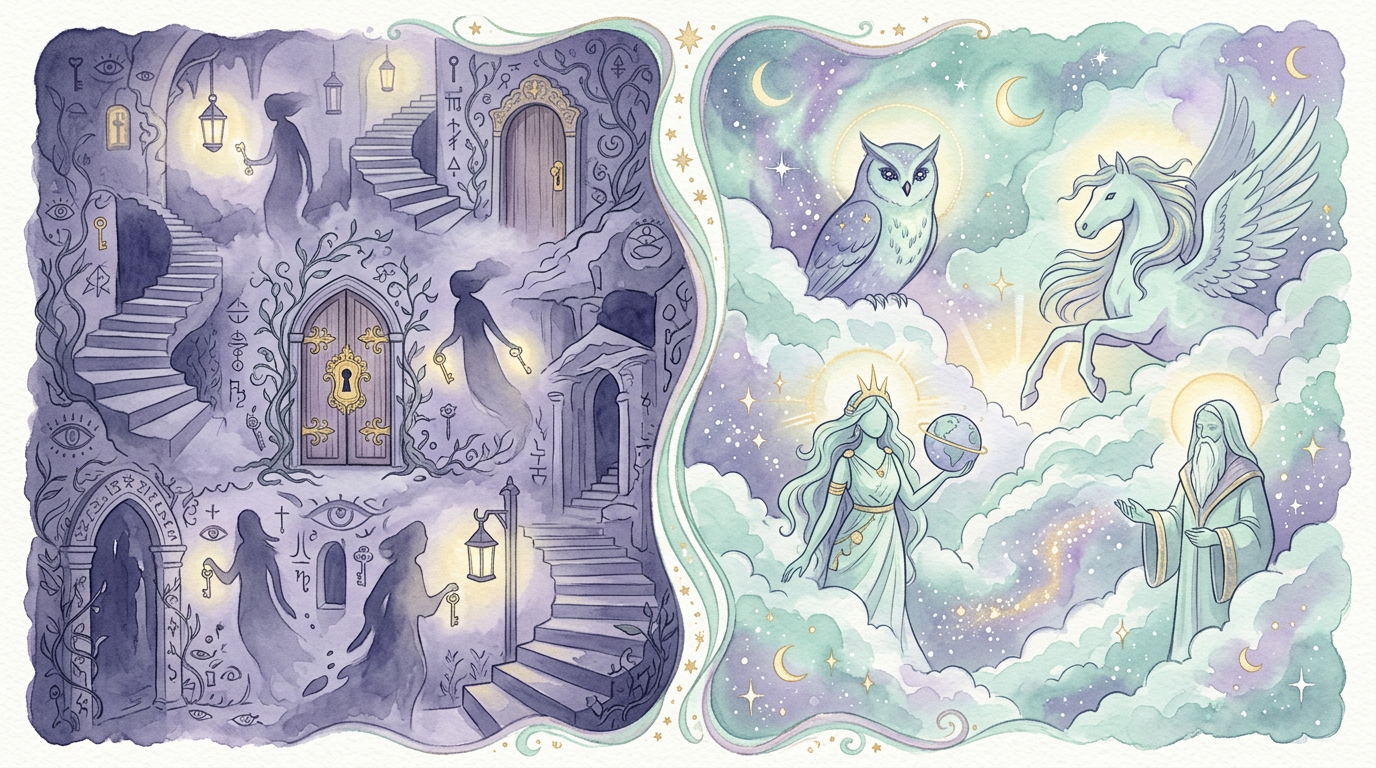
Your dream last night was either a disguised wish your waking mind refuses to admit — or a message bubbling up from a layer of the psyche you share with all of humanity. Pick your therapist, because Freud and Jung genuinely cannot agree on this.
So what did Freud actually say?
In The Interpretation of Dreams (1899/1900), Sigmund Freud laid out the idea that dreams are, at their core, wish-fulfilment. Not always in an obvious way — that's the whole point. Freud drew a sharp line between the manifest content (the weird, jumbled story you actually remember) and the latent content (the underlying wish it's concealing). The dream, in his framework, is basically a censor doing its job: it disguises what you really want so your sleeping mind doesn't wake you up in a panic.
Two key mechanisms do the disguising, according to Freud: condensation, where several ideas or figures get smooshed into one dream image, and displacement, where emotional weight gets shifted onto something that seems totally unrelated. That random dream about missing a train? Freud would say the train is doing a lot of heavy lifting.
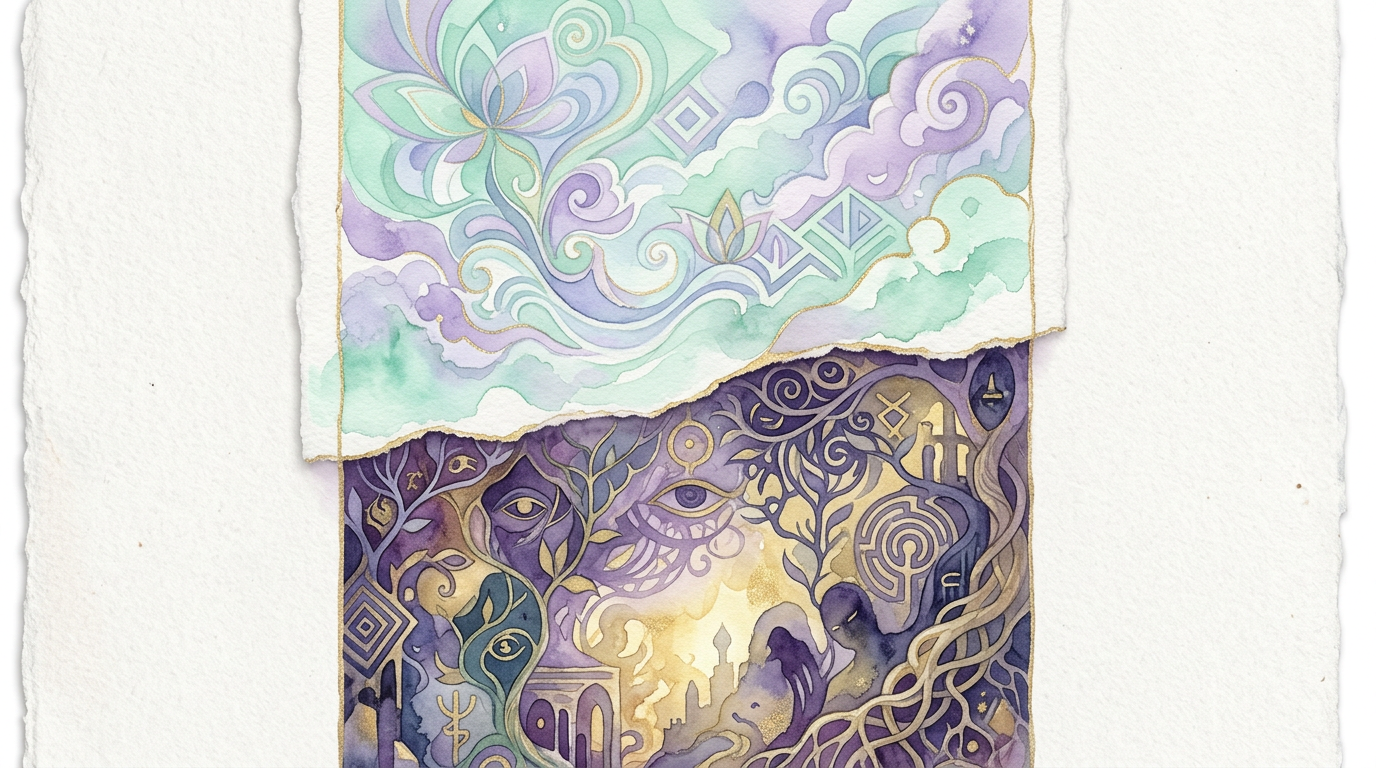
And then Jung walked in and changed the whole conversation
Carl Jung started out in Freud's orbit — and then departed from it in a pretty significant way. In Man and His Symbols (1964), Jung argued that dream symbols aren't just personal disguises for repressed wishes. They connect to something much larger: the collective unconscious, a layer of the psyche that Jung believed is shared across humanity and stocked with archetypes — recurring symbolic figures and patterns that show up across cultures and across time.
For Jung, a dream isn't primarily hiding something from you. It's trying to show you something — compensating for what your waking, conscious life is missing or ignoring. The symbols matter not because they're coded desires, but because they carry meaning that goes beyond your personal history. A wise old figure in your dream, a great flood, a journey into darkness — Jung saw these as archetypal, not just autobiographical.
Which is a genuinely different vibe. Same: both thinkers took dreams seriously as meaningful, not random noise. Different: basically everything about why they're meaningful.

So which one should you use?
Honestly? Neither framework is a rulebook, and both are best understood as cultural and intellectual traditions for reflecting on your inner life — not as scientific prediction tools. Freud's approach invites you to ask: what am I not letting myself want? Jung's approach asks: what bigger story is this symbol part of? Those are just two genuinely useful questions to sit with after a strange night.
The real move is treating your dreams as a conversation worth having — with yourself, with your history, with whatever you believe connects you to something larger. Freud and Jung just gave us two very different opening lines.
- Sigmund Freud, The Interpretation of Dreams (Die Traumdeutung, 1899/1900) — foundational text on wish-fulfilment, manifest vs. latent content, condensation, and displacement.
- Carl Jung, Man and His Symbols (1964) — Jung's account of dream symbols, archetypes, and the collective unconscious, and his departure from Freud's framework.
This article is offered for cultural reflection and personal curiosity only, not as psychological or clinical advice.
Lunaple's dream and symbol tools are built for exactly this kind of reflection — no couch required. Come explore what your subconscious might be working through.
Explore Dream ToolsFor entertainment purposes only. Not a substitute for professional, medical, legal, or financial advice.
← Back to the Journal