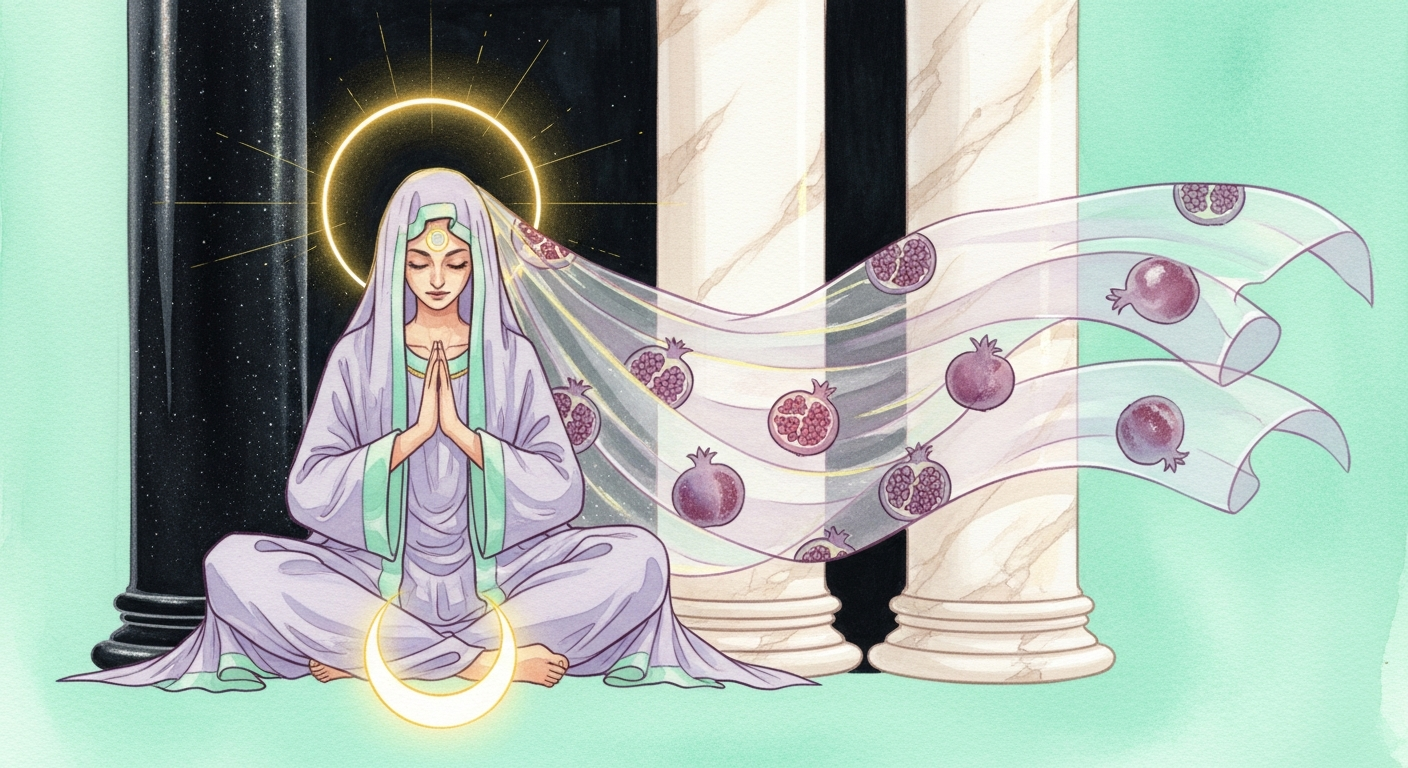
Have you ever had a moment where you just knew something — before you could explain how or why? That quiet, almost electric certainty that lives below words? If any tarot card could be the mascot of that feeling, it is the High Priestess. She sits at the threshold between what is seen and what is not, and she is in absolutely no hurry to explain herself. Let's pull up a chair and spend some time with her.
Who Is the High Priestess?
The High Priestess is the second card of the Major Arcana — numbered II — and she is one of the most visually layered figures in the entire tarot tradition. The version most people encounter today is the one illustrated by Pamela Colman Smith for the Rider-Waite-Smith tarot deck, published in 1909. Smith's artwork was created under the direction of occultist and scholar A. E. Waite, who later described the card's symbolism in detail in his 1911 book The Pictorial Key to the Tarot. Together, the deck and the book form an inseparable pair — the image and its key — and they are the sources we'll draw on here.
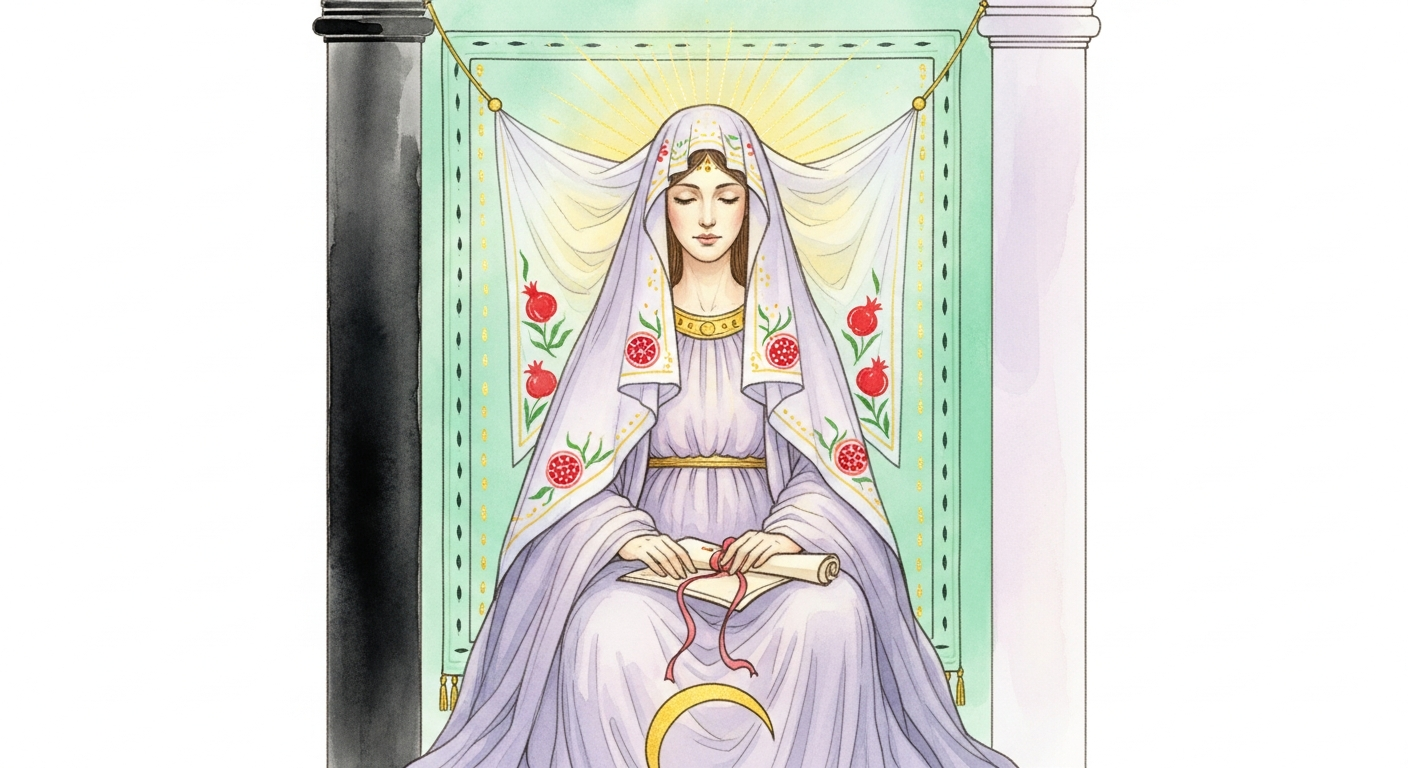
What strikes most people first is her stillness. She does not gesture dramatically or gaze into the distance. She simply sits, composed and watchful, as if she has been waiting for you specifically.
The Two Pillars: Boaz and Jachin
Flanking the High Priestess on either side are two pillars. According to A. E. Waite in The Pictorial Key to the Tarot, these pillars are marked B and J, standing for Boaz and Jachin. One pillar is dark, the other light — a visual statement about duality that needs no translation. She sits precisely between them, neither choosing one side nor the other, perfectly poised at the point where opposites meet.
This placement is not accidental. The High Priestess does not resolve the tension between the two pillars; she inhabits it. As a card for reflection, this can be a gentle nudge to consider where in your own life you might be standing between two seemingly opposite truths — and whether the wisest move is simply to be there for a while, rather than rushing to pick a side.
The Veil of Pomegranates
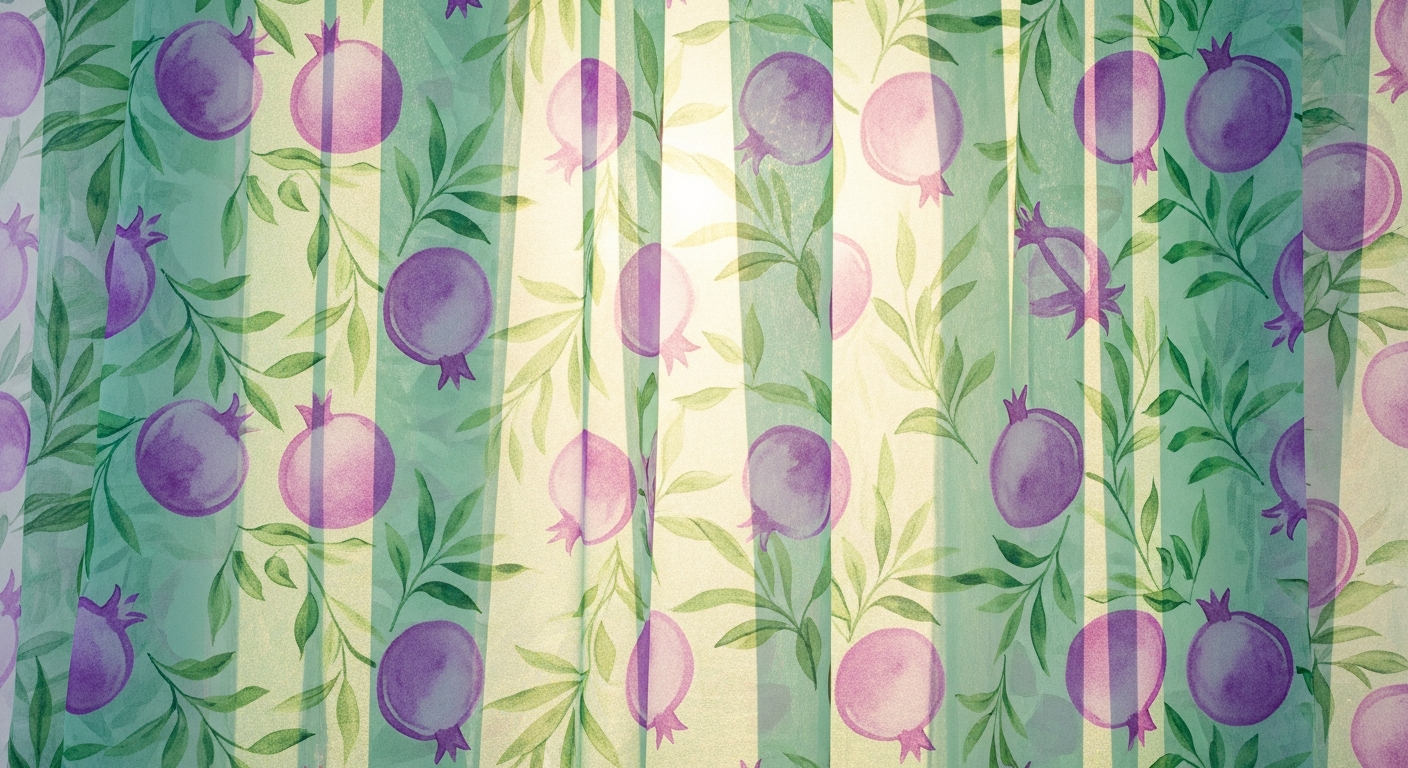
Behind the High Priestess hangs a veil, and Waite describes it in The Pictorial Key to the Tarot as a veil of pomegranates. In Pamela Colman Smith's illustration for the 1909 Rider-Waite-Smith deck, this veil is richly patterned, creating a lush curtain between the figure and whatever lies beyond. It is beautiful — and it is also, quite deliberately, blocking your view.
That is the point. The veil signals that there is something on the other side, something the card does not fully reveal. The pomegranate has long been a symbol associated with fertility, abundance, and the mysteries of the interior — think of how a pomegranate looks when you cut it open, all those hidden seeds. The veil does not taunt you; it simply reminds you that not everything is meant to be seen all at once, and that mystery itself has value.
The Crescent Moon and the Scroll of Tora
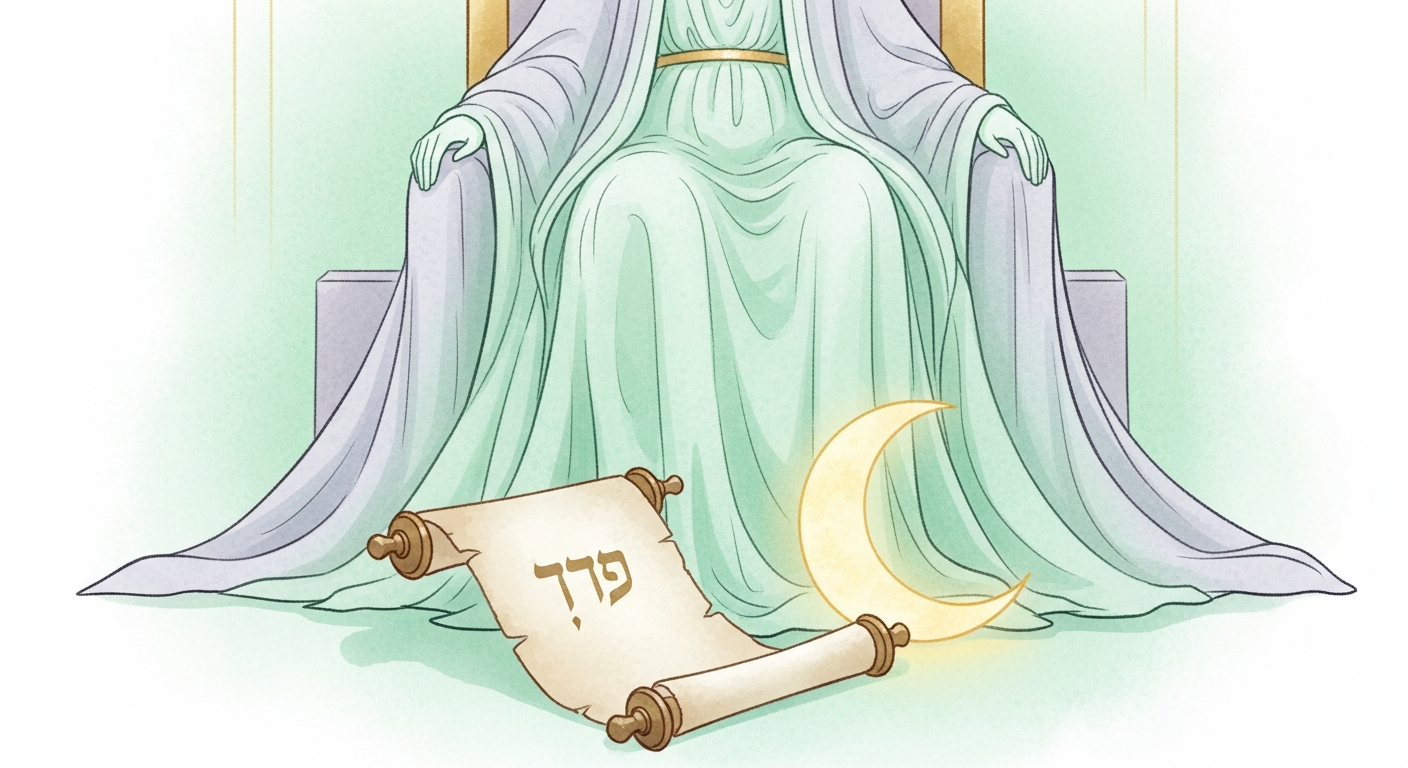
Look down, and you will notice a crescent moon at the High Priestess's feet. Look at her lap, and you will find a scroll. Waite, in The Pictorial Key to the Tarot, notes that this scroll is partly hidden by her robes and is marked with the word Tora. The partial concealment is deliberate — she holds knowledge, but she does not hand it over freely. The scroll is accessible, technically, but you have to lean in, pay attention, and perhaps earn the right to read further.
The crescent moon at her feet echoes the same theme of cycles, of things that wax and wane, of light that reveals gradually rather than all at once. Together, the moon and the scroll paint a portrait of a figure who is deeply connected to knowledge and to time — but who understands that wisdom is not the same as information. Information can be downloaded in an instant. Wisdom tends to arrive on its own schedule.
What the High Priestess Invites You to Reflect On
It is worth being clear: tarot cards are a tool for cultural reflection and self-exploration, rooted in a rich tradition of symbolism and art. They are not a method of predicting the future, and the High Priestess is certainly not whispering prophecies. What she is doing — through Waite's careful design and Smith's extraordinary illustration — is holding up a mirror to a particular kind of inner experience.
When you sit with the High Priestess, the questions she tends to surface are quiet ones. What do you already know, somewhere beneath the noise of daily life, that you haven't yet let yourself fully acknowledge? Where are you being called to listen rather than speak, to wait rather than act? What is behind your own veil — the parts of yourself or your situation that you haven't examined closely yet?
These are not ominous questions. They are the kind a good friend might ask over a long cup of coffee, gently, without any agenda. The High Priestess is not here to alarm you. She is here to remind you that your own intuition is a real and valuable thing — and that sometimes the most powerful move is simply to get quiet enough to hear it.
A Card Worth Sitting With
The High Priestess, as A. E. Waite described her in The Pictorial Key to the Tarot and as Pamela Colman Smith brought her to life in the 1909 Rider-Waite-Smith deck, is one of tarot's most enduring images precisely because she does not rush. The pillars of Boaz and Jachin frame her without confining her. The pomegranate veil conceals without deceiving. The scroll of Tora offers knowledge without forcing it on anyone. And the crescent moon at her feet reminds us that everything moves in cycles, including understanding.
She is, in the best possible sense, a card that rewards patience. The more quietly you approach her, the more she seems to have to say.
- A. E. Waite, The Pictorial Key to the Tarot, 1911 — the primary textual source for the symbolism of the High Priestess, including the pillars marked B and J (Boaz and Jachin), the veil of pomegranates, the crescent moon, and the partly hidden scroll marked Tora.
- Rider-Waite-Smith tarot deck, illustrated by Pamela Colman Smith, 1909 — the primary visual source for the depiction of the High Priestess described throughout this article.
This article is offered for cultural reflection and personal exploration only; tarot is a tradition of symbolism and heritage, not a method of prediction or fortune-telling.
The High Priestess reminds us to trust what we already sense beneath the surface. Let Lunaple's tarot readings give you a quiet, reflective space to listen to yourself.
Explore Tarot ReadingsFor entertainment purposes only. Not a substitute for professional, medical, legal, or financial advice.
← Back to the Journal