

Palm reading has a documented history that goes back centuries — and the two most famous moments in it involve a legend about a philosopher-king handoff and a Victorian showman whose celebrity client list would break the internet today. No mystical fog required.

Wait, did Aristotle actually invent this?
Here's where it gets fun. A legend — and palmistry scholarship is careful to call it exactly that, a legend, not confirmed history — claims that Aristotle (384–322 BCE) discovered a treatise on reading hands and personally gave it to Alexander the Great. It's a great story: the world's most famous philosopher handing the world's most ambitious general a guide to reading people from their palms. Very cinematic.
The catch? As historical palmistry scholarship notes, Aristotle's authorship of any such treatise is not confirmed. This is a widely repeated legend, not an established fact. Which, honestly, makes it more interesting — because it tells us that even in antiquity, people wanted hand-reading to feel ancient and authoritative enough to need a famous name attached to it. Some things never change.
The Victorian who actually standardized it (and had receipts)
Fast-forward to 1897. A man named William John Warner — better known by his stage name, Cheiro — published Cheiro's Language of the Hand, the book that, according to the historical record, genuinely standardized and popularized Western palmistry as we recognize it today.
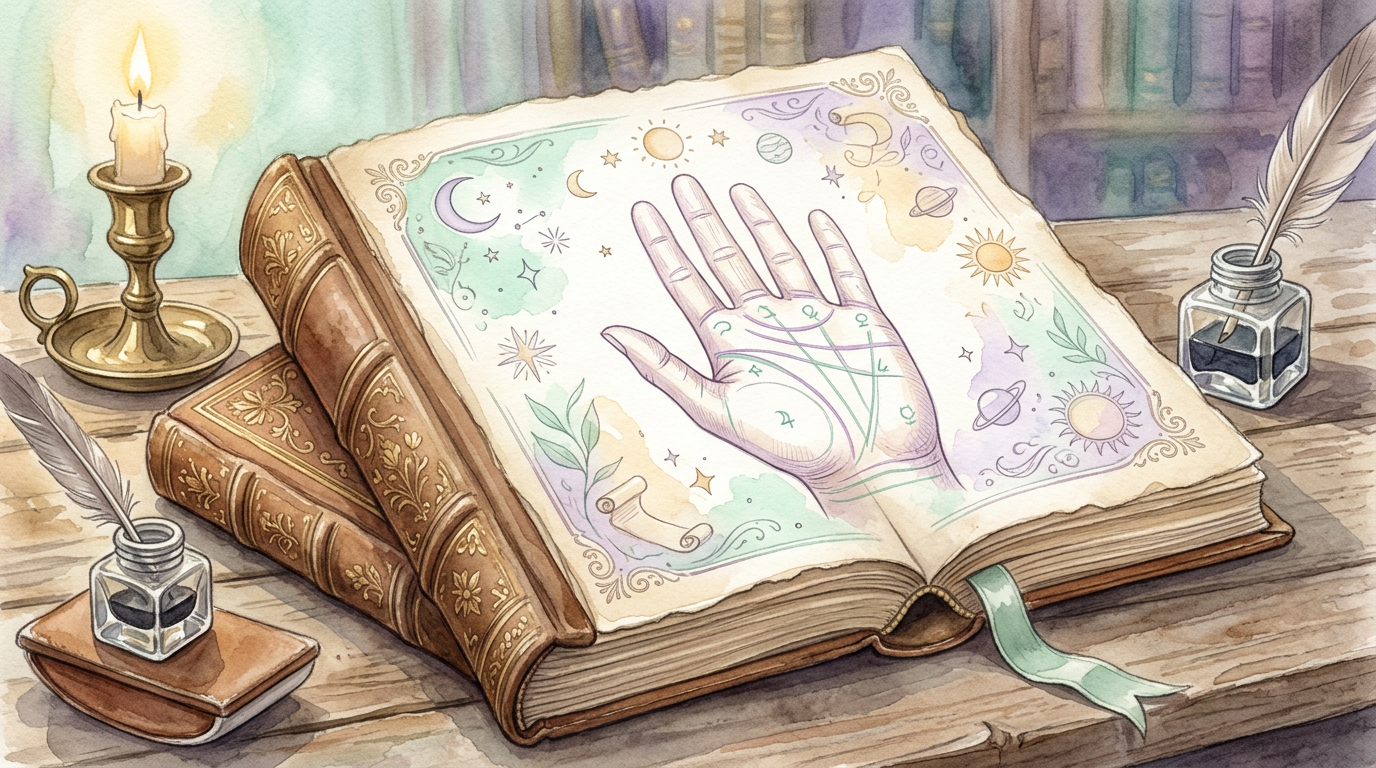
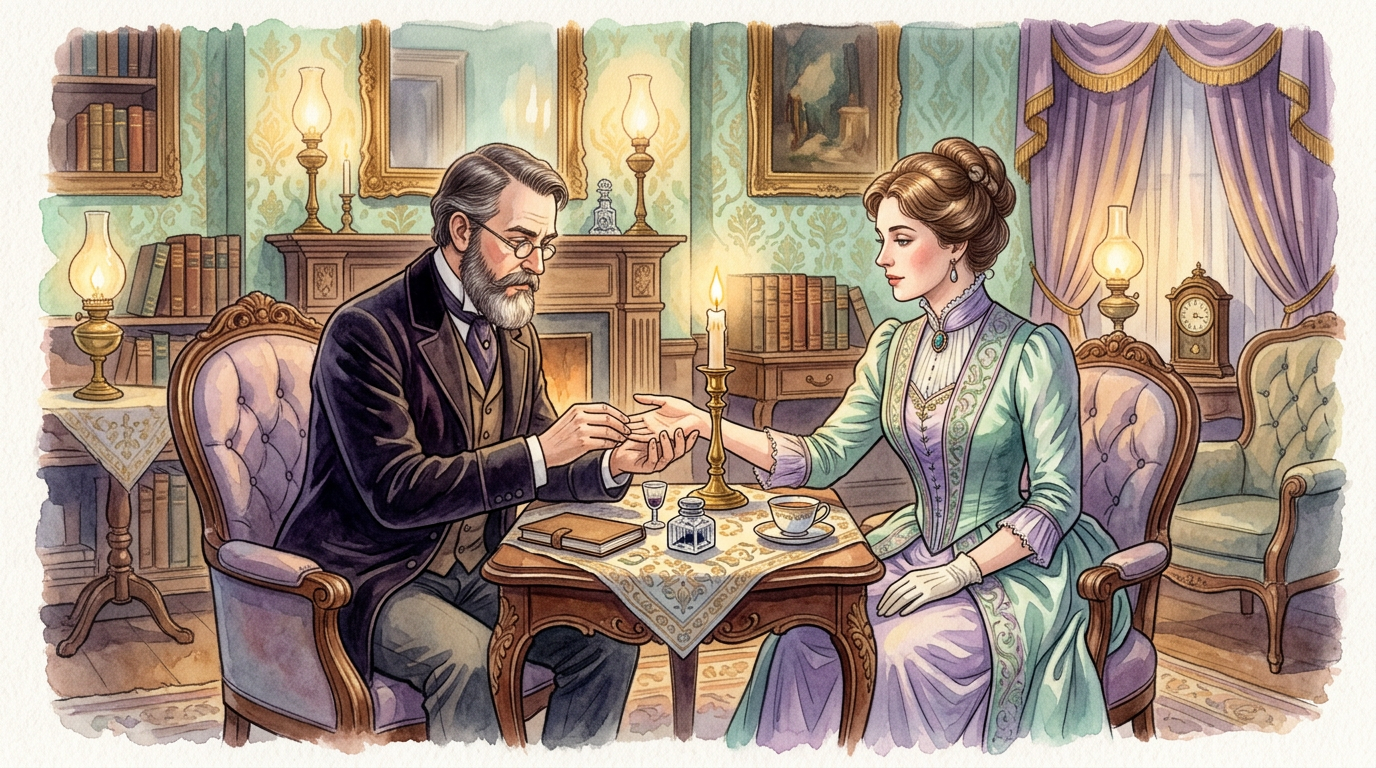
Cheiro wasn't just writing theory in a quiet study. His documented clients included Mark Twain and Oscar Wilde. Let that sink in. Two of the sharpest, most skeptical wits of the nineteenth century sat down and let this man read their hands. Whether they believed it or went for the spectacle, the fact that they showed up at all says everything about how much cultural electricity palmistry carried in that era.
Cheiro's Language of the Hand is the reason Western palmistry has the relatively consistent vocabulary it does today — the lines, the mounts, the framework that every pop-culture palm reading still loosely follows. Before Cheiro, the tradition was scattered. After him, it had a canon.
So what do we do with all of this?
The honest answer is: enjoy it as exactly what it is — a long, layered piece of cultural heritage that humans have been building and rebuilding for centuries. The Aristotle legend tells us people have always wanted hand-reading to feel profound. Cheiro's celebrity client list tells us it has always been part entertainment, part genuine curiosity about the self.
Neither of those things makes it less interesting. If anything, the real history is more interesting than the mystical version — because it's a story about how humans keep reaching for ways to feel seen, across every era, one open palm at a time.
- Ancient legend crediting Aristotle (384–322 BCE) with an early treatise on hand-reading [historical-record] — cited across historical palmistry scholarship as a widely repeated legend, not confirmed authorship.
- William John Warner ("Cheiro"), Cheiro's Language of the Hand, 1897 [historical-record] — the book that standardized and popularized Western palmistry, with documented clients including Mark Twain and Oscar Wilde.
All content is offered for cultural reflection and entertainment only, not as prediction or personal advice.
Lunaple pairs the rich traditions of palmistry and astrology into one thoughtful, personalized reading — for anyone who loves the history and wants to explore what it means for them.
Get My ReadingFor entertainment purposes only. Not a substitute for professional, medical, legal, or financial advice.
← Back to the Journal