

Tarot was just a card game — until one Frenchman decided it was ancient Egyptian magic. According to scholar Michael Dummett's The Game of Tarot (1980), tarot began as a 15th-century Italian card game, full stop. The mystical reputation? That's an 18th-century invention, and it has a very specific origin story.
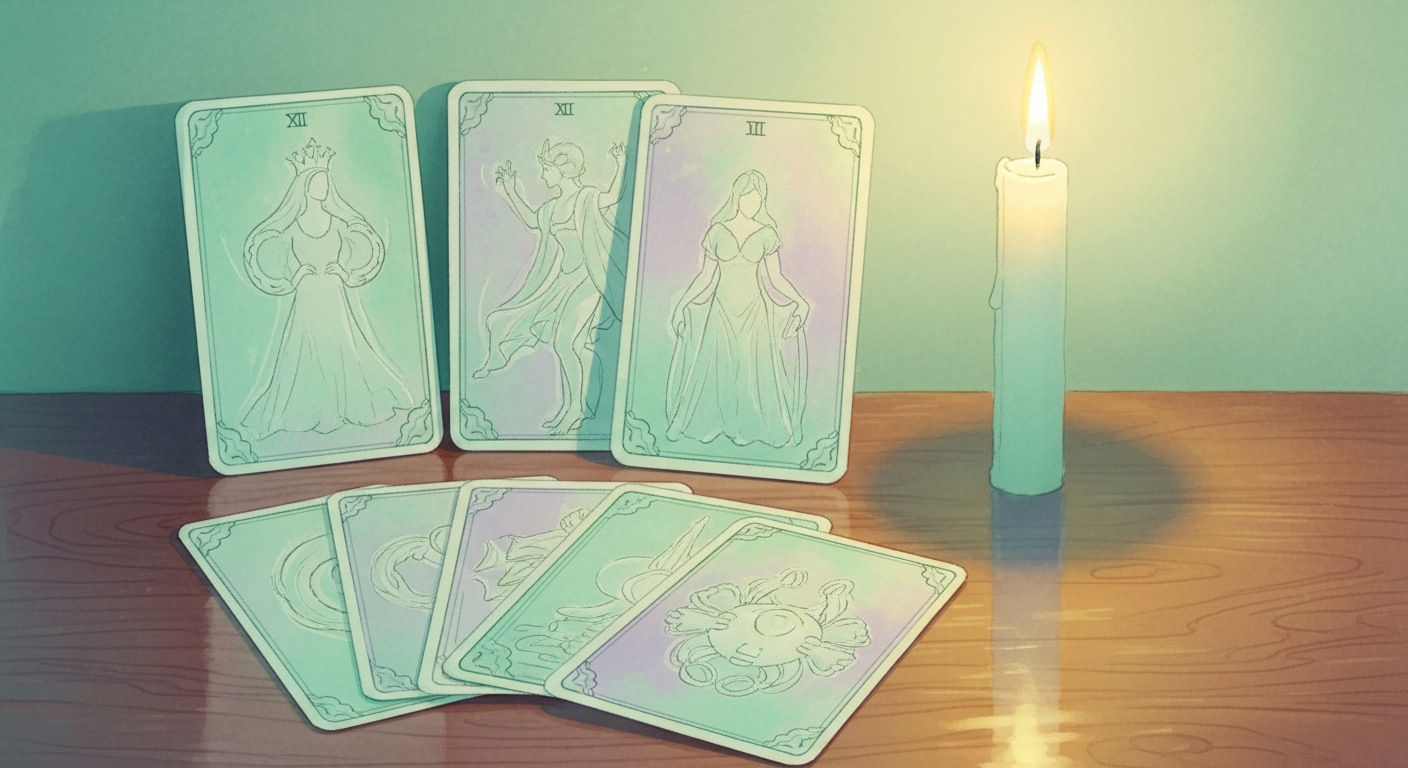
So wait — tarot was just… a game?
Yes, and apparently a pretty popular one. As Dummett documents, tarot cards were invented in 15th-century Italy for playing games — think trick-taking, the same family as bridge or whist. There was nothing secret, sacred, or Egyptian about them. They were shuffled, dealt, and played at tables, not read by candlelight in a velvet tent. For roughly three centuries, that's all they were.
Which makes what happened in 1781 all the more chaotic.
The plot twist: one very confident Frenchman
Enter Antoine Court de Gébelin. In volume VIII of his sprawling work Le Monde primitif (1781), Court de Gébelin published an essay claiming that tarot cards were not a game at all — they were a surviving relic of ancient Egyptian wisdom, encoded in symbolic imagery and passed down through the ages. He presented this as a revelation, not a theory.
There was just one problem: as Dummett's research makes clear, the occult reading was an 18th-century invention, not a recovered ancient truth. Court de Gébelin's Egyptian origin story wasn't supported by historical evidence — but it was incredibly compelling to a French intellectual scene that was fascinated by ancient mysteries and esoteric philosophy. The idea stuck. Hard.
The first person to actually make it a business
Court de Gébelin lit the match, but Jean-Baptiste Alliette — who published under the name Etteilla — built the fire. According to the historical record of his works from the 1780s and 1790s, Etteilla was the first professional to publish actual methods for divination with tarot cards. He developed systems, wrote guides, and essentially created the template for tarot reading as a practice. Before Etteilla, there was a provocative essay. After him, there was a whole craft.

Why does any of this matter now?
Because the tarot you know — the one with the Fool stepping off a cliff and the High Priestess sitting between two pillars — carries the weight of this very specific reinvention. It's not ancient Egyptian. It's a 15th-century Italian game that got a dramatic rebranding in 1781, turbocharged by one man's unfounded (but undeniably poetic) theory, and then systematized by a professional cartomancer a decade later.
Does that make it less meaningful? That's honestly up to you. Folklore traditions get remixed and reinterpreted all the time — that's kind of what makes them alive. But knowing the real history means you're not just reading the cards. You're also reading the story of how human beings have always wanted to find pattern and meaning in the world, even in a deck of playing cards.
Which, honestly? Same.
- Antoine Court de Gébelin, Le Monde primitif, vol. VIII (1781) — primary source essay first claiming tarot encoded ancient Egyptian wisdom.
- Michael Dummett, The Game of Tarot (1980) — academic history documenting tarot's origins as a 15th-century Italian card game and identifying the occult reading as an 18th-century invention.
- Jean-Baptiste Alliette ("Etteilla"), tarot cartomancy works (1780s–1790s) — historical record of the first professional to publish methods for divination with tarot cards.
This article is offered for cultural reflection and historical interest only, not as prediction or guidance of any kind.
Now that you know the real history, exploring tarot as a tool for self-reflection hits differently. Lunaple's readings are rooted in the rich symbolic tradition — not ancient Egypt, but still pretty illuminating.
Explore Your ReadingFor entertainment purposes only. Not a substitute for professional, medical, legal, or financial advice.
← Back to the Journal