

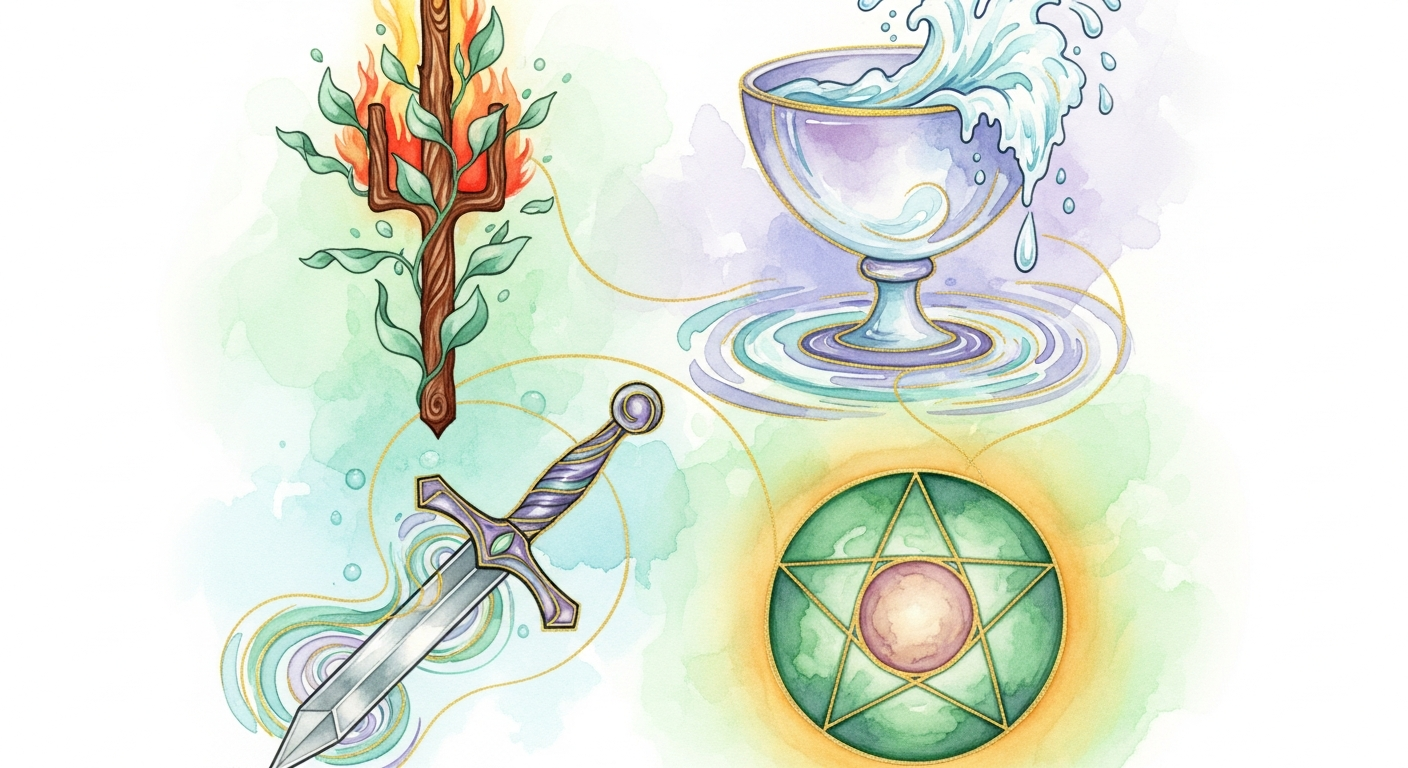
The Minor Arcana makes up the everyday half of your tarot deck — 56 cards split across four suits that each govern a different slice of human experience. Before they were spiritual tools, though, they were literally just cards for playing games. Wild, right?
Wait, tarot started as a card game?
Yes, and not even a mysterious one. As scholar Michael Dummett documents in The Game of Tarot (1980), the four-suited tarot pack originated in 15th-century Italy as a card game — full stop. There was no occult agenda at the start. The suits, the structure, the whole deck: it was entertainment first. The mystical layer came considerably later. So if you've ever felt a little silly taking your cards very seriously, just know the cards themselves had a pretty casual origin story.
So what does each suit actually cover?
A. E. Waite laid out the suits and their court cards in detail in The Pictorial Key to the Tarot (1911), and his framework is still the one most English-language readers use today. Here's the breakdown:
- Wands — Waite associates this suit with enterprise, energy, and the animating force behind action. Think: ambition, creative drive, the spark that makes you start something.
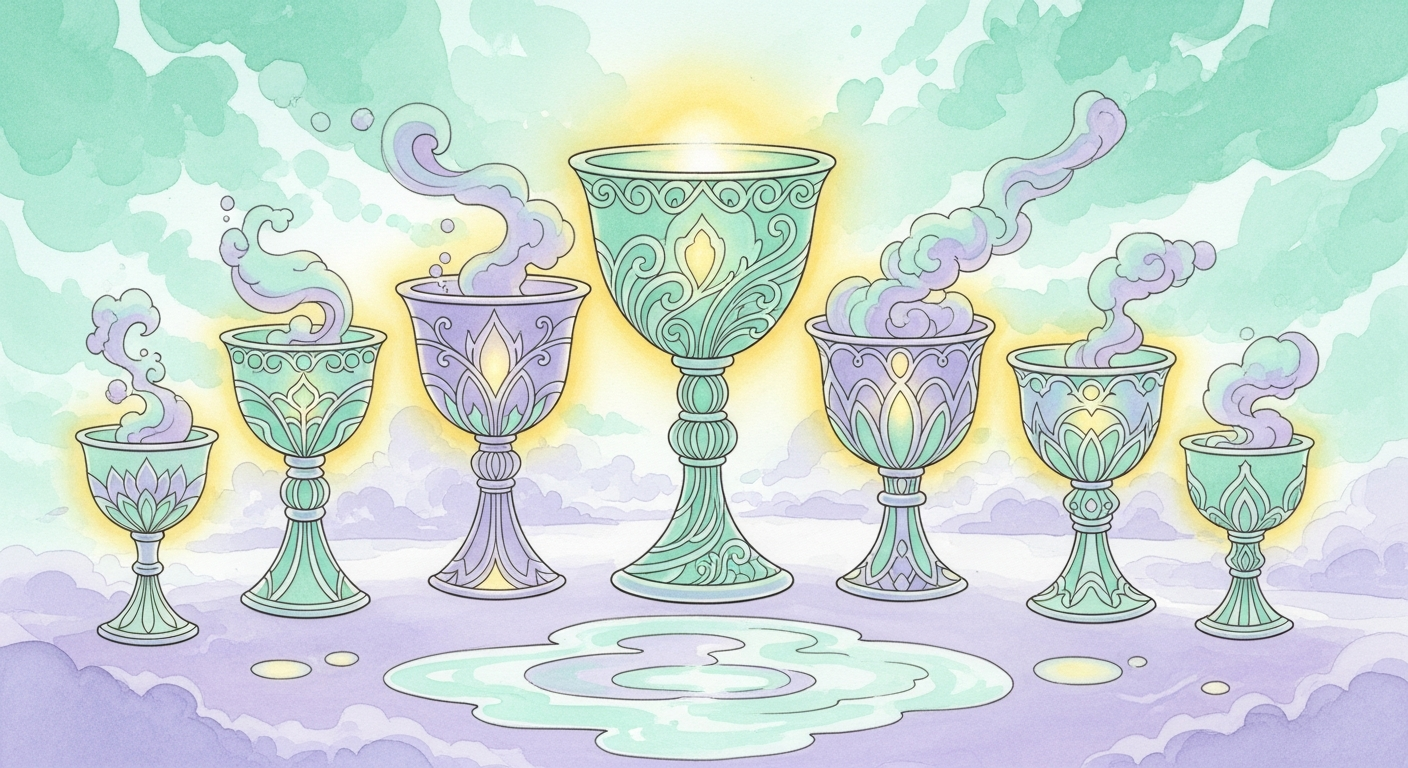
- Cups — The emotional suit. Waite connects Cups to the inner life: feeling, imagination, and the whole beautiful mess of human relationships. If your reading is swimming in Cups, your heart is doing most of the talking.
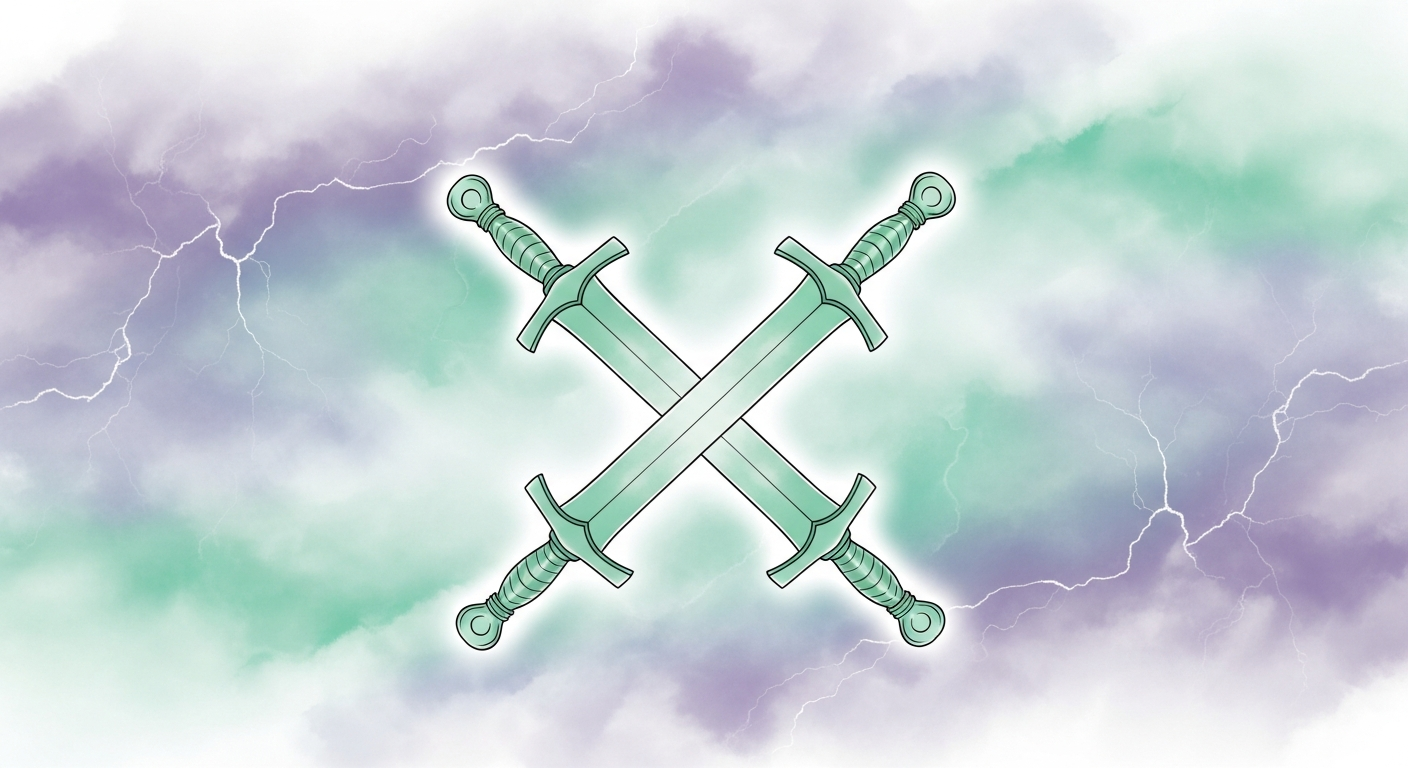
- Swords — The suit of the mind — and its complications. According to Waite, Swords deal with thought, conflict, and the double-edged nature of intellect. Sharp and clarifying, but not always comfortable.
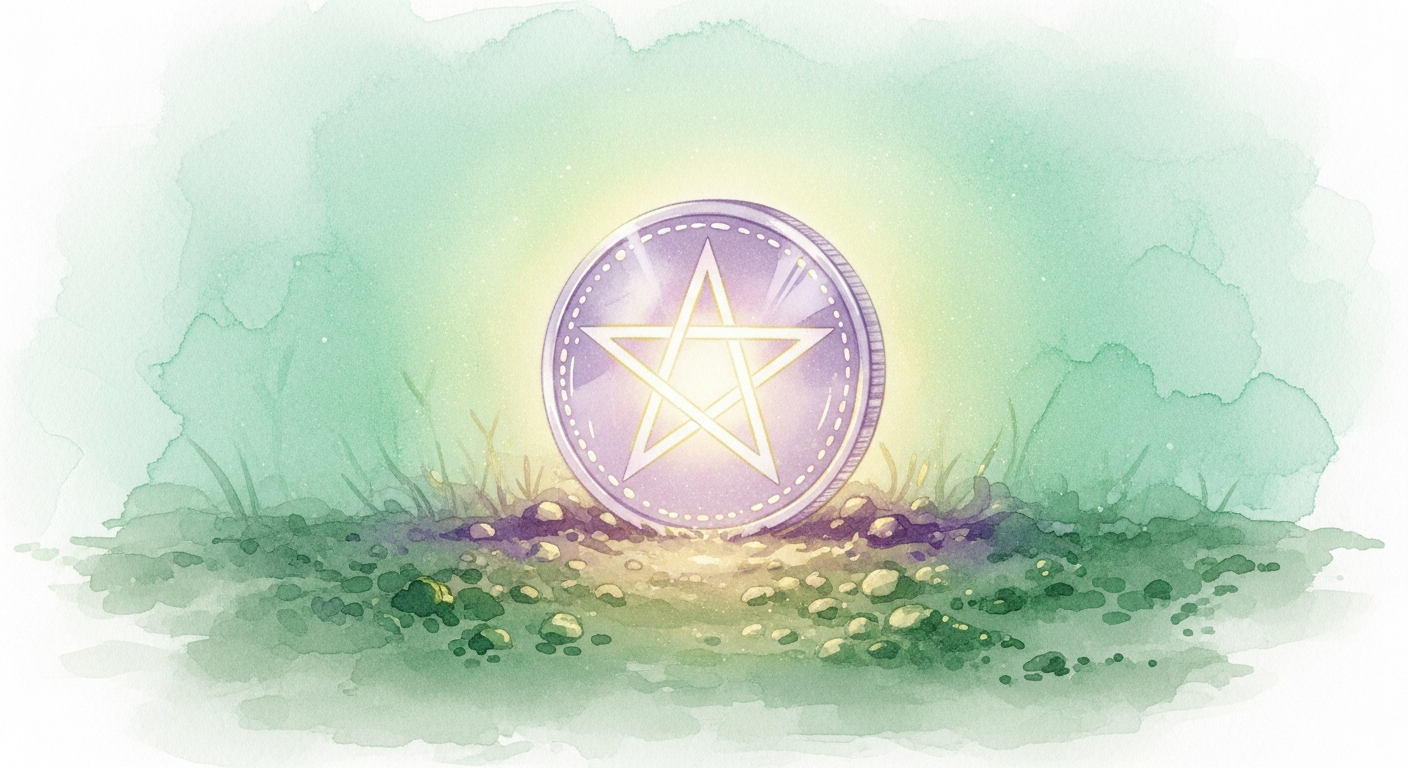
- Pentacles — Waite's account frames Pentacles as the material suit: the body, practical affairs, money, work, the tangible world you actually live in. Grounded, real, and deeply useful.
Why does this structure feel so universal?
Because it maps onto things we already care about: passion, feeling, thought, and material life. Dummett's research shows the four-suit structure has been stable since that 15th-century Italian origin — it survived the transition from parlor game to philosophical tool essentially intact. Waite's 1911 codification gave English speakers a clear vocabulary for what each suit governs, and his court card descriptions (the Pages, Knights, Queens, and Kings within each suit) added another layer of personality to the whole system.
Whether you read the suits as a spiritual mirror or just a fascinating piece of cultural history, the framework holds up. Four domains, 56 cards, centuries of staying power — not bad for something that started as a game.
- A. E. Waite, The Pictorial Key to the Tarot, 1911 — Waite's account of the four Minor Arcana suits and their court cards.
- Michael Dummett, The Game of Tarot, London: Duckworth, 1980 — The documented history of the four-suited tarot pack as a 15th-century Italian card game before any occult use.
This article is offered for cultural reflection and historical interest, not as prediction or divination advice.
Now that you know the suits, let Lunaple walk you through a reading that actually makes sense of them — your spread, your symbols, your moment.
Try a ReadingFor entertainment purposes only. Not a substitute for professional, medical, legal, or financial advice.
← Back to the Journal