Here's the twist: scientists liked the full-moon-makes-people-wild idea enough to actually study it — 37 times. Then, according to Rotton and Kelly's 1985 review in Psychological Bulletin, they pooled all that research together and found no meaningful link between the full moon and crisis calls, psychiatric admissions, or homicide. Thirty-seven studies. Still no.
Wait, where did "lunar lunacy" even come from?
The word lunacy literally contains the moon — luna in Latin. The folk belief that a full moon stirs up erratic behavior is ancient and widespread, which is exactly why researchers kept wanting to test it. By 1985, enough individual studies had piled up that James Rotton and Ivan W. Kelly decided to do a meta-analysis: a formal review that combines the results of many studies to look for an overall pattern.
Their paper, "Much Ado About the Full Moon," reviewed 37 published studies that had looked at things like emergency psychiatric admissions, crisis hotline calls, and violent crime. The title alone — a Shakespeare nod — gives you a sense of where they landed.
So what did 37 studies actually show?
According to Rotton and Kelly's meta-analysis, the overall evidence did not support a meaningful connection between full moons and any of the "lunacy" outcomes researchers had been tracking. Not crisis calls. Not psychiatric admissions. Not homicide. When you combine the studies and account for statistical noise, the dramatic moon-makes-people-wild narrative just doesn't hold up.
Which, honestly, is a little funny. Imagine being the researcher who designs a study to test whether the full moon causes chaos — and then running that study, and then 36 other people running similar studies — and the collective answer being a very thorough "not really."
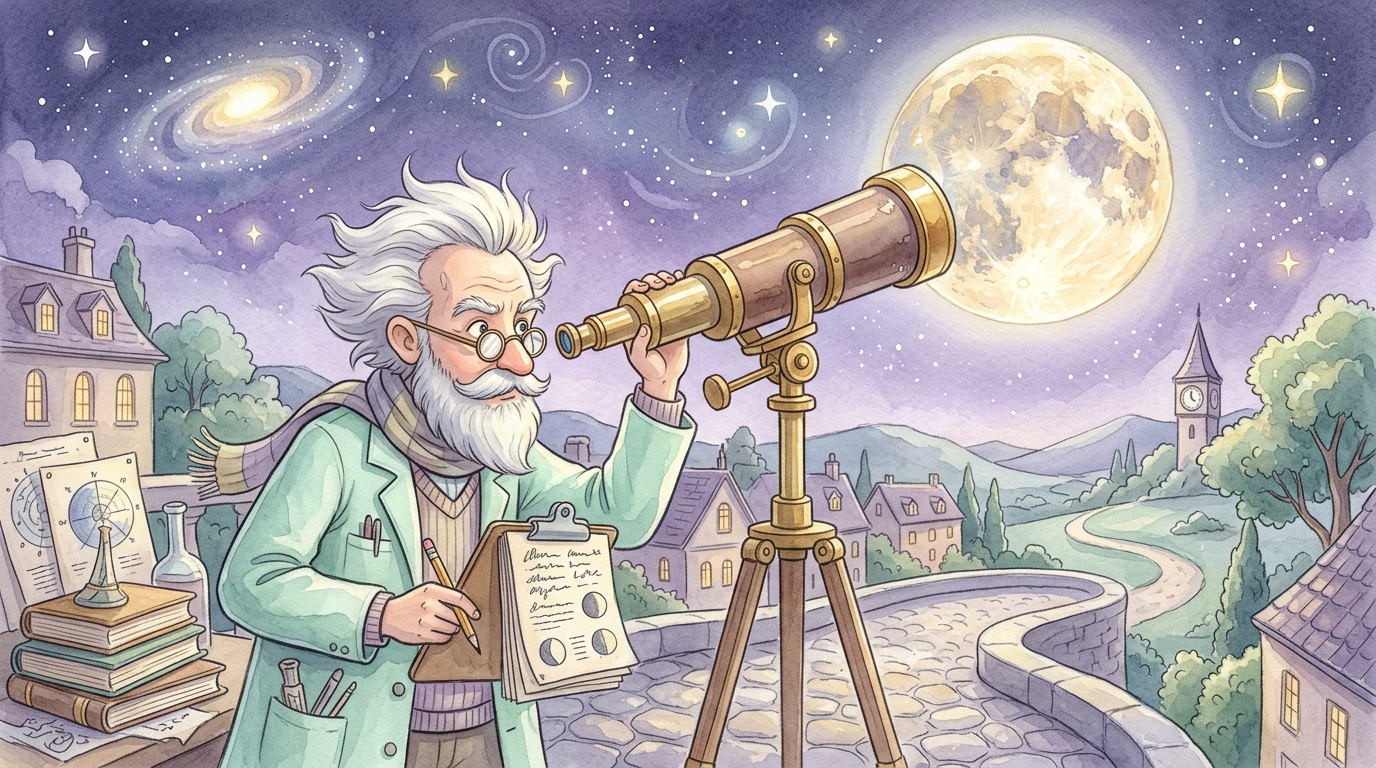
Does this mean the moon is boring? Absolutely not.
The moon controls tides, lights up folklore across every culture on earth, and has inspired more poetry than almost any other object in the sky. The full moon's reputation as a chaos agent is itself a fascinating piece of human psychology — we are pattern-seeking creatures, and a big bright moon in the sky is a very compelling thing to blame.
Rotton and Kelly's review doesn't make the moon less magical. It just means you can enjoy the next full moon without worrying that everyone around you is about to lose it. (Whatever's going on in your group chat tonight? Probably not the moon's fault.)
- James Rotton & Ivan W. Kelly, Much Ado About the Full Moon: A Meta-Analysis of Lunar-Lunacy Research, Psychological Bulletin 97(2), 1985, pp. 286–306.
This content is offered for cultural reflection and entertainment only, not as prediction or medical advice.
The science says the full moon isn't causing chaos — but moon phases have been a lens for self-reflection across cultures for centuries. Explore what your moon sign says about your inner world.
Read My Moon SignFor entertainment purposes only. Not a substitute for professional, medical, legal, or financial advice.
← Back to the Journal