
The Moon may have had a hand in the most famous shipwreck in history — and that's not folklore, it's an actual astronomical hypothesis. According to a 2012 analysis published in Sky & Telescope, a rare celestial alignment three months before the Titanic sank could have set the disaster in motion.
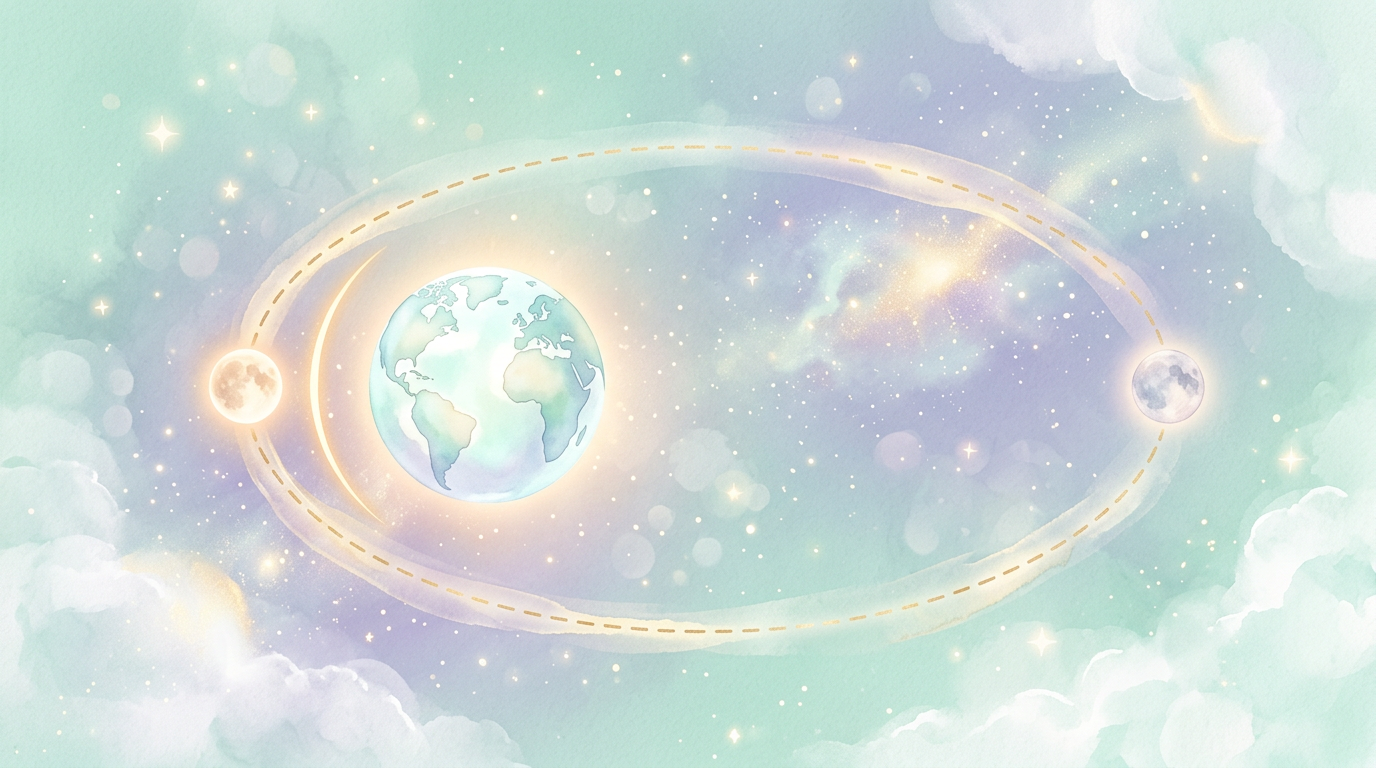
So what exactly did the Moon do?
On January 4, 1912, something genuinely unusual happened in the sky. Astronomers Donald W. Olson, Russell L. Doescher, and Roger W. Sinnott — writing in Sky & Telescope in April 2012 — identified that an exceptionally close lunar perigee (the moment the Moon swings nearest to Earth in its elliptical orbit) coincided with a full Moon that day. That double-whammy combination, they propose, produced extreme tidal forces. And extreme tides, their hypothesis goes, may have been powerful enough to free icebergs that had been grounded along the shallow coastal waters of Newfoundland — icebergs that then drifted south into the North Atlantic shipping lanes.
Three months later, on the night of April 14–15, 1912, RMS Titanic struck one of those icebergs. NASA's own science-communication team at SSERVI (the Solar System Exploration Research Institute) summarized the hypothesis on their website, lending it enough credibility to discuss publicly — which, honestly, is the astronomical equivalent of a co-sign.
Is this actually proven?
Here's where we have to be honest with you, because the science deserves it: no, it is not proven. Olson, Doescher, and Sinnott present this as a hypothesis — a well-reasoned, astronomically grounded one, but a hypothesis nonetheless. NASA's SSERVI summary frames it the same way. The chain of events (rare perigee → extreme tides → freed icebergs → drift south → collision) is plausible and the celestial mechanics are real, but "plausible" is not the same as "confirmed."
What is confirmed is the astronomy itself: the January 4, 1912 alignment was genuinely exceptional, as Olson and colleagues document. The tidal effects of a close perigee full Moon are real physics. The leap from there to a specific iceberg on a specific night is where the hypothesis lives — fascinating, but not settled.
Why does this feel so eerie?
Because it reframes the disaster as something that began not in the North Atlantic in April, but in the sky in January — quietly, beautifully, with no one watching. The Moon didn't "decide" anything. It just followed its orbit, as it always does. The tides did what tides do. And somewhere off Newfoundland, according to this hypothesis, a grounded iceberg slipped free into the current.
It's a reminder that celestial mechanics and human history can intersect in ways that feel almost too poetic to be real — and yet the astronomy, at least, is entirely real.

Next time you look up at a full Moon sitting unusually large and low on the horizon, maybe just… acknowledge it. Not with fear. Just with the quiet awareness that the universe is doing math all the time, and occasionally the math touches us.
- Donald W. Olson, Russell L. Doescher & Roger W. Sinnott, "Blame the Moon," Sky & Telescope, April 2012. Foundational astronomical analysis proposing that an exceptionally close lunar perigee combined with a full Moon on January 4, 1912 produced extreme tides that may have freed the iceberg later struck by Titanic — presented by the authors as a hypothesis.
- NASA Solar System Exploration Research Institute (SSERVI), "Did the Moon Contribute to the Sinking of the Titanic?" (sservi.nasa.gov). NASA's science-communication summary of the Olson/Doescher/Sinnott hypothesis.
This article is offered for cultural and scientific reflection. The astronomical hypothesis described is presented as proposed by its authors, not as established or proven fact.
The Moon shapes tides, history, and — according to centuries of tradition — our inner lives too. Explore your personal lunar chart on Lunaple.
Read My Moon ChartFor entertainment purposes only. Not a substitute for professional, medical, legal, or financial advice.
← Back to the Journal