
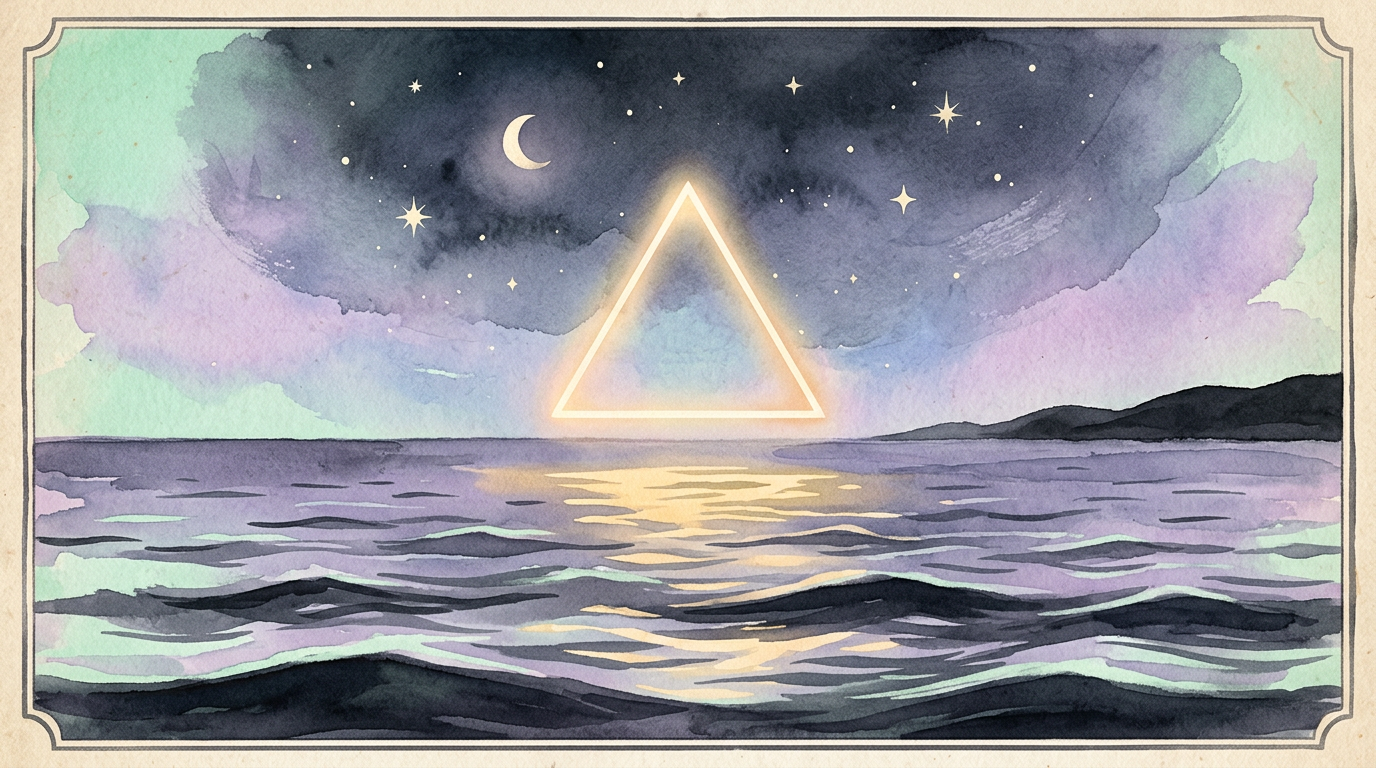
Here's the twist ending to one of history's greatest mysteries: the Bermuda Triangle was essentially invented by a pulp magazine article in February 1964 — and according to NOAA, the U.S. Board on Geographic Names doesn't even recognize it as an official region.
Wait, so who actually made this up?
Credit — or blame — goes to a writer named Vincent Gaddis. In February 1964, his article The Deadly Bermuda Triangle ran in Argosy magazine and is widely credited with coining the term and turbocharging the legend into mainstream consciousness. One magazine article. That's it. That's the origin story.
To be fair to Gaddis: he was writing for a publication that loved a good yarn, and "a vaguely triangular stretch of the Atlantic where spooky things happen" is genuinely a great yarn. No notes on the pitch.
Okay but… ships and planes really did disappear, right?
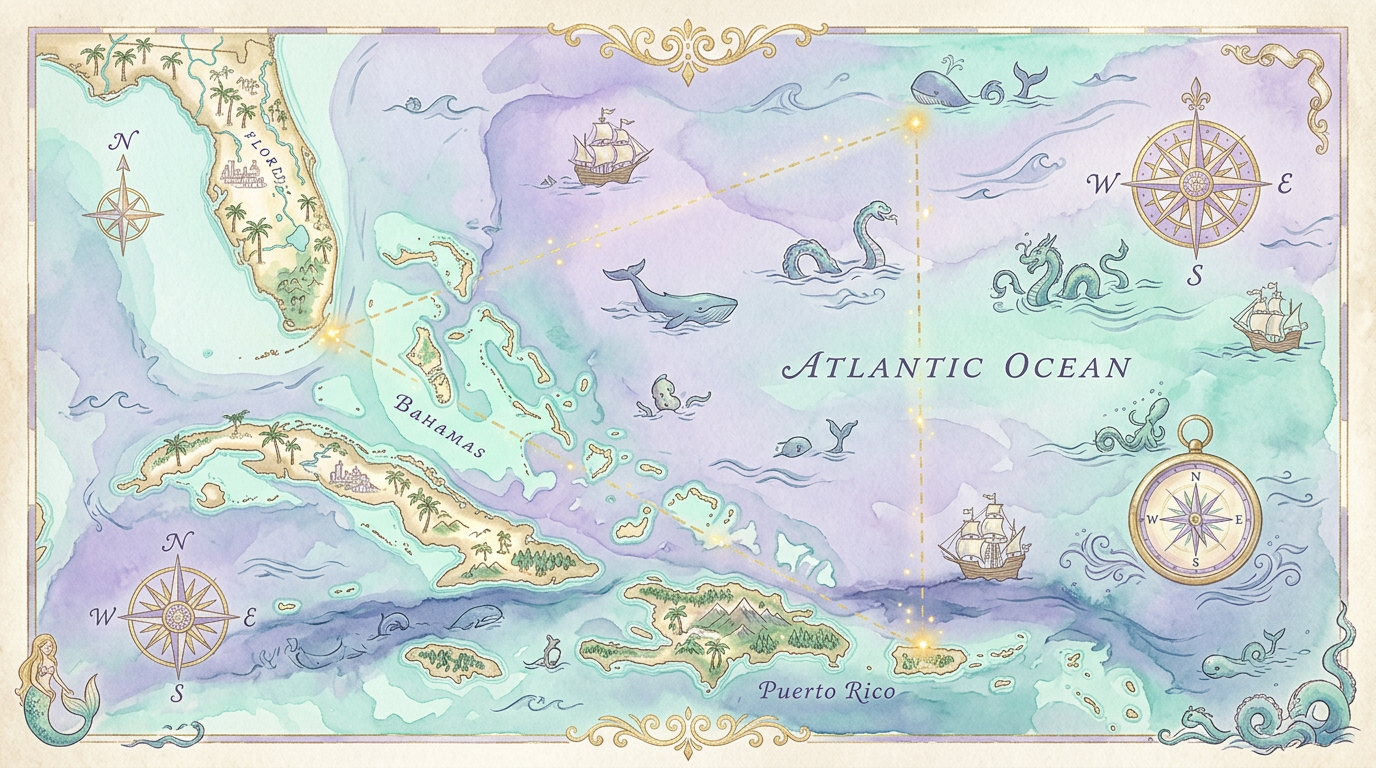
Sure — the ocean is enormous and genuinely dangerous, and things do go missing in it. But here's where NOAA steps in with the cold water: according to the NOAA Ocean Service, there is no evidence that disappearances occur in the Bermuda Triangle area more often than in any other well-traveled ocean region. The U.S. Board on Geographic Names does not recognize the Bermuda Triangle as an official geographic region at all. It has no boundary on any official map. It is not a designated hazard zone. No government agency on Earth treats it as a special danger area.
The mystery, in other words, is mostly a story about how a compelling name — coined in a 1964 pulp magazine — can take on a life so vivid it outlasts the magazine itself.
Why does this matter (and why is it kind of beautiful)?
Because it's a masterclass in the power of framing. Gaddis didn't invent the ocean or the accidents. He invented the triangle — the shape, the name, the sense that these incidents belonged together in one spooky category. Once you have a name for something, you start seeing it everywhere. That's not a flaw in human thinking; it's basically the whole engine of storytelling.

NOAA's conclusion is clear, and Gaddis's 1964 byline is documented history. What we're left with is something genuinely fun: a reminder that "mystery" is often less about what's out there in the dark water and more about what a good writer decided to call it one winter in 1964.
Honestly? Respect the craft.
- Vincent Gaddis, "The Deadly Bermuda Triangle," Argosy magazine, February 1964. [Primary source credited with coining the term "Bermuda Triangle" and popularizing the mystery.]
- NOAA Ocean Service, "What is the Bermuda Triangle?" (oceanservice.noaa.gov). [NOAA's statement that the U.S. Board on Geographic Names does not recognize the Bermuda Triangle as an official region, and that there is no evidence disappearances occur there more often than in any other well-traveled ocean area.]
This article is offered for cultural and media-history reflection only, not as a guide to navigation or prediction of any kind.
If a single magazine article can reshape how millions of people see the ocean, imagine what a fresh lens on your own chart could reveal. Explore your Lunaple reading and see what new story emerges.
Explore My ReadingFor entertainment purposes only. Not a substitute for professional, medical, legal, or financial advice.
← Back to the Journal