
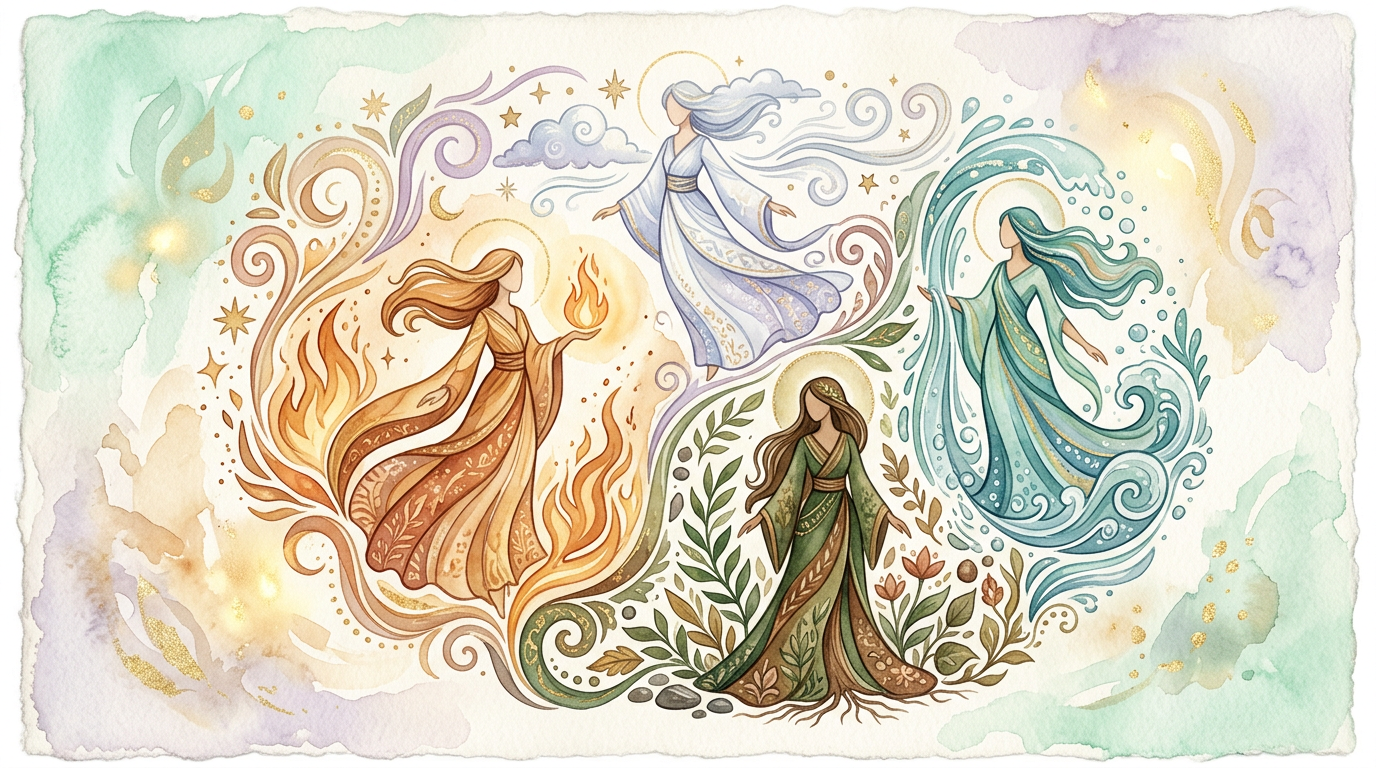
Long before you were taking BuzzFeed quizzes to find out which pasta shape matches your soul, ancient doctors had already sorted all of humanity into exactly four personality types — and they tied each one straight to a bodily fluid and a classical element. It's genuinely unhinged, and also kind of brilliant.
Wait, who actually came up with this?
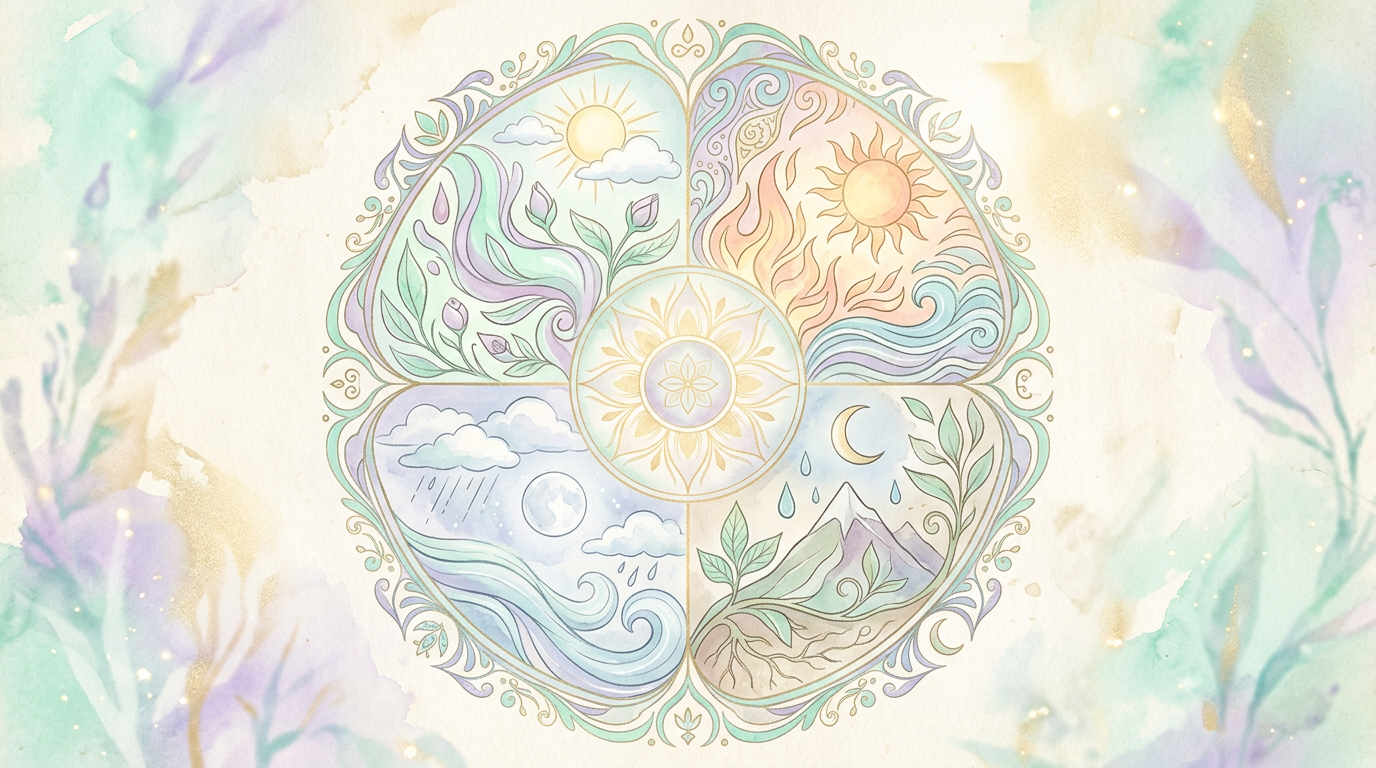
The person who really codified the system was Galen of Pergamon, the 2nd-century CE physician whose work De Temperamentis laid out the theory of the four temperaments in full. According to Galen, your personality wasn't a vibe — it was a medical condition determined by which of four bodily humors dominated your constitution: blood, yellow bile, black bile, or phlegm. Each humor mapped to one of the four classical elements, and the result was a tidy (if slightly terrifying) personality taxonomy.
So what are the four types, actually?
- Sanguine — ruled by blood and, per Galen's framework, associated with air. The social butterfly. The one who says "we should do this more often" and actually means it.
- Choleric — ruled by yellow bile and fire. Driven, intense, the person who already has a five-year plan and is annoyed you don't. Leadership energy, occasionally intimidating energy.
- Melancholic — ruled by black bile and earth. Thoughtful, detail-oriented, the friend who remembers every anniversary and also every slight. Artistic. Probably journaling right now.
- Phlegmatic — ruled by phlegm and water. Calm, diplomatic, the person who somehow never gets into drama. Everyone's emotional support human.
Okay but what does this have to do with astrology?
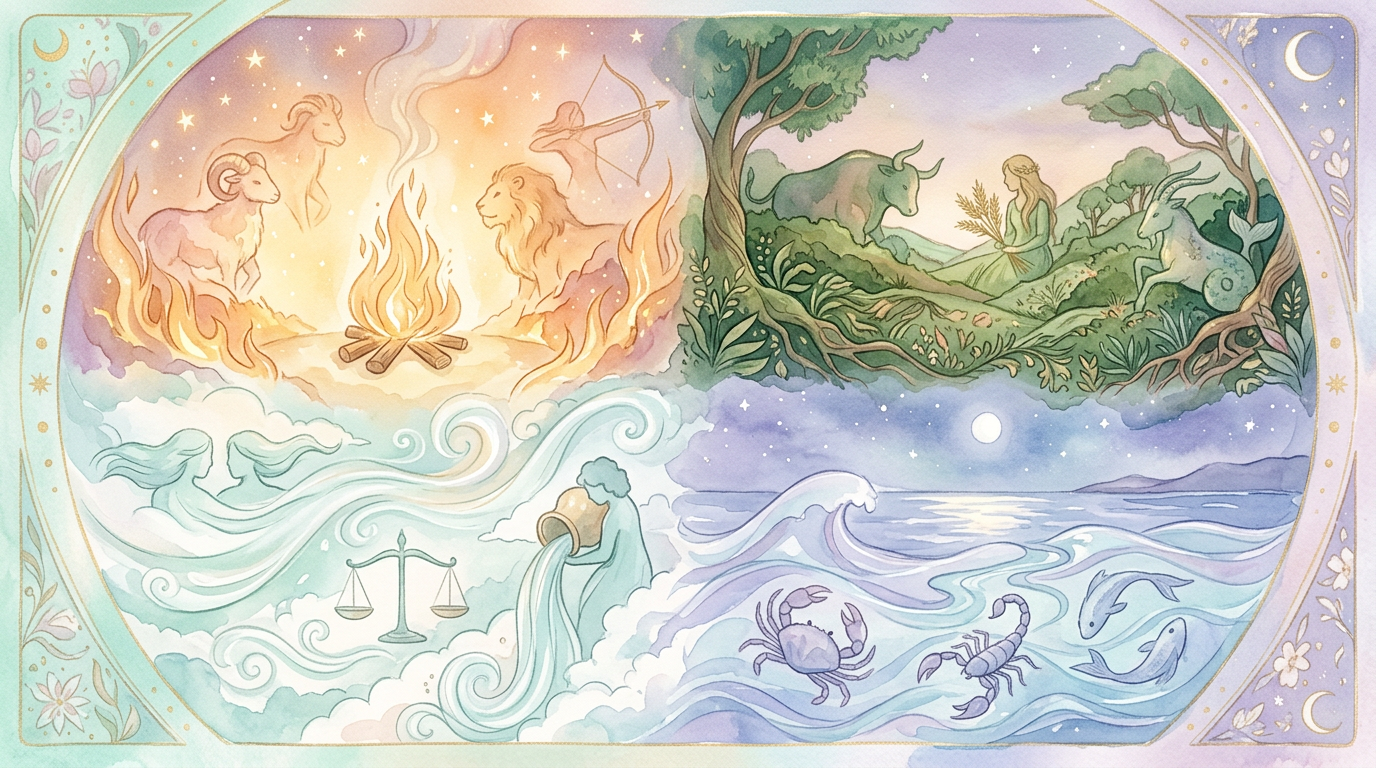
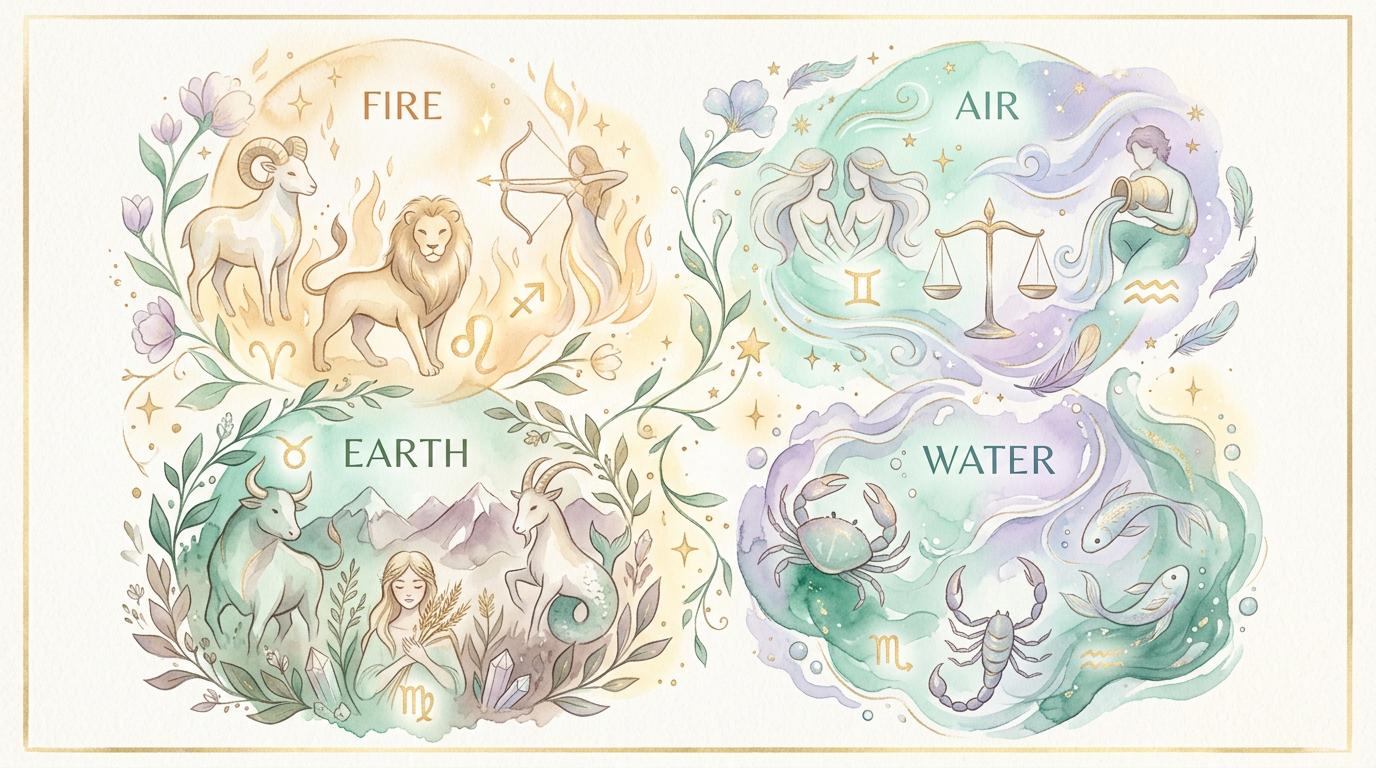
Here's where it gets fun. Ptolemy's Tetrabiblos — also written in the 2nd century CE — assigns the very same fire, earth, air, and water framework to the twelve zodiac signs. That's the system Western astrology still uses today: Aries, Leo, Sagittarius as fire signs; Taurus, Virgo, Capricorn as earth; Gemini, Libra, Aquarius as air; Cancer, Scorpio, Pisces as water. The medical and astrological element systems were running in parallel, in the same era, drawing from the same ancient well. Whether you call it your humor or your element, the ancient world was clearly very committed to sorting people into four boxes.
(To be clear: this is a historical connection between two ancient theoretical frameworks — not medicine, not prediction. Just a genuinely fascinating piece of intellectual history.)
So which one are you?
Galen's De Temperamentis treated temperament as something a physician would diagnose — but there's no reason you can't do it yourself over a coffee. Are you the one who lights up a room or the one quietly holding it together? Do you run hot and fast, or slow and steady? The categories are old, but the self-recognition is instant. That's probably why this 2nd-century medical theory is still floating around in personality quizzes, pop psychology, and yes, astrology memes.
Turns out the urge to know what type of person am I, exactly is just a very human thing — and we've been at it for at least two thousand years.
- Galen of Pergamon, De Temperamentis (2nd century CE) — source for the four temperaments (sanguine, choleric, melancholic, phlegmatic), their associated bodily humors, and their links to the four classical elements.
- Ptolemy, Tetrabiblos (2nd century CE) — source for the fire, earth, air, and water framework as applied to the twelve zodiac signs in Western astrological tradition.
All content is offered for cultural reflection and historical interest only, not as medical advice or personal prediction.
Lunaple's birth chart reading digs into your personal elemental balance — fire, earth, air, and water — so you can see exactly how the ancient framework maps to your sky. Ancient wisdom, zero bloodletting required.
Read My ChartFor entertainment purposes only. Not a substitute for professional, medical, legal, or financial advice.
← Back to the Journal