
Your rising sign isn't just a personality quirk — according to ancient astrological tradition, it's the exact degree of the zodiac that was climbing over the eastern horizon the moment you were born. Two thousand years of astrologers agreed: this is where your chart begins.
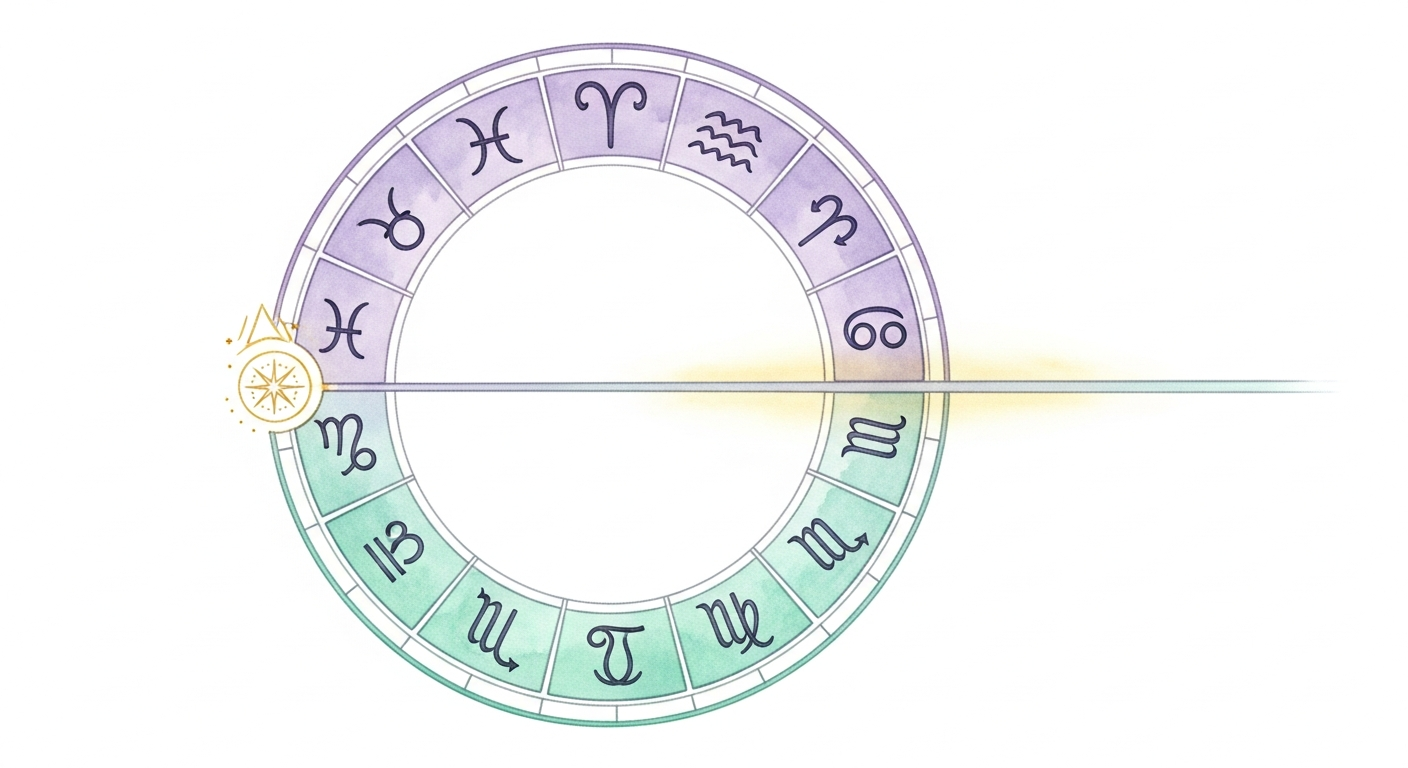
Wait, what even is the ascendant astronomically?
Here's the genuinely cool part. As Earth rotates, different degrees of the zodiac appear to rise over the eastern horizon — and the specific degree cresting that horizon at your exact moment of birth is what astrologers call the horoskopos, or ascendant. Ptolemy, writing in the Tetrabiblos in the 2nd century CE, identified this rising degree as the starting point of the entire natal chart. Not the Sun, not the Moon — the horizon. The chart literally begins where the sky meets the earth at the moment you arrive.
That's why your rising sign changes roughly every two hours throughout the day, even for people born in the same city on the same date. It's hyper-specific to your moment. (Yes, this is why astrologers are so annoying about needing your exact birth time. They're not being dramatic — Ptolemy started it.)
So what did ancient astrologers say it means?
Vettius Valens, another 2nd-century CE astrologer writing in his Anthologiae, used the ascendant as the primary marker of the self and the body in a natal chart. Not your inner emotional life, not your ego — the self as it interfaces with the world. The body you inhabit, the presence you project.
That framing is actually why the modern "mask" metaphor makes so much sense as a reading of this tradition. If the ascendant is the self as it meets the world — the face of the chart — then of course it shapes first impressions, physical presence, and the energy you lead with before anyone gets to your Sun sign depths.
Why does it matter more than people think?
Most people know their Sun sign because it only requires your birthday. Your rising sign requires the time and place of birth, which means a lot of people simply don't know theirs. But in the tradition Ptolemy laid out, the ascendant is the chart's structural anchor — the point from which the houses are measured and the whole map is oriented.
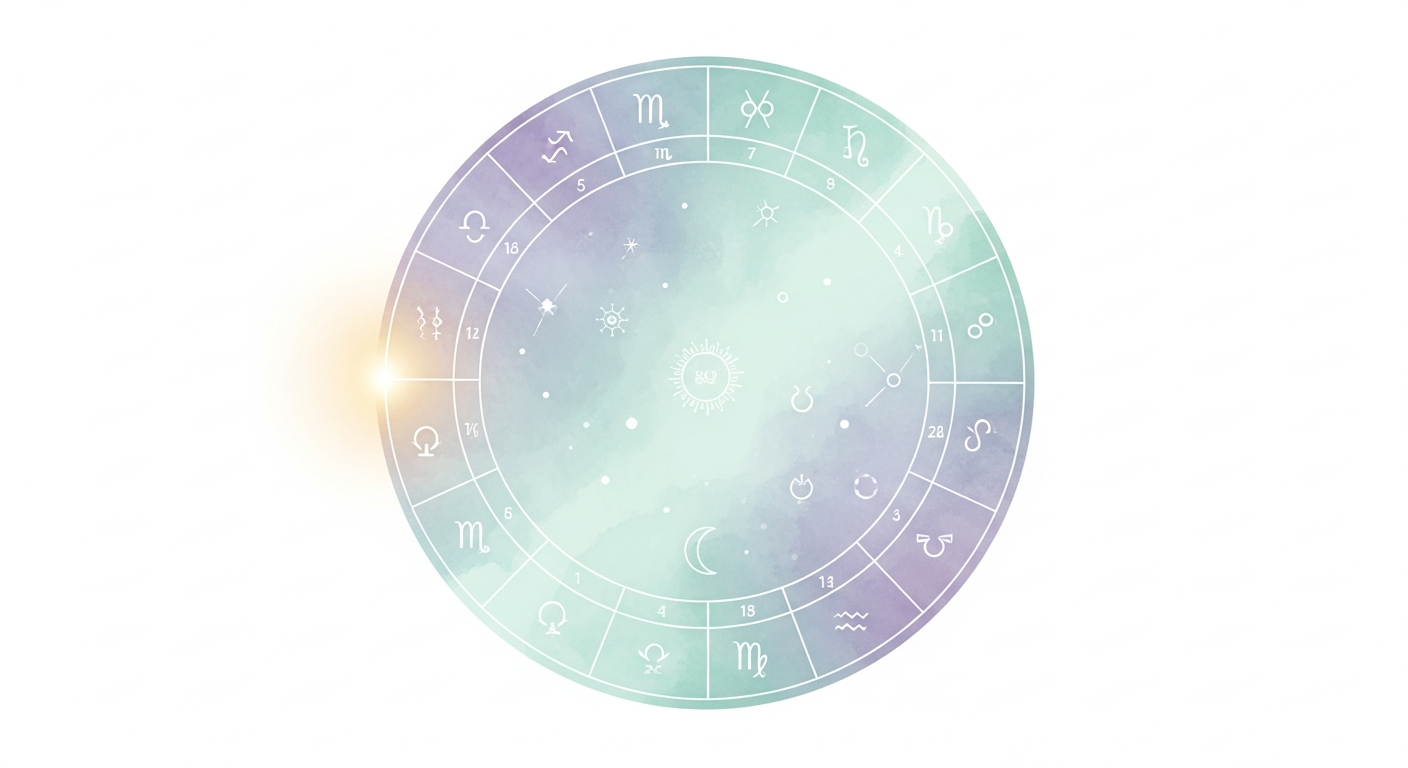
Think of it this way: your Sun sign is the story. Your rising sign is the opening line — the one that sets the tone for everything that follows. Ancient astrologers weren't being poetic when they put it first. They were being structural.
How to actually find yours
You'll need your birth date, birth time (as precise as possible — check your birth certificate), and birth location. Plug those into any natal chart calculator and look for the sign on the cusp of the first house. That's your ascendant. That's your horizon.
Consider it less a mask and more a doorway — the specific slice of sky the world saw when you walked in. Pretty hard to argue that's not worth knowing.
- Ptolemy, Tetrabiblos, 2nd century CE — identifies the horoskopos (ascendant), the degree of the zodiac rising on the eastern horizon at birth, as the starting point of the natal chart.
- Vettius Valens, Anthologiae, 2nd century CE — documents early use of the ascendant as the marker of the self and the body in a natal chart.
All astrological content on Lunaple is offered as cultural heritage and personal reflection, not as prediction or factual description of any individual's character or future.
Generate your full natal chart on Lunaple and explore your ascendant alongside your Sun and Moon — all in one place.
Find My Rising SignFor entertainment purposes only. Not a substitute for professional, medical, legal, or financial advice.
← Back to the Journal