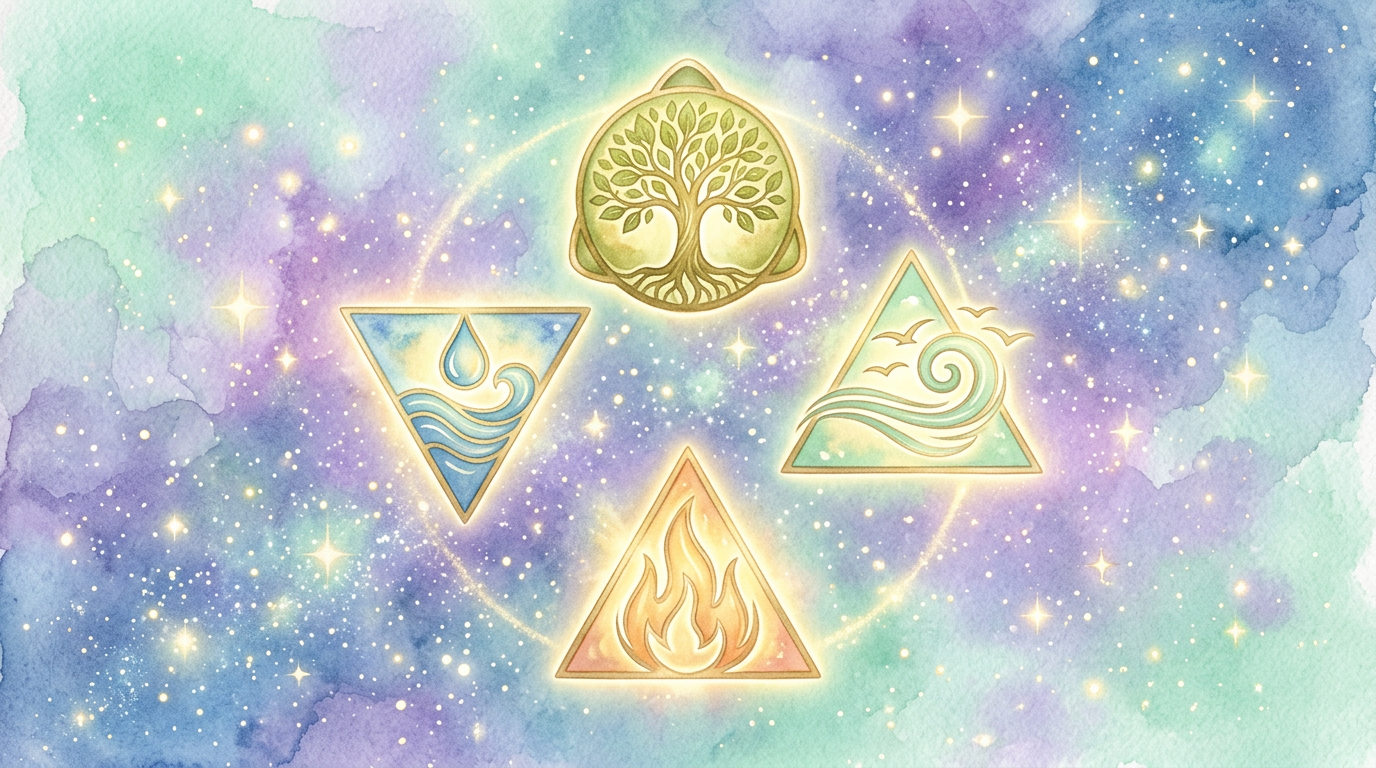
Fire, earth, air, water — you've seen these words scattered across every astrology app, meme, and personality quiz on the internet. But what do they actually mean, and where did they even come from? The short answer: they go way back. As the 2nd-century Hellenistic text Tetrabiblos by Ptolemy documents, the assignment of the twelve zodiac signs to four elements is one of the oldest organizing frameworks in Western astrology.
Okay but first — why four elements?
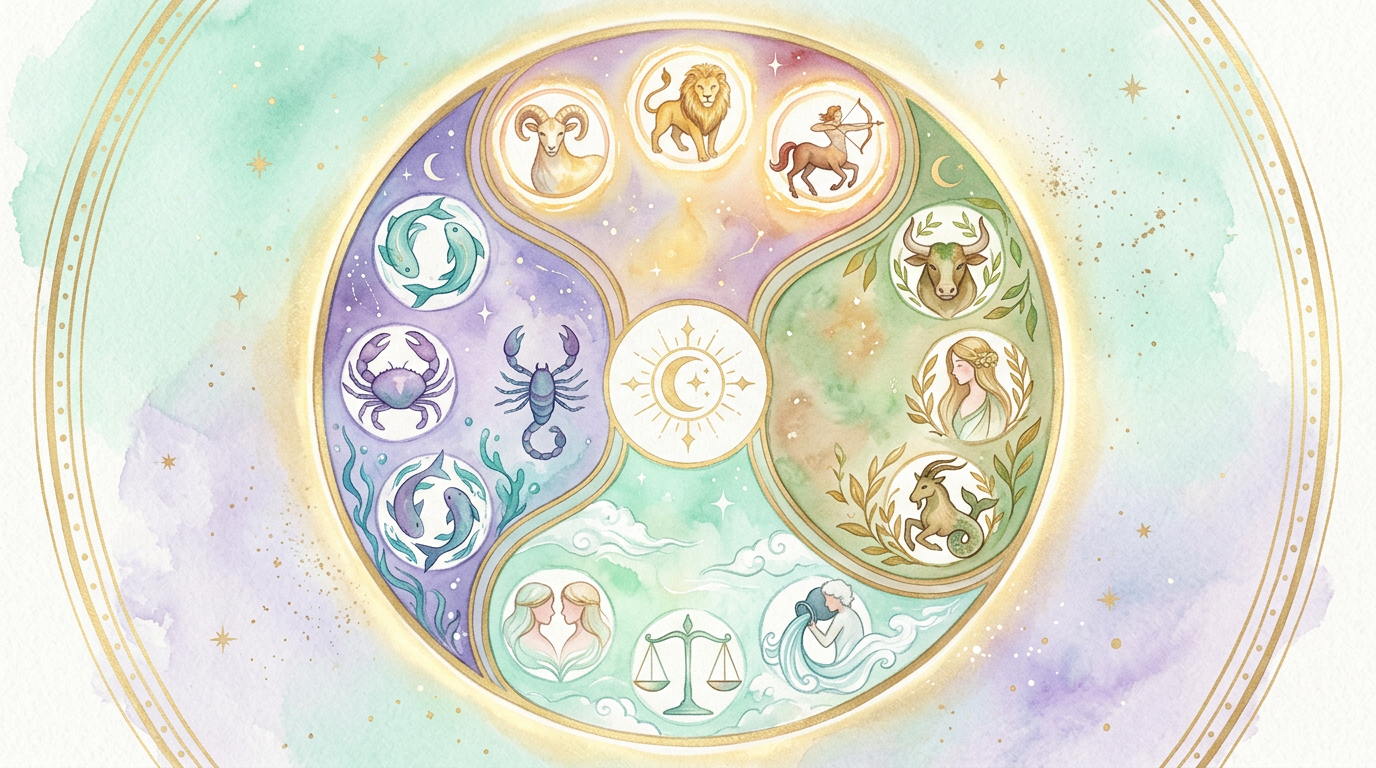
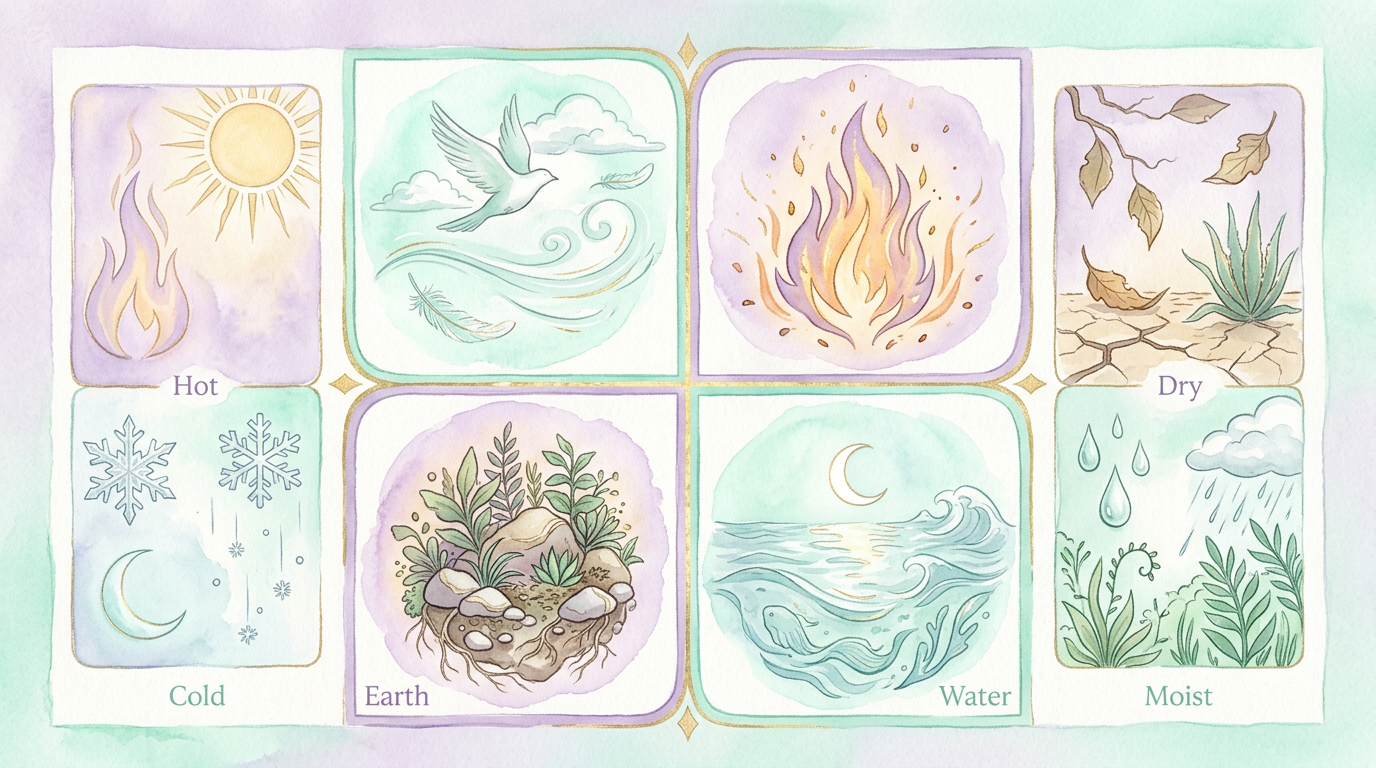
Ptolemy's Tetrabiblos lays out the foundational Hellenistic system in which each of the twelve signs is assigned to one of four elements — fire, earth, air, or water — along with specific qualities associated with each. Think of the elements as the temperament layer underneath everything else in a birth chart. Before you get to your specific sign, you're already grouped into one of these four broad families. It's the zodiac's way of saying: here's your baseline vibe.
So what's each element actually about?
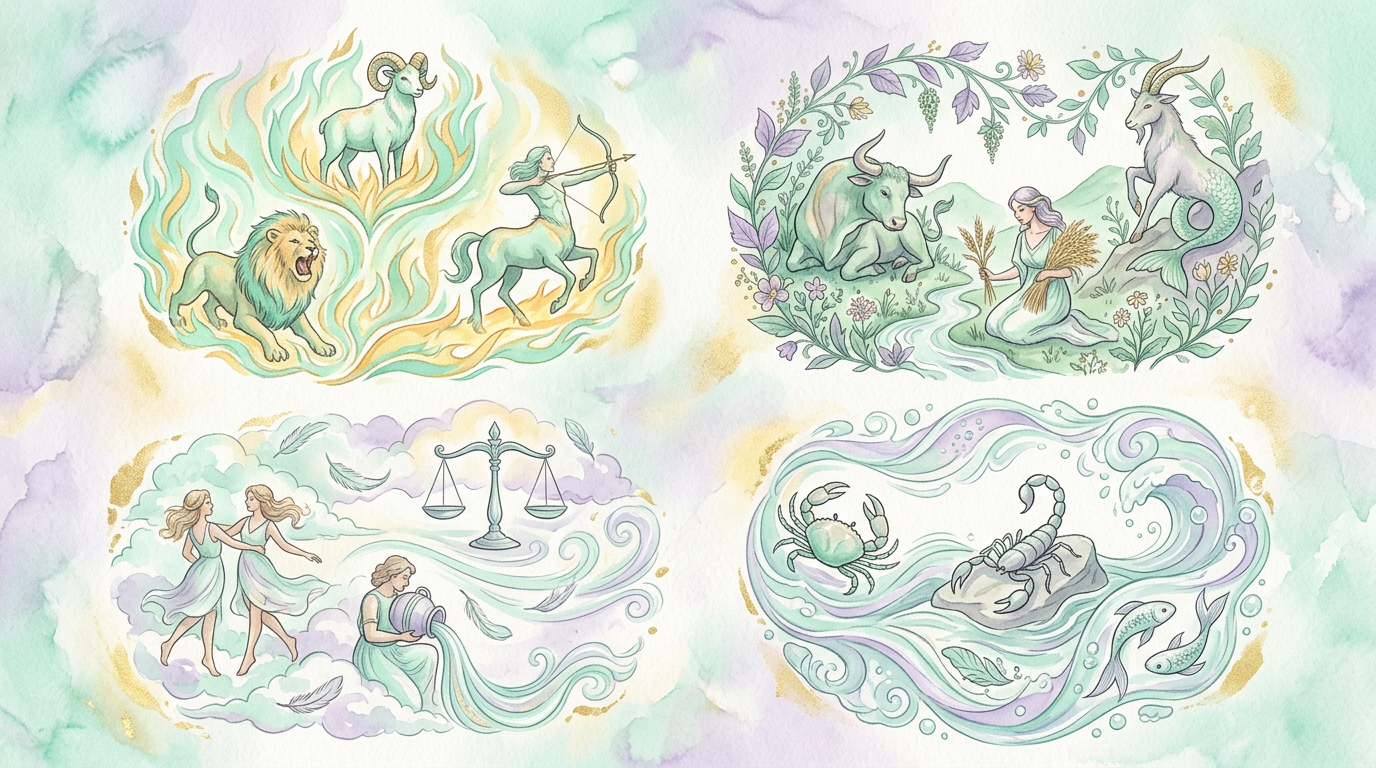
- 🔥 Fire (Aries, Leo, Sagittarius): According to the elemental framework Ptolemy documents, fire signs carry qualities associated with heat and energy. In traditional astrology, fire is the element of action, enthusiasm, and drive. These are the signs that tend to move first and think later — which, honestly, sometimes works out great.
- 🌍 Earth (Taurus, Virgo, Capricorn): Earth signs are grouped around qualities of stability and groundedness in the Hellenistic system. The earth element is traditionally linked to the material world — bodies, resources, the tangible stuff of life. Earth signs are the ones you call when you need someone to actually show up.
- 💨 Air (Gemini, Libra, Aquarius): Air is associated with qualities of movement and connection in Ptolemy's framework. Traditionally, the air element governs ideas, communication, and relationship. Air signs are the ones still texting at 2 a.m. because they just thought of something interesting.
- 💧 Water (Cancer, Scorpio, Pisces): Water signs are grouped around qualities of depth and receptivity in the Hellenistic tradition. The water element is traditionally linked to emotion, intuition, and the inner life. Water signs are the ones who picked up on the vibe in the room before anyone said a word.
Why does this matter for reading your chart?
The element framework matters because it's one of the first lenses astrologers use to read a chart. Ptolemy's Tetrabiblos establishes the element-and-quality system as a foundational layer — meaning your sun sign's element shapes the style in which that sign expresses itself. Two fire signs aren't identical, but they share a family resemblance. Same goes for earth, air, and water.
It also explains why some signs feel instantly familiar to each other. In the traditional framework, signs sharing the same element are considered to have a natural affinity — which is why "what element are you?" is genuinely a useful shortcut when you're trying to figure out why you click (or clash) with someone.
One thing to keep in mind
Astrology — including the elemental system Ptolemy documents — is a rich cultural and philosophical tradition, not a predictive science. The elements are best used as a framework for reflection and self-understanding, not a verdict on who you are or who you'll get along with. Think of them as a really old, really interesting personality lens. Use it for fun, use it for insight, and take the rest with a grain of cosmic salt.
- Ptolemy, Tetrabiblos (2nd century CE) — the foundational Hellenistic text documenting the assignment of the twelve zodiac signs to four elements and their associated qualities.
This article is offered for cultural reflection and entertainment only, not as prediction or personal advice.
Lunaple can walk you through your full birth chart — elements, modalities, and all. Your cosmic blueprint is waiting.
Explore My ChartFor entertainment purposes only. Not a substitute for professional, medical, legal, or financial advice.
← Back to the Journal