
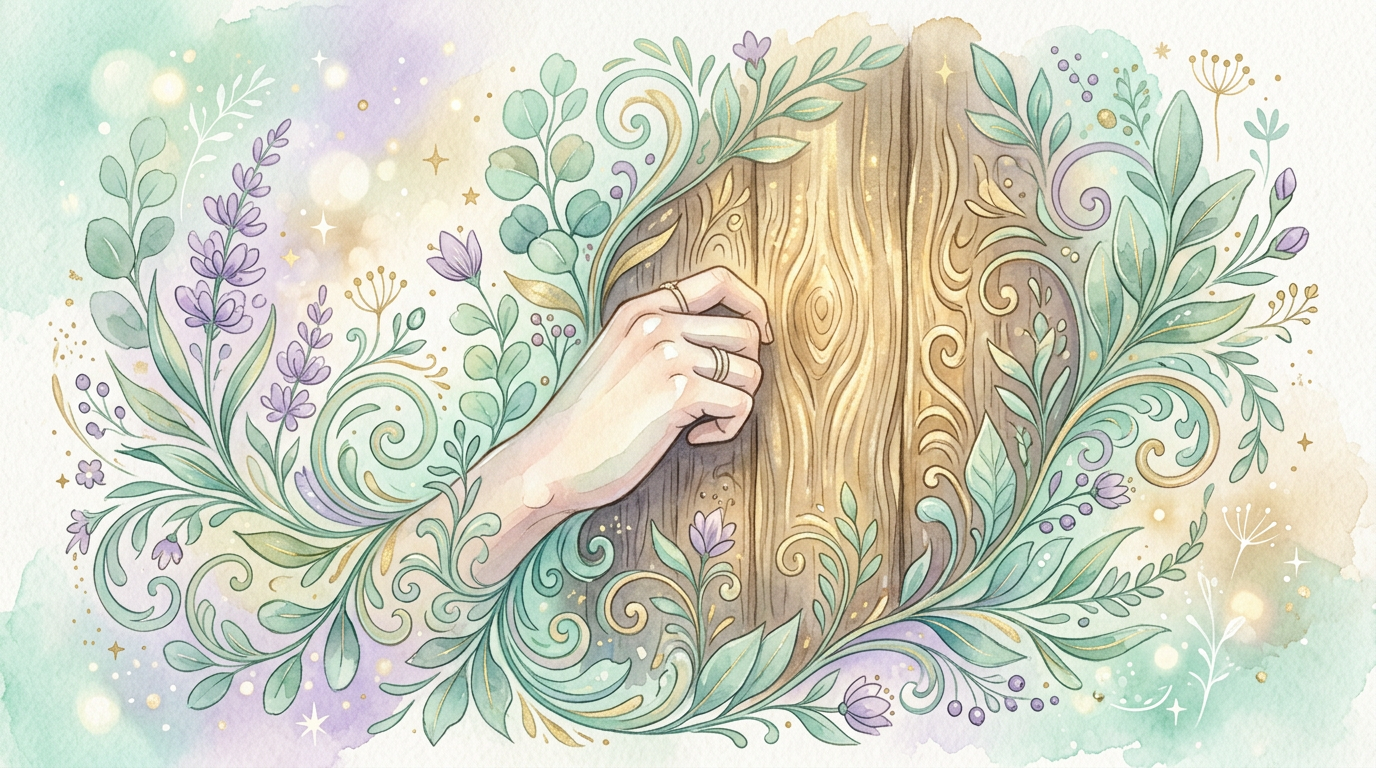
The popular story says knocking on wood goes back to ancient pagans who believed tree spirits lived in the bark. Lovely myth — but according to folklorist Steve Roud and the Oxford English Dictionary, the actual documented origin is far more recent, and involves Victorian children playing a glorified game of tag.
So wait — where does the pagan story even come from?
Nowhere documented, basically. It's the kind of origin story that sounds ancient and therefore gets repeated until it feels like fact. But folklore doesn't work that way. As the Oxford English Dictionary records, the phrase "touch wood" doesn't appear in print until 1898, and "knock on wood" not until 1907. That's not ancient. That's closer to the invention of the telephone.
If tree spirits and druid rituals were really behind this, you'd expect the phrase to show up much, much earlier. It doesn't. That gap matters.
Okay, so what actually happened?
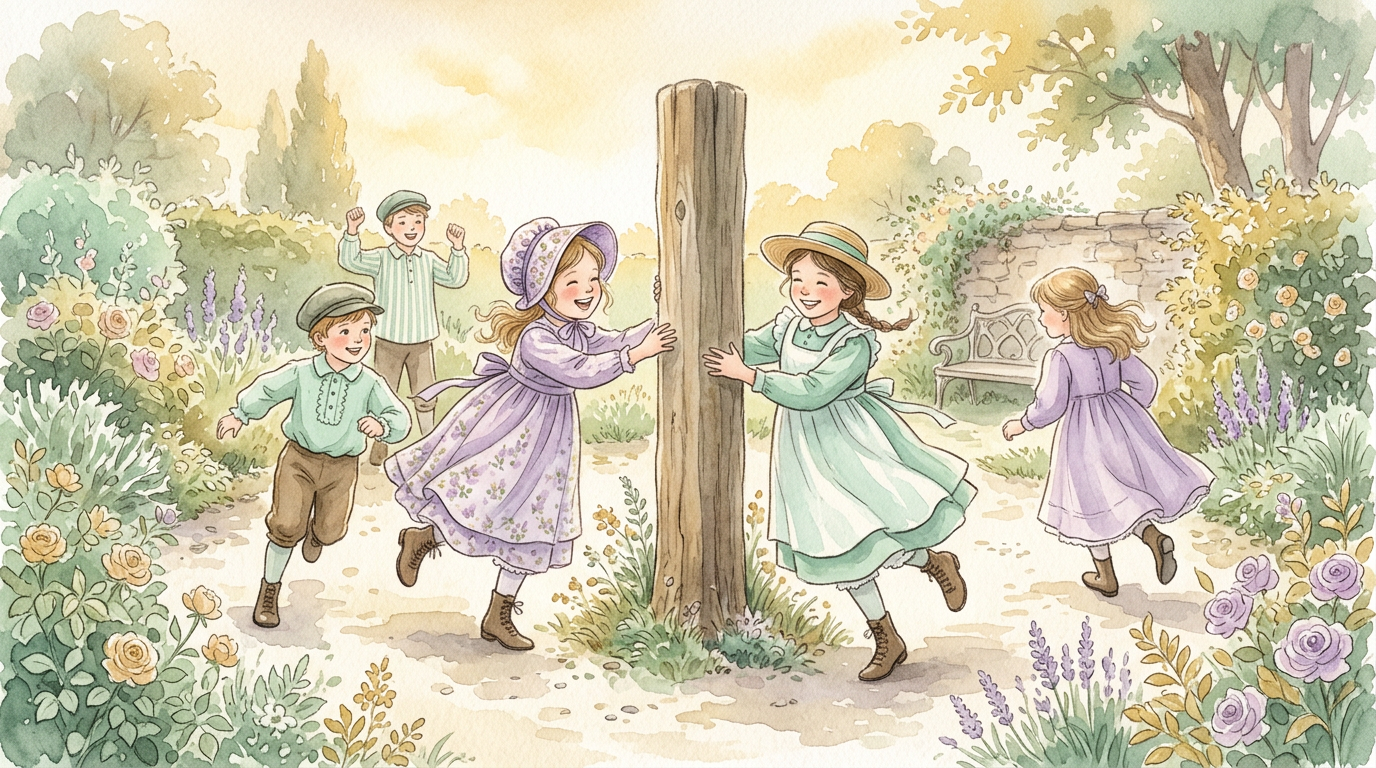
Enter: Tiggy Touchwood. Folklorist Steve Roud argues that this Victorian children's tag game — in which touching a piece of wood made a player safe from being caught — is almost certainly the direct origin of the modern superstitious phrase. You touch the wood, you're safe. Simple as that.
Think about it. The logic maps perfectly. In the game, wood = protection from the thing chasing you. In the superstition, wood = protection from the bad luck you just tempted by saying something too confident out loud. Same instinct, different stakes. (One involves your friend Karen tagging you. The other involves the universe.)
Why does the pagan version keep winning?
Because it's a better story. "Victorian children's tag game" doesn't have the same mystical pull as "ancient forest spirits." Humans are wired to prefer origin stories that feel old and sacred — it gives the ritual more weight. But Roud's research points firmly at the playground, not the sacred grove.
It's also worth noting that just because a tradition is recent doesn't make it meaningless. Plenty of the things we do for comfort — little rituals, small gestures — are modern inventions that filled a very human need. Knocking on wood is one of them.
The takeaway
Next time someone knocks on wood and says "you know, the druids used to do this," you can gently inform them: actually, per the Oxford English Dictionary, the phrase is barely over a century old, and per Steve Roud, it probably started with kids playing tag. Which is, honestly, kind of adorable. The universe's protection system originated on a Victorian playground. Same.
- Steve Roud, folklorist — argument that the children's tag game Tiggy Touchwood is almost certainly the direct origin of the modern superstitious phrase.
- Oxford English Dictionary — first recorded appearances of "touch wood" (1898) and "knock on wood" (1907) in print.
This article is offered for cultural reflection and entertainment only, not as prediction or advice.
From folklore to the stars, Lunaple helps you explore the symbolic patterns in your life — with the same mix of curiosity and good humor. Come take a look.
Explore LunapleFor entertainment purposes only. Not a substitute for professional, medical, legal, or financial advice.
← Back to the Journal