
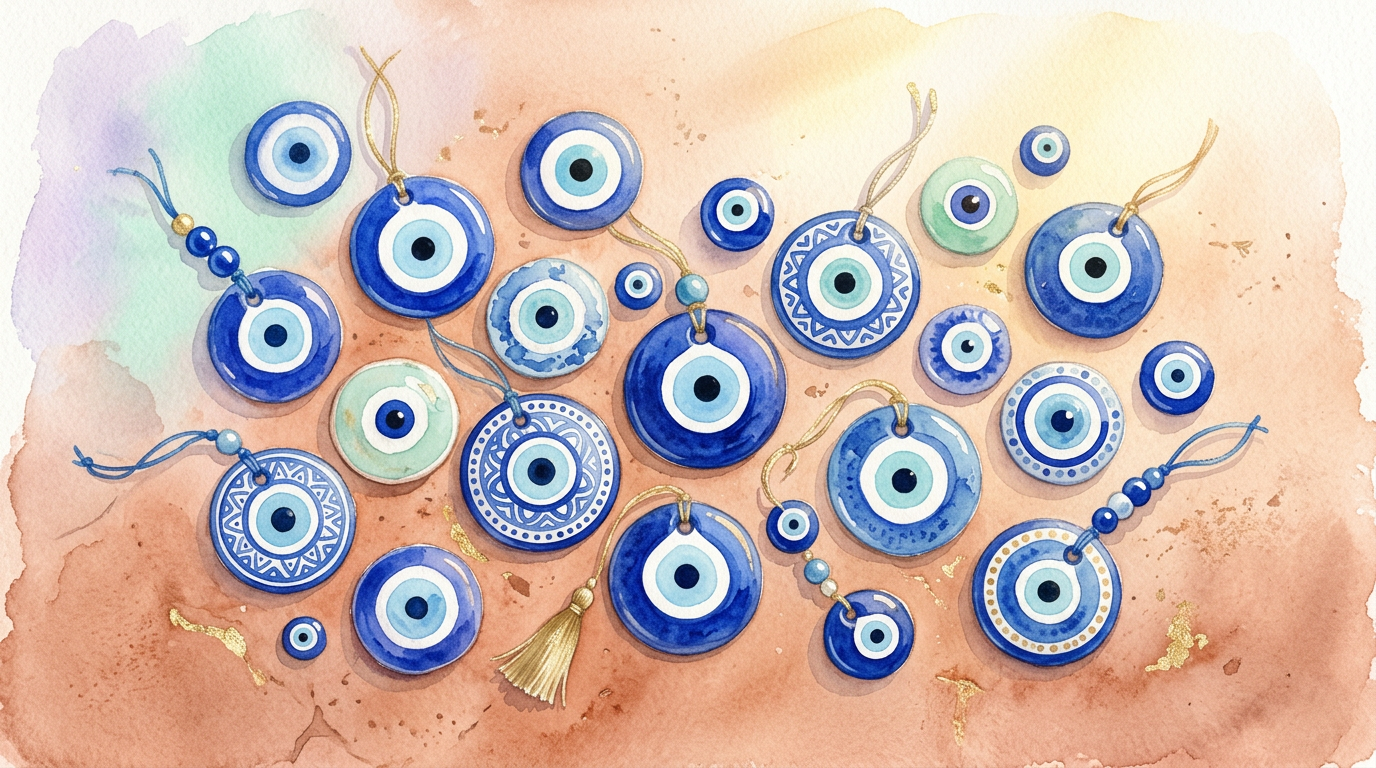
Scholars have traced the evil eye belief across the Mediterranean, the Middle East, South Asia, and Latin America — and according to Alan Dundes's landmark academic collection, it may be one of the most widespread superstitions in human history. One glance, one amulet, one very universal anxiety about envy.
Wait, what actually IS the evil eye belief?
At its core, the tradition holds that an envious or admiring glance — even an unintentional one — can cause real harm to the person, animal, or object on the receiving end. As the historical record of the nazar and mal de ojo traditions documents, this belief appears across the Mediterranean, the Middle East, South Asia, and Latin America, making it one of the rare folk beliefs that genuinely crossed oceans and centuries without losing its essential shape.
The harm is typically thought to fall on whoever is being envied — a healthy baby, a beautiful new home, a run of good luck. Envy, in this worldview, is not just a feeling. It's a force.
So why the blue bead?
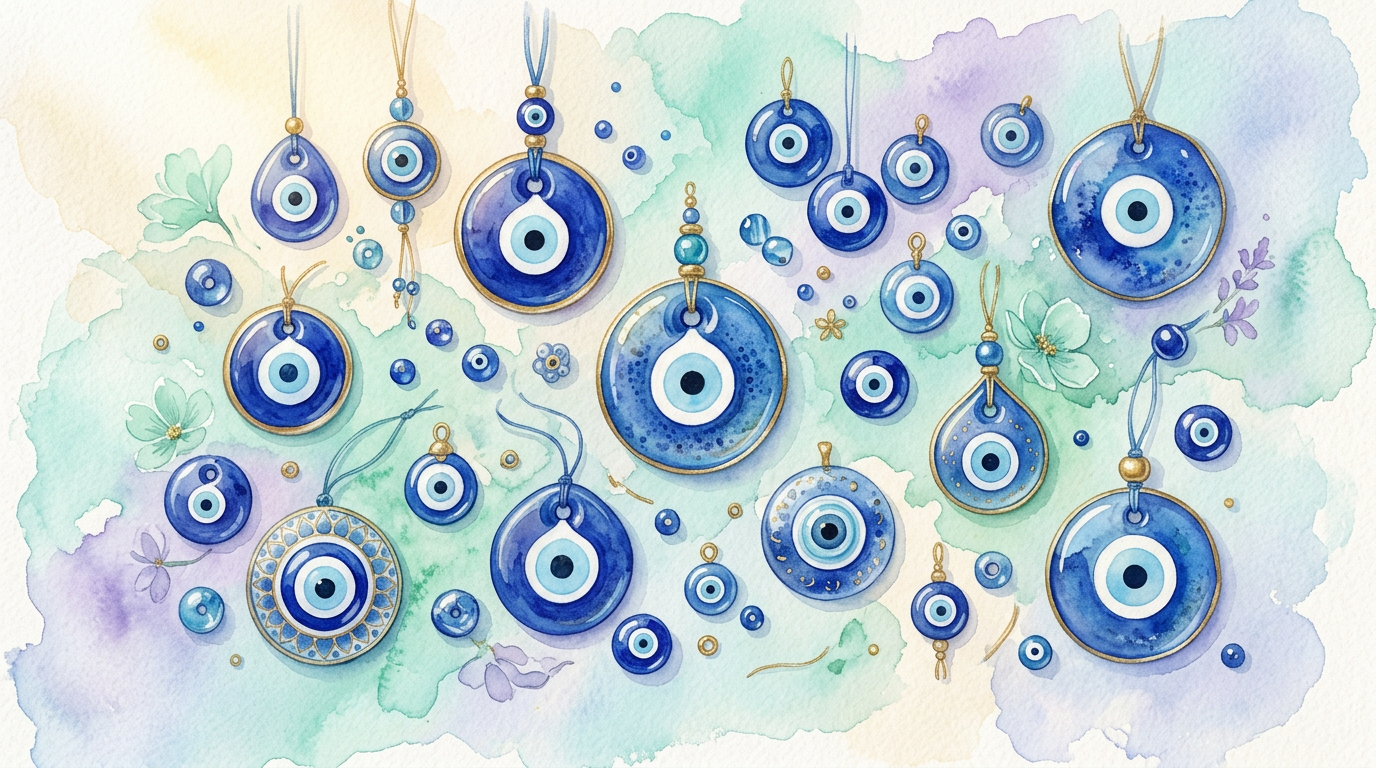
The nazar — that iconic concentric-circle amulet in cobalt and white — is the protective charm most associated with the Turkish and broader Mediterranean tradition. According to the documented nazar and mal de ojo tradition, blue eye amulets are used specifically to ward off the harmful effects of an envious glance. The logic is almost poetic: an eye to defeat an eye.
You'll find them dangling from rearview mirrors in Istanbul, pinned to newborns' blankets in Greece, and hanging in the entryways of homes from Morocco to Mumbai. Same belief, same basic shape, wildly different zip codes.
And the scholarship on this is… serious?
Extremely. Alan Dundes's edited volume, The Evil Eye: A Casebook (University of Wisconsin Press, 1981), is the standard academic reference on the subject — a cross-cultural collection that maps the belief and its protective charms across societies. This isn't fringe stuff. Folklorists, anthropologists, and cultural historians have all taken the evil eye seriously as a window into how humans everywhere process envy, vulnerability, and the fear that being seen too clearly might cost you something.
Dundes's casebook treats the evil eye not as a quirk of one culture but as a recurring human response — which, honestly, makes a lot of sense. Envy is universal. Of course the folklore around it went global too.
Is it still a thing today?
Very much so. The nazar and mal de ojo traditions remain living practices — not museum pieces — in communities across the Mediterranean, Middle East, South Asia, and Latin America. Whether someone wears a nazar bracelet as a genuine protective charm or just thinks it looks cool is, honestly, a question only they can answer. But the belief system behind it is documented, ancient, and still doing its thing.
Frame it as cultural heritage, a beautiful piece of folk wisdom about the weight of envy, or just a really good-looking piece of jewelry. The evil eye doesn't mind. It's been around long enough to handle a little ambiguity.
- Alan Dundes (ed.), The Evil Eye: A Casebook, University of Wisconsin Press, 1981 — the standard scholarly collection on the cross-cultural evil-eye belief and its protective charms.
- The nazar / mal de ojo tradition (Mediterranean, Middle East, South Asia, Latin America) — historical record of the widespread belief that an envious glance can cause harm, and the blue eye amulets used against it.
This article is offered for cultural reflection and folkloric exploration only, not as prediction, medical advice, or statement of supernatural fact.
From ancient folk beliefs to your personal birth chart, Lunaple helps you explore the traditions that have always tried to make sense of the unseen. Your chart is waiting.
Read My ChartFor entertainment purposes only. Not a substitute for professional, medical, legal, or financial advice.
← Back to the Journal