
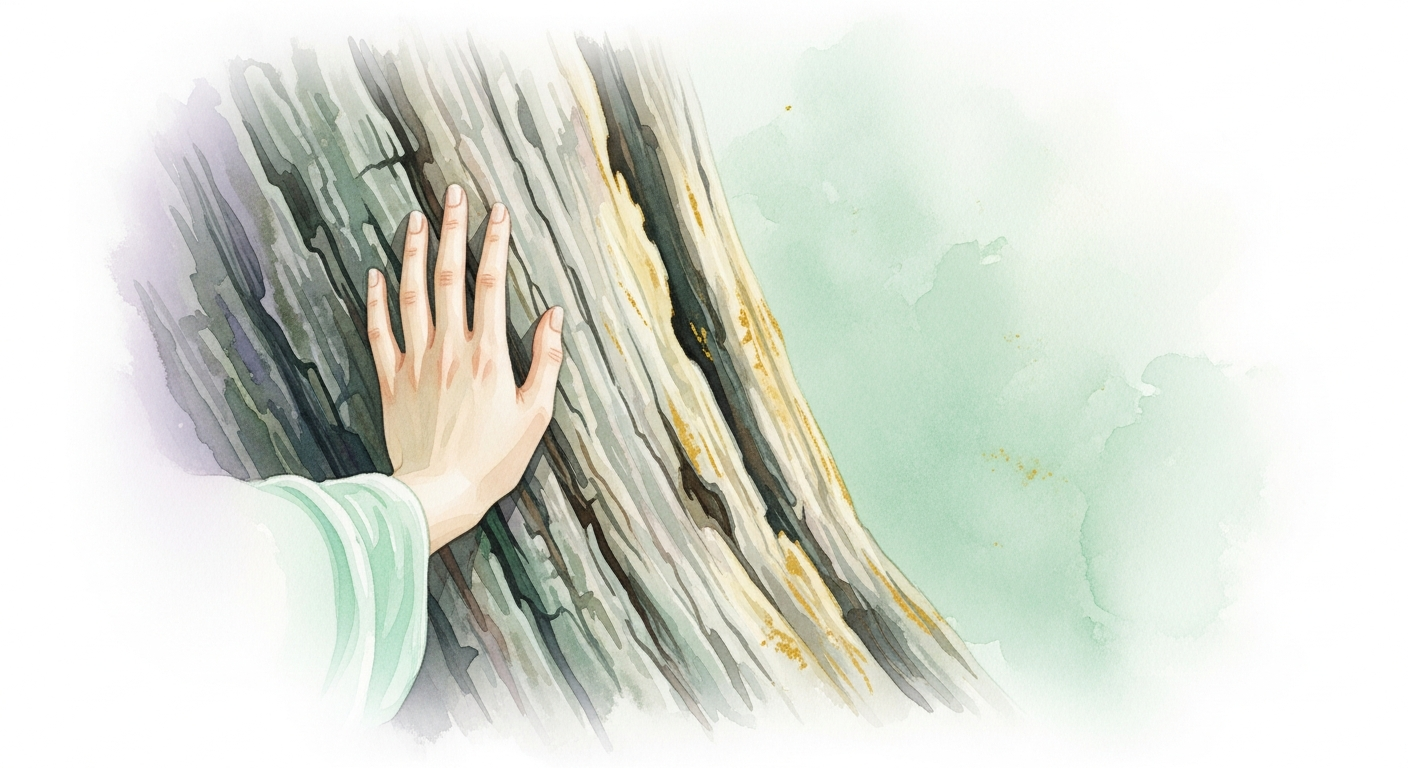
You just said something hopeful out loud — "I haven't been sick all year" — and before you finished the sentence, your knuckles were already drifting toward the nearest table. Knock, knock. You barely noticed you did it.
Almost everyone does this. "Knock on wood" in the US, "touch wood" across the UK and beyond. It's one of those tiny rituals we inherit without ever asking where it came from. So let's actually ask. The honest answer is one of my favorite kinds of answer: nobody is completely sure, and the experts genuinely disagree.
Theory one: the old tree spirits
The most romantic explanation reaches way back, before churches and calendars. Many ancient European cultures believed that spirits, or even gods, lived inside trees. Sir James George Frazer's sprawling 1890s study of myth and ritual, The Golden Bough, documents how widespread tree-worship once was across Europe — certain trees like oak, ash, and hawthorn were treated as sacred and protective.
From there, the popular story goes: maybe people touched or knocked on a tree to wake those spirits, ask for protection, or quietly say "thank you" for a bit of good luck. It's a lovely image. Just know that Frazer was writing about tree-worship in general — he wasn't documenting our exact "knock on wood" habit. That leap is something later storytellers added.

Theory two: the wood of the Cross
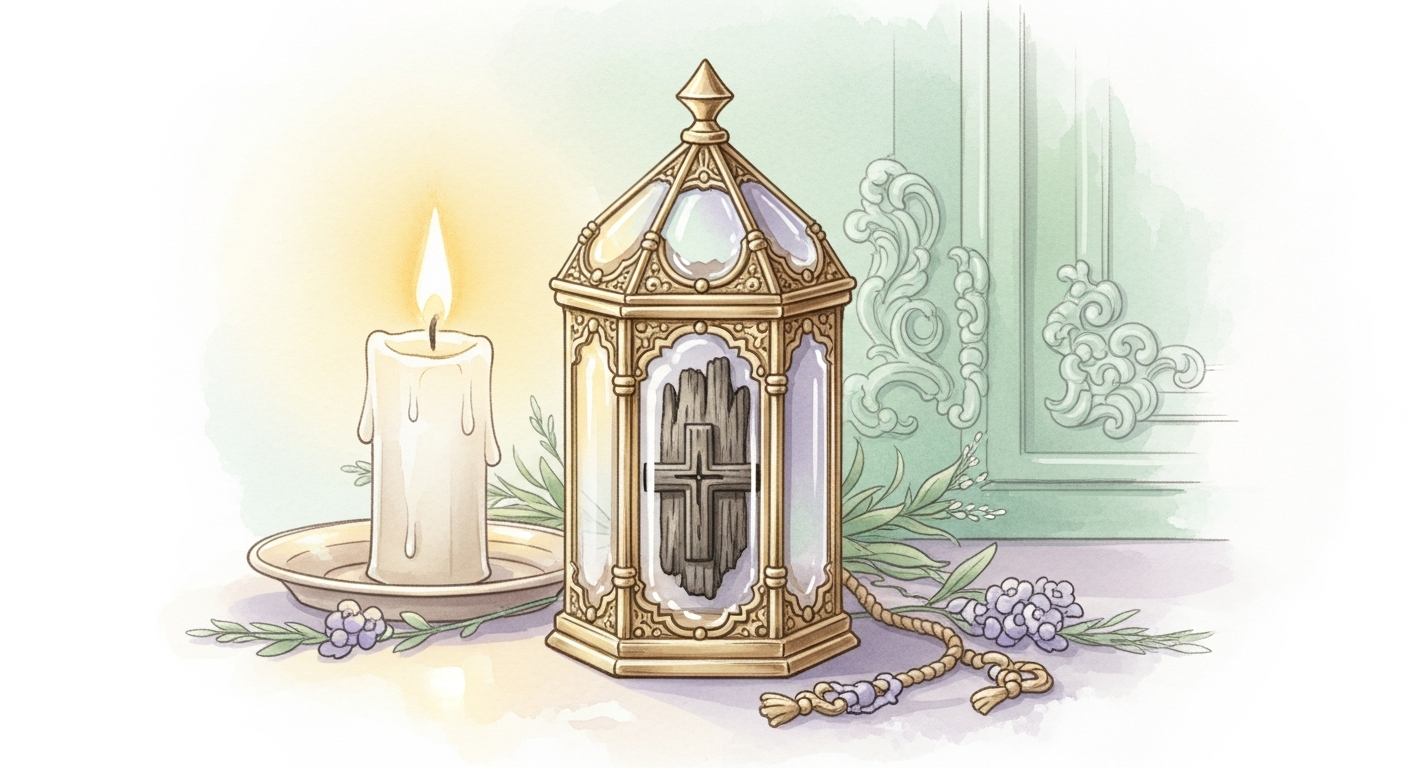
Then there's the Christian version. As Europe shifted from pagan belief to Christianity, the story shifted with it. By the Middle Ages there was a booming trade in holy relics, including fragments said to come from the True Cross — the wood of Jesus' crucifixion. Those wealthy or lucky enough to own a splinter would reportedly touch it for safety and protection.
In this telling, "touch wood" became a way of reaching for that sacred wood, even symbolically. Folklore writer Madeleine D'Este lays out this theory clearly on FolkloreThursday, drawing on academic work by scholars including Carole M. Cusack and Amots Dafni — while being upfront that it's one possibility among several, not a proven fact.
Theory three: a children's game (and the skeptics)
Here's the twist that keeps me humble. Some of the most respected folklorists think both stories above are charming inventions with little hard evidence behind them.
In A Dictionary of English Folklore (Oxford, 2000), folklorists Jacqueline Simpson and Steve Roud point out that there's no documented trace of the "touch wood" custom before the 1800s. The earliest known reference they cite comes from a children's chasing game in R. Anderson's Ballads in the Cumberland Dialect (1805). They link the habit to a playground tag game called "Tiggy Touchwood," where you were safe from being caught as long as you were touching wood. Roud has bluntly called the idea that it goes back to ancient tree spirits "complete nonsense."
So the ritual you do for luck might not be ancient magic at all — it might be a Victorian recess game that grew up.
Why we still don't know for sure
Here's the honest part, and I think it's the best part. We don't actually have a verdict. The deep-history theories are evocative but thin on hard evidence; the playground-game theory has the paper trail but lacks the mystique. As D'Este sums it up: no one knows for sure.
And maybe that's exactly why the gesture survives. It's small, it costs nothing, and it lets us feel like we've nudged fate back into our corner. Whether it descends from tree spirits, the Cross, or a bunch of kids yelling "touchwood" in 1805, the impulse underneath is the same one that's always pulled at us: a little hope, a little protection, a quiet wish that the good things stick around.
Next time your hand drifts toward the table, go ahead and knock. You're in very old, very human company — even if the historians are still arguing about whose company, exactly.
Some questions don't have one settled answer — pull a card and sit with the mystery for a moment.
Ask the CardsFor entertainment purposes only. Not a substitute for professional, medical, legal, or financial advice.
← Back to the Journal