The Wheel of Fortune isn't a threat — it's a reminder. Pull this card and you're not getting a cosmic death sentence; you're getting the oldest philosophy lesson in the Western world, dressed up in ink and gold leaf. And it goes back way further than tarot.
Wait, who invented the spinning wheel of fate?
Credit goes to Boethius, a Roman philosopher writing around 524 CE in his The Consolation of Philosophy. His concept — the Rota Fortunae, or Wheel of Fortune — imagines Lady Fortune herself turning a great wheel that raises people up and then, inevitably, brings them back down. No one stays at the top. No one stays at the bottom. The wheel just… keeps spinning. It's bleak and weirdly comforting at the same time, which is very much the energy of someone writing philosophy while awaiting execution. (Boethius was, in fact, awaiting execution. Same, buddy.)
This idea became one of the defining images of medieval thought — a cultural shorthand for the unpredictability of worldly success. Kingdoms rise. Kingdoms fall. The wheel doesn't care.
So how did it become a tarot card?
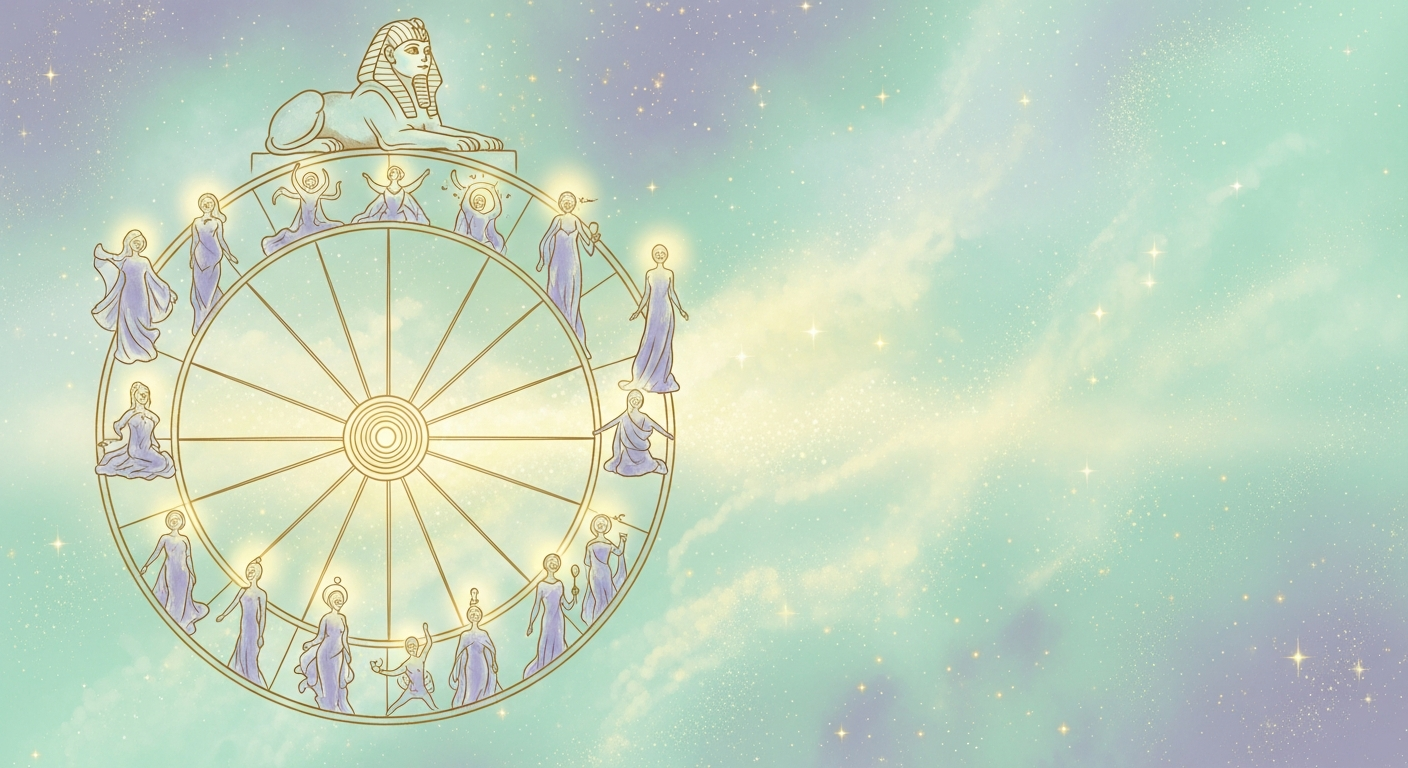
Fast-forward to the early twentieth century, and A. E. Waite is designing what would become the most influential tarot deck in the English-speaking world. In The Pictorial Key to the Tarot (1911), Waite describes Major Arcana X — The Wheel of Fortune — in layered, almost puzzle-like terms. There's the wheel itself, a sphinx seated at the top, and the letters T-A-R-O and R-O-T-A arranged around the rim. Rota is Latin for "wheel." The echo of Boethius is not subtle.
Waite's divinatory meanings for the card include destiny, fortune, and the idea of things being in motion — not fixed, not final, but turning. The sphinx at the top, stable while everything else rotates, is the card's quiet suggestion: there's something that doesn't get swept away by the cycle, if you can find it.
Cycles, not doom — here's why that matters
Both Boethius and Waite are pointing at the same thing from different centuries: the wheel is not punishment. It's just the nature of things. Boethius's Lady Fortune doesn't spin the wheel at you — she spins it because that's what wheels do. Waite's card doesn't predict disaster; it marks a moment of change, of motion, of something shifting.
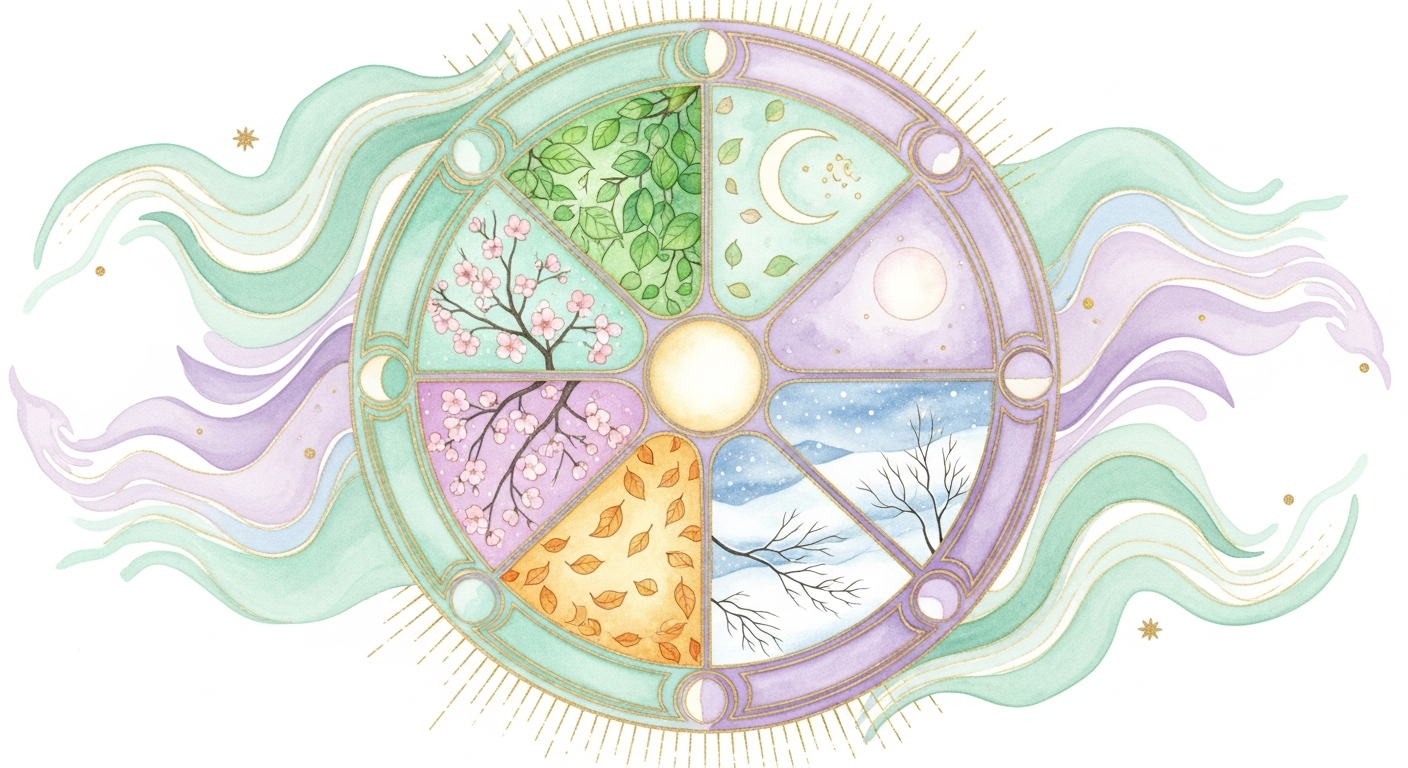
That reframe is genuinely useful. When you're in a low point, the wheel reminds you the spin continues. When you're at a high point, it's a gentle heads-up not to grip too tight. It's less "your luck is changing" and more "change is the only constant" — which, honestly, is better advice than most things on the internet.
So the next time The Wheel of Fortune lands in a reading, think of it less as a verdict and more as a very old philosopher tapping you on the shoulder. The wheel was turning long before you got here. It'll keep turning. You're just somewhere on the rim right now — and that's okay.
- A. E. Waite, The Pictorial Key to the Tarot (1911) — primary source for the card's imagery, symbolism (the sphinx, the letters TARO/ROTA), and divinatory meanings.
- Boethius, The Consolation of Philosophy (c. 524 CE) — source for the medieval Rota Fortunae, Lady Fortune, and the philosophical framework of the rising-and-falling wheel.
This article is offered for cultural reflection and entertainment only, not as prediction or advice.
Lunaple's readings use the full Major Arcana to help you reflect on where you are in the cycle — not to predict the future, but to help you navigate it. Give it a spin.
Explore Your ReadingFor entertainment purposes only. Not a substitute for professional, medical, legal, or financial advice.
← Back to the Journal