
The reason people hang horseshoes over their doors isn't just a fuzzy 'good vibes' tradition — according to the traditional English legend, it's a binding contract with the Devil, negotiated by a saint who had a hammer and zero chill.
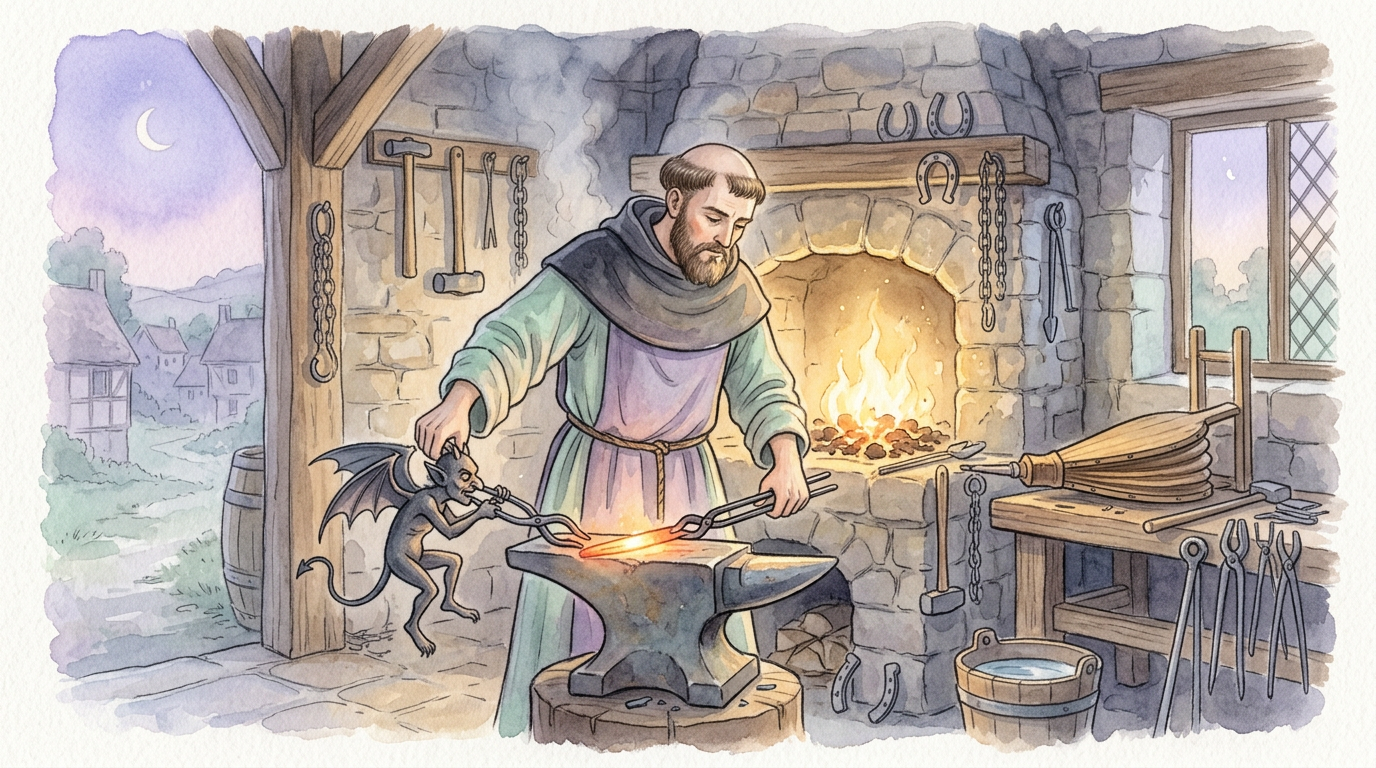
Okay, so who is St. Dunstan and why was he shoeing the Devil?
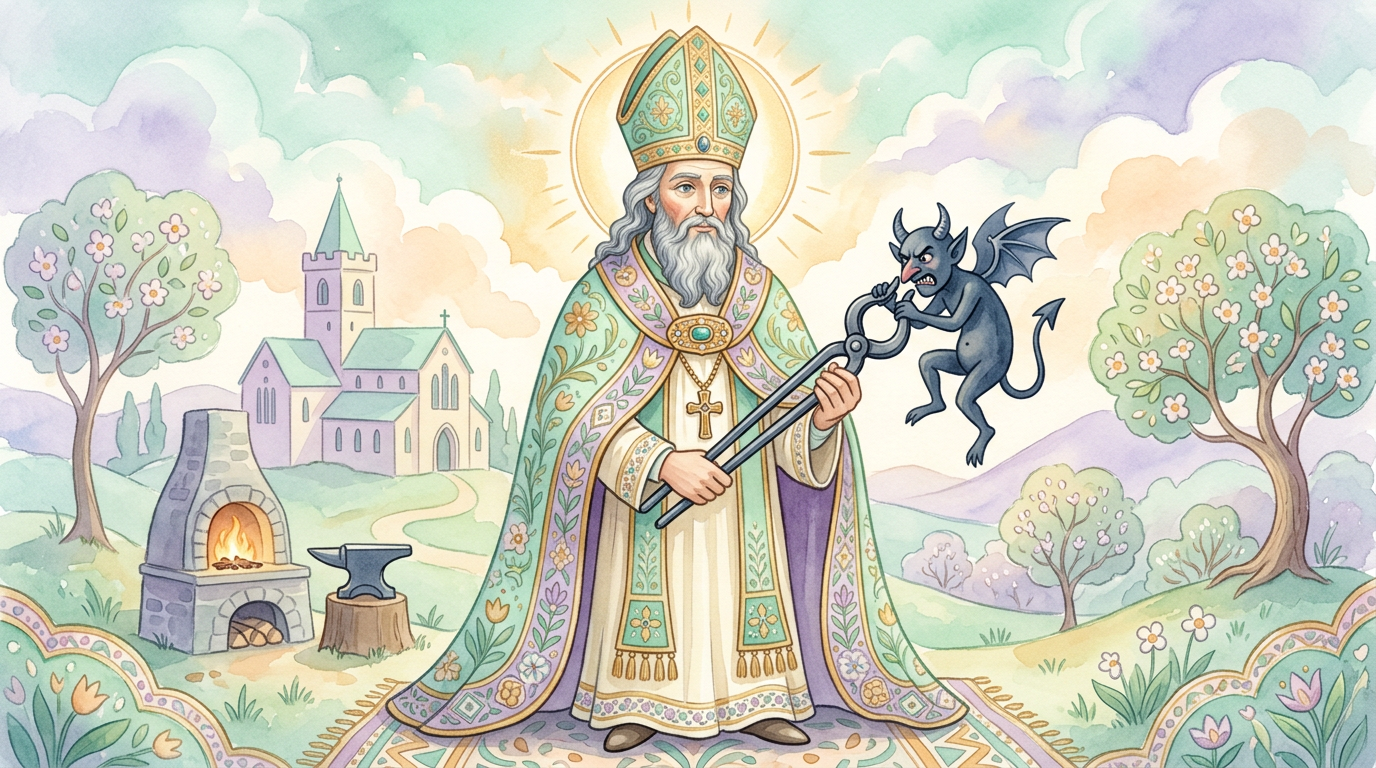
The traditional English legend centers on St. Dunstan (909–988 CE), who would go on to become Archbishop of Canterbury — but who, according to the story, also worked as a blacksmith. One day, the Devil showed up at his forge. Maybe he wanted custom work done. Maybe he underestimated the guy with the tongs. Either way, it did not go well for him.
According to the legend, Dunstan recognized his visitor and proceeded to shoe the Devil's hoof — painfully. We're talking a full, deliberate, this-is-going-to-hurt nailing of an iron horseshoe onto an actual demonic hoof. The Devil, understandably, was not having it.
So how does a screaming devil become a lucky charm?
Here's where the legend gets contractual. Dunstan only agreed to release the Devil from his very bad afternoon on one condition: a sworn promise never to enter any home that had a horseshoe displayed over its door. The Devil, presumably in significant pain, agreed.
And that, according to the traditional English legend, is why the horseshoe became a protective symbol. It's not about luck in the abstract — it's a no-entry sign backed by a deal the Devil himself made. The iron, the shape, the door placement: all of it traces back to that one extremely specific negotiation.
Wait, does the direction it hangs actually matter?
You've probably seen the debate: points up (to hold the luck in) versus points down (to pour the luck out). The traditional English legend as recorded doesn't actually settle this one — it just says a horseshoe over the door is enough to keep the Devil out. So honestly? Hang it however you like. The contract doesn't have fine print about orientation.
Why does this legend hit different than the vague versions?
Most lucky-charm origin stories are frustratingly fuzzy — lost to time, attributed to "ancient peoples," impossible to pin down. The Dunstan legend is the opposite: a named person (Archbishop of Canterbury, 909–988 CE), a named adversary, a specific profession, a specific act, and a specific promise. It's folklore, yes — but it's detailed folklore, which is exactly why it survived a thousand years and is still the go-to explanation in the traditional English record.
Next time someone asks why there's a horseshoe over the door, you now have the full story. A saint, a forge, a very bad day for the Devil, and a deal that — according to legend — is still technically in effect.
- Traditional English legend of St. Dunstan, Archbishop of Canterbury (909–988 CE), and the Devil [historical-record] — the documented folk legend in which Dunstan, working as a blacksmith, painfully shod the Devil's hoof and released him only after extracting a promise never to enter a home with a horseshoe over its door.
This article explores folklore and legend for cultural reflection and entertainment only — it is not offered as historical fact or prediction of any kind.
If a thousand-year-old legend can have this much personality, imagine what your birth chart has been holding onto. Explore your cosmic profile on Lunaple.
Read My ChartFor entertainment purposes only. Not a substitute for professional, medical, legal, or financial advice.
← Back to the Journal