
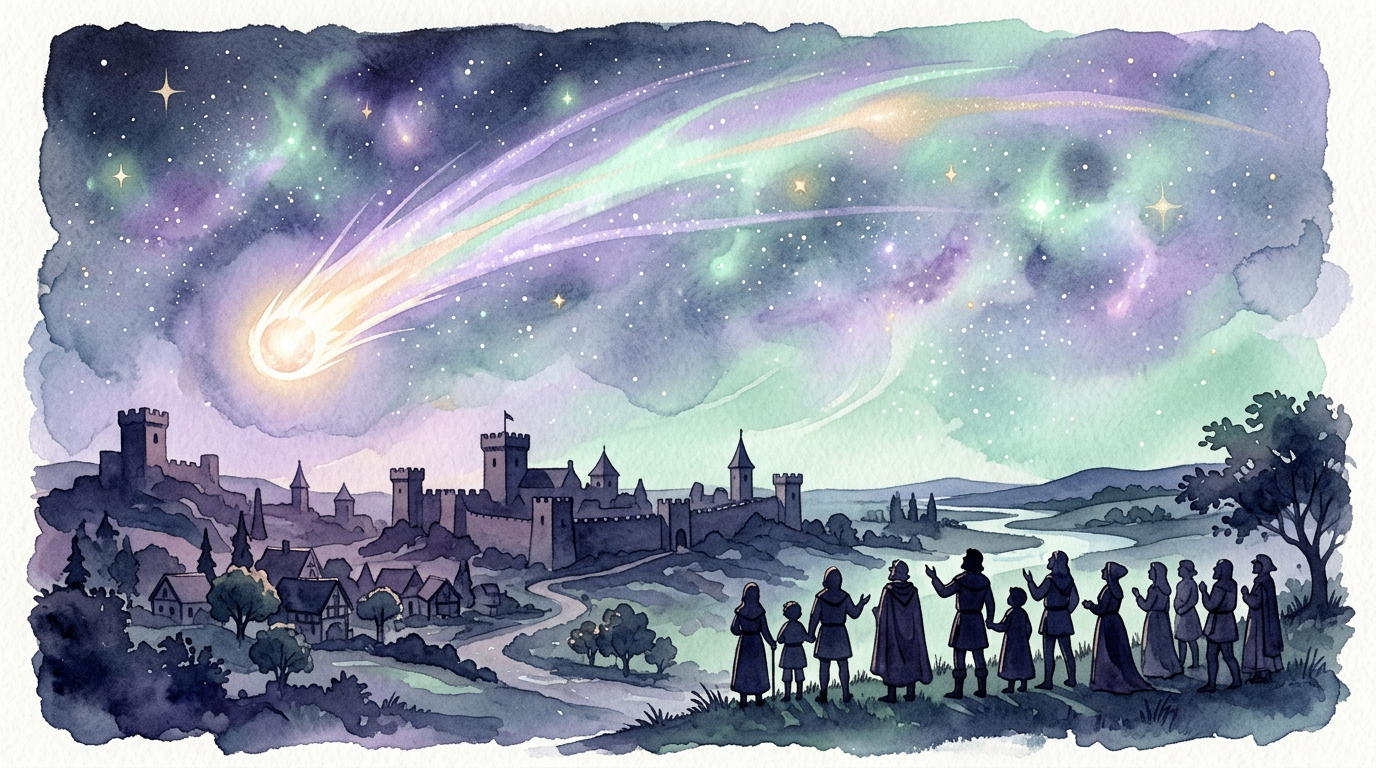
For most of human history, a comet in the sky wasn't a cool space fact — it was a warning. Kings trembled. Armies panicked. Chroniclers sharpened their quills. Then one stubborn astronomer did the math and ruined the mystique forever (sort of).
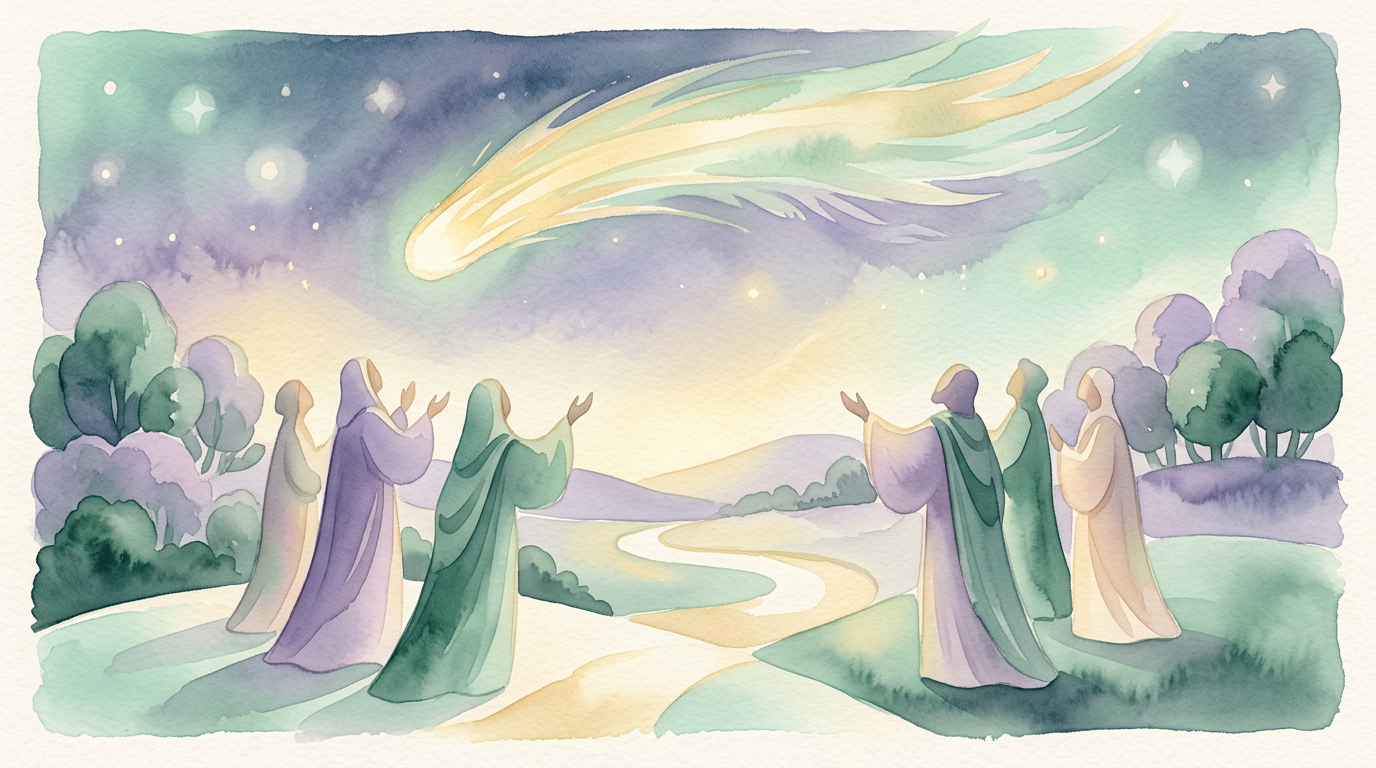
Wait, there's literally a comet embroidered into a medieval tapestry?
Yes, and it's as dramatic as it sounds. The Bayeux Tapestry — the 11th-century embroidered record of the Norman Conquest — depicts the 1066 apparition of Halley's Comet right before the Battle of Hastings. The Latin caption stitched alongside it reads Isti mirant stella: "these men wonder at the star." Below the comet, a crowd of figures stares upward in visible alarm, while King Harold sits on his throne looking like he already knows it's not going to be a great year. Spoiler: it wasn't. The tapestry frames the comet as a clear omen of the upheaval to come — not a coincidence, not a curiosity, but a sign.
And China had a whole comet field guide?
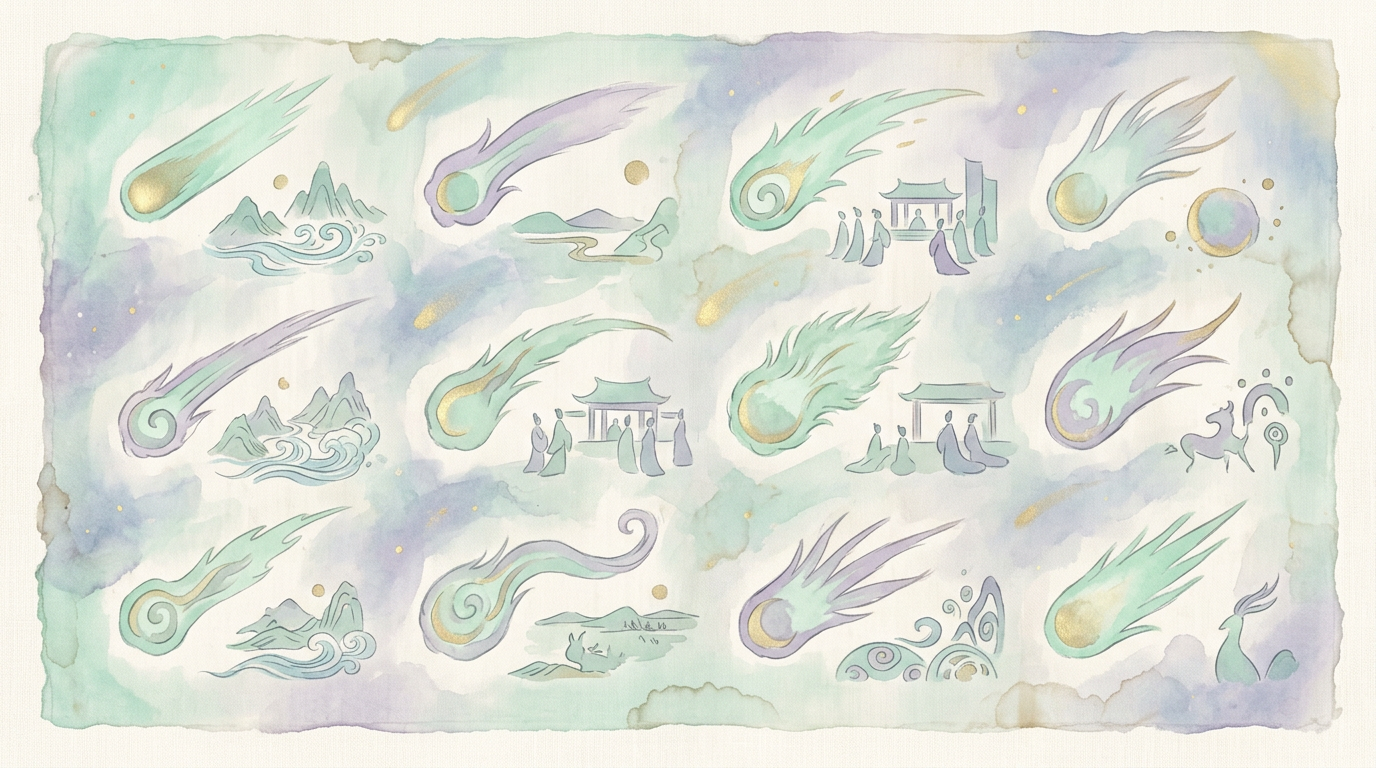
Centuries earlier and thousands of miles away, someone in Han-dynasty China was doing the same thing — just with more organizational energy. The Mawangdui silk comet atlas, a manuscript dating to around the 2nd century BCE, catalogues different comet shapes and records the kinds of events each type was thought to foretell. It's essentially an ancient omen reference book, cross-referencing celestial appearances with earthly consequences. The fact that it existed at all tells you how seriously the sky was being watched — and how badly people wanted a system for reading it.
So when did comets stop being omens and start being... science?
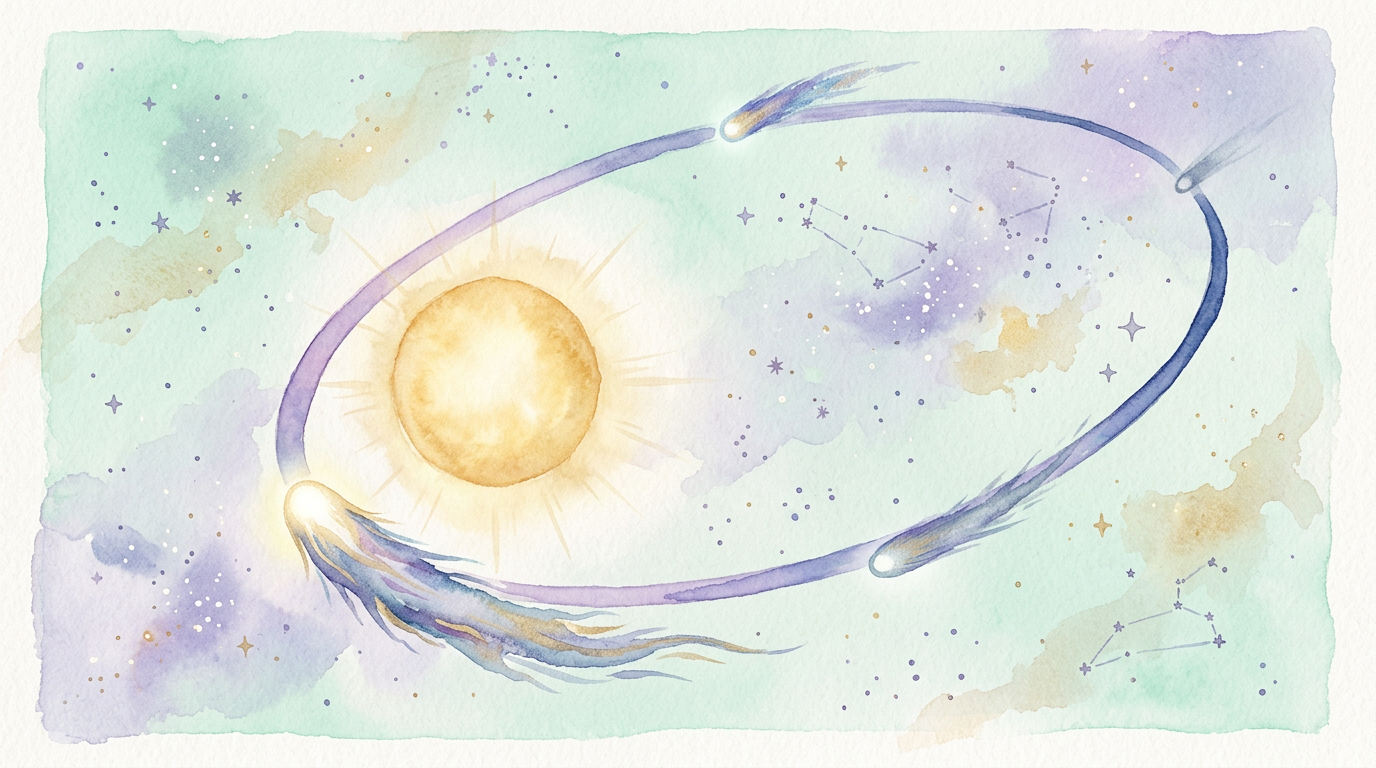
That shift has a very specific name attached to it: Edmond Halley. In his 1705 paper A Synopsis of the Astronomy of Comets, Halley proposed that the comet observed in 1682 was the same object that had appeared before — and that it would return again on a predictable schedule. He was applying orbital mechanics to something people had always experienced as random and terrifying. A comet wasn't a message from the cosmos aimed at your king. It was a rock on a path, following rules, coming back around.
That reframe is genuinely radical. For millennia, the unpredictability of comets was the whole point — they showed up unannounced, blazed across the sky, and vanished. That randomness made them feel intentional, like they were for something. Halley's prediction didn't erase the wonder, but it did dissolve the dread. (Mostly. Comet panic made a comeback as recently as 1910, but that's a story for another day.)
So what do we do with all of this?
Here's what's genuinely interesting: the Bayeux Tapestry, the Mawangdui atlas, and Halley's paper are all doing the same thing — trying to make sense of something sudden and bright in the sky. The tools changed. The impulse didn't. Humans see a comet and immediately ask: what does this mean? That question didn't stop being asked in 1705. It just got better answers. And honestly? Wondering at the star — Isti mirant stella — still feels like the right response.
- The Bayeux Tapestry (11th century). Historical record depicting the 1066 apparition of Halley's Comet and the inscription Isti mirant stella as an omen before the Battle of Hastings.
- Mawangdui silk comet atlas (Han dynasty, c. 2nd century BCE). Ancient Chinese manuscript cataloguing comet shapes and the events each was thought to foretell.
- Edmond Halley, A Synopsis of the Astronomy of Comets (1705). Halley's prediction that the 1682 comet would return, marking the shift from omen to orbital science.
All content is offered for cultural reflection and historical curiosity, not as prediction or prophecy.
Humans have been reading the heavens for thousands of years. Lunaple can help you explore what your own chart has to say — no dread required.
Read My ChartFor entertainment purposes only. Not a substitute for professional, medical, legal, or financial advice.
← Back to the Journal