
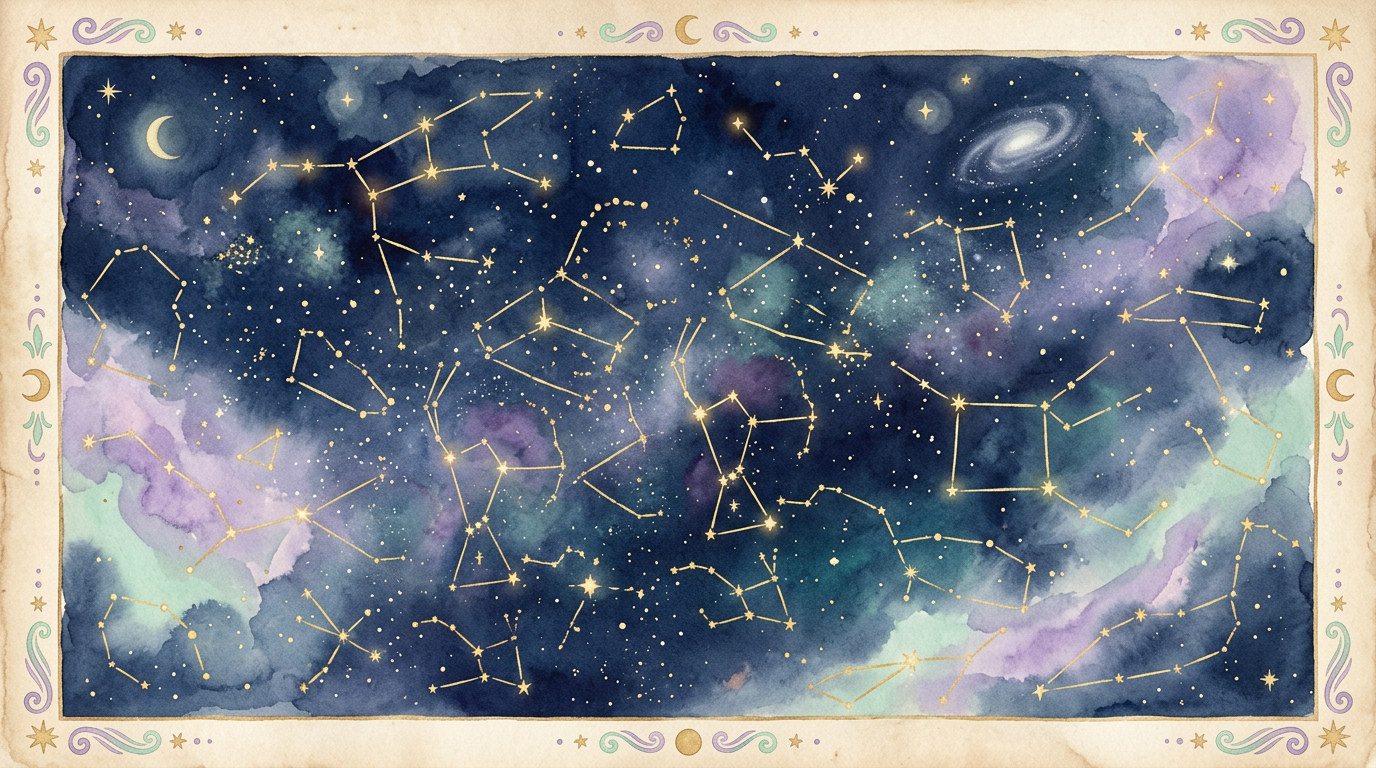
The night sky has exactly 88 official constellations — and that number didn't fall from the heavens. According to the International Astronomical Union (IAU), it was locked in during the 1920s and 1930s by a Belgian astronomer with a very precise pen. But the story starts almost two thousand years earlier.
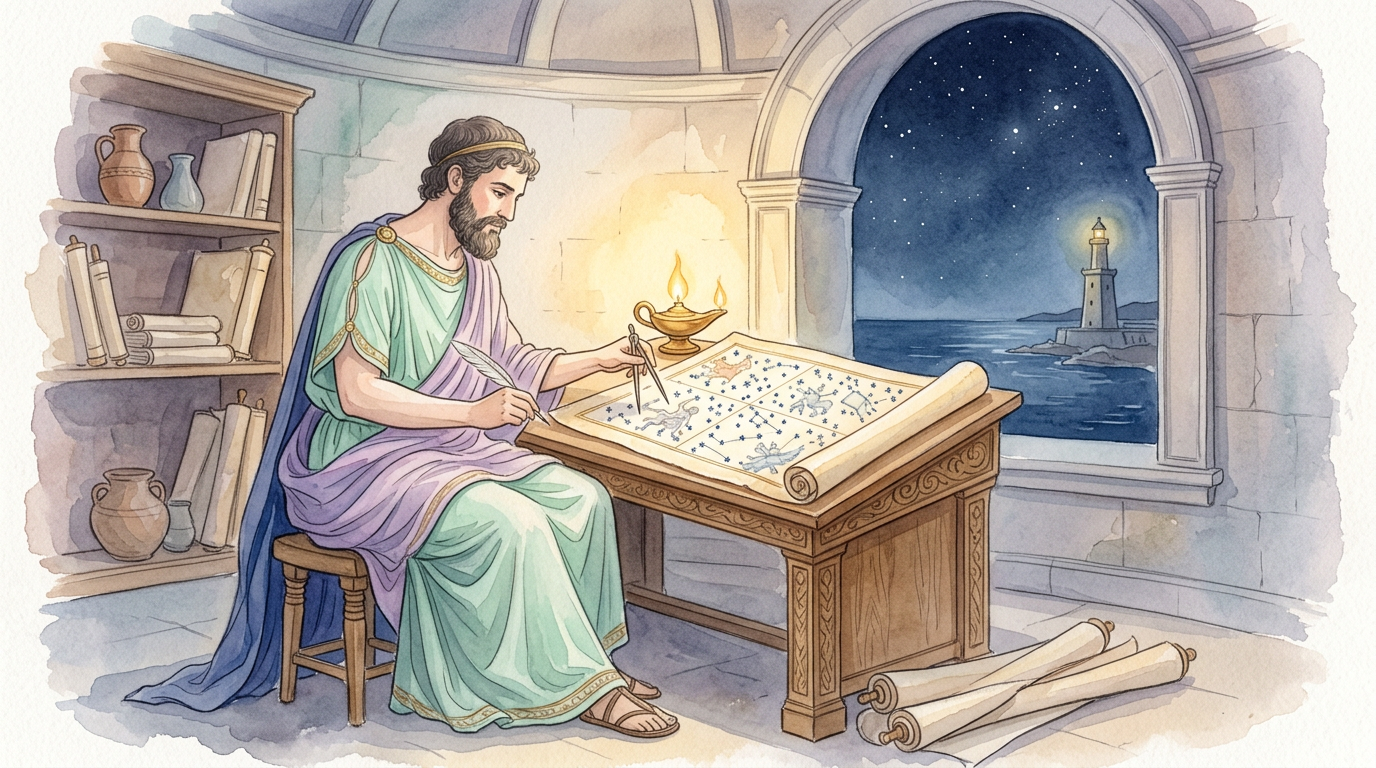
Wait, so who built the original list?
Credit goes to Claudius Ptolemy, the 2nd-century CE Greek-Egyptian astronomer whose landmark work Almagest catalogued 48 constellations that anchored Western star lore for over a millennium. We're talking a single text holding the sky together for more than a thousand years. That's a legacy most of us can only dream of.
And Ptolemy wasn't working in a vacuum. Centuries before him, the Greek poet Aratus wrote Phaenomena (3rd century BCE) — an early poem that popularized the constellations and wove their myths into something the general public could actually enjoy. Think of Aratus as the person who made star lore go viral, and Ptolemy as the one who filed the paperwork.
So where did the other 40 constellations come from?
As European explorers sailed into the Southern Hemisphere between the 15th and 18th centuries, they encountered huge swaths of sky that Ptolemy's Mediterranean gaze had never seen. New star patterns got named — telescopes, compasses, exotic birds — and different astronomers proposed different groupings. By the early 20th century, the sky was a patchwork of overlapping, contested, and frankly chaotic star territories. Relatable, honestly.
So the IAU just… drew lines?
Essentially, yes — and it was the right call. The International Astronomical Union first adopted a list of 88 official constellations in 1922, and then in 1930, Belgian astronomer Eugène Delporte drew precise, fixed boundaries for every single one of them. No more fuzzy edges. No more arguments about which star belonged to which pattern. Every point in the sky now falls inside exactly one constellation's territory.
Ptolemy's original 48 survived the cut — his framework was simply too foundational to discard. The IAU built the modern 88 on top of it, folding in the Southern Hemisphere additions and standardizing the whole system. According to the IAU, those boundaries have been official ever since.

Why does any of this matter for astrology?
Here's where it gets interesting: the 88 IAU constellations are an astronomical system — a practical map for scientists locating objects in the sky. Astrology's twelve zodiac signs are a separate, older tradition with their own cultural roots (and their own fascinating history). The constellations and the zodiac signs share names and mythology, but they're not the same thing. One is a coordinate grid; the other is a symbolic language. Both are worth knowing.
So next time someone asks you why there are 88 constellations, you've got the full receipts: a Greek poet made the myths sing, Ptolemy made the catalogue, explorers expanded the map, and Delporte drew the lines. The sky is a group project — just a very, very old one.
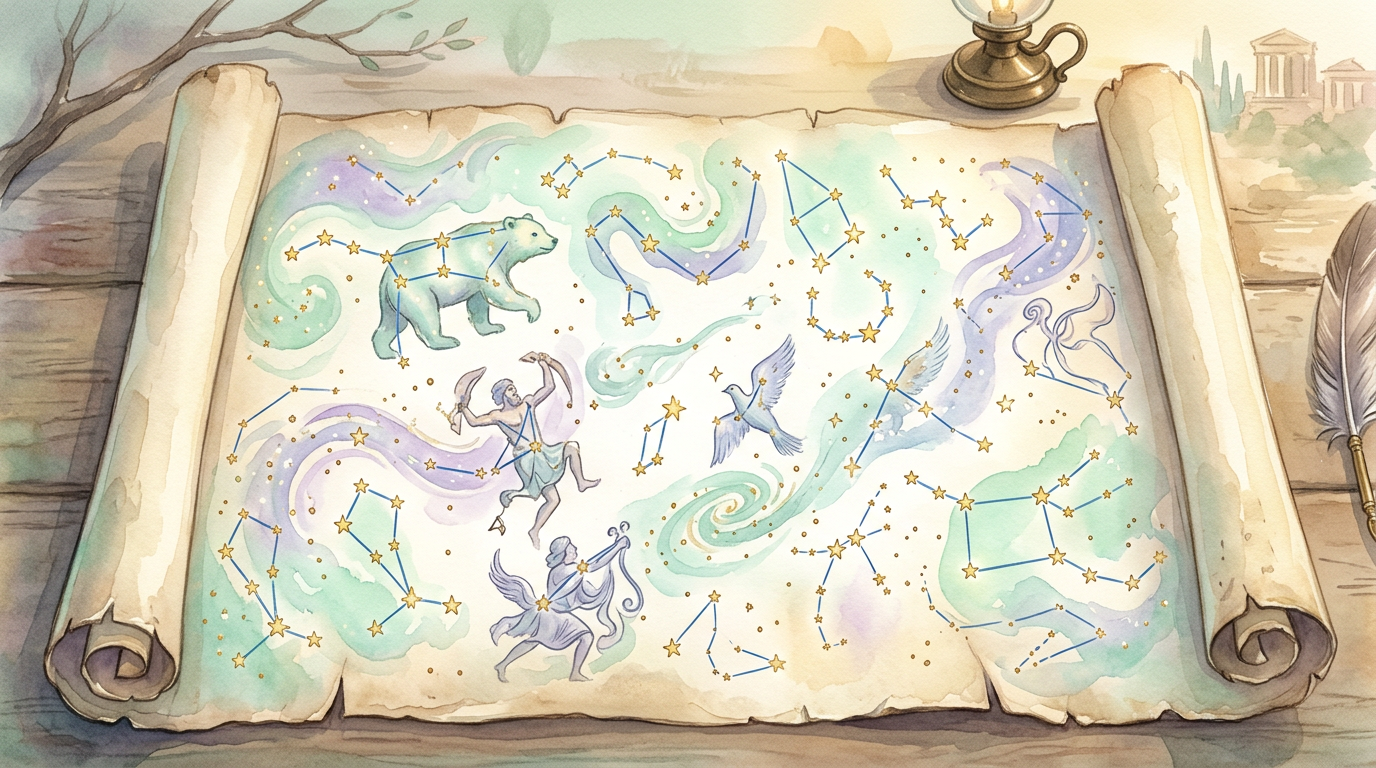
- Ptolemy, Almagest (2nd century CE) — the foundational catalogue of 48 classical constellations that shaped Western astronomy for over a millennium.
- International Astronomical Union (IAU), official constellation boundaries (adopted 1922; boundaries drawn by Eugène Delporte, 1930) — the source for the modern list of 88 constellations and their fixed sky boundaries.
- Aratus, Phaenomena (3rd century BCE) — an early Greek poem that popularized the constellations and their associated myths.
This article is offered for cultural reflection and historical curiosity, not as astronomical or astrological prediction.
The constellations have been mapped for millennia — now it's your turn to explore what the stars mean for you. Lunaple's readings blend cosmic history with personal reflection.
Explore Your ChartFor entertainment purposes only. Not a substitute for professional, medical, legal, or financial advice.
← Back to the Journal