
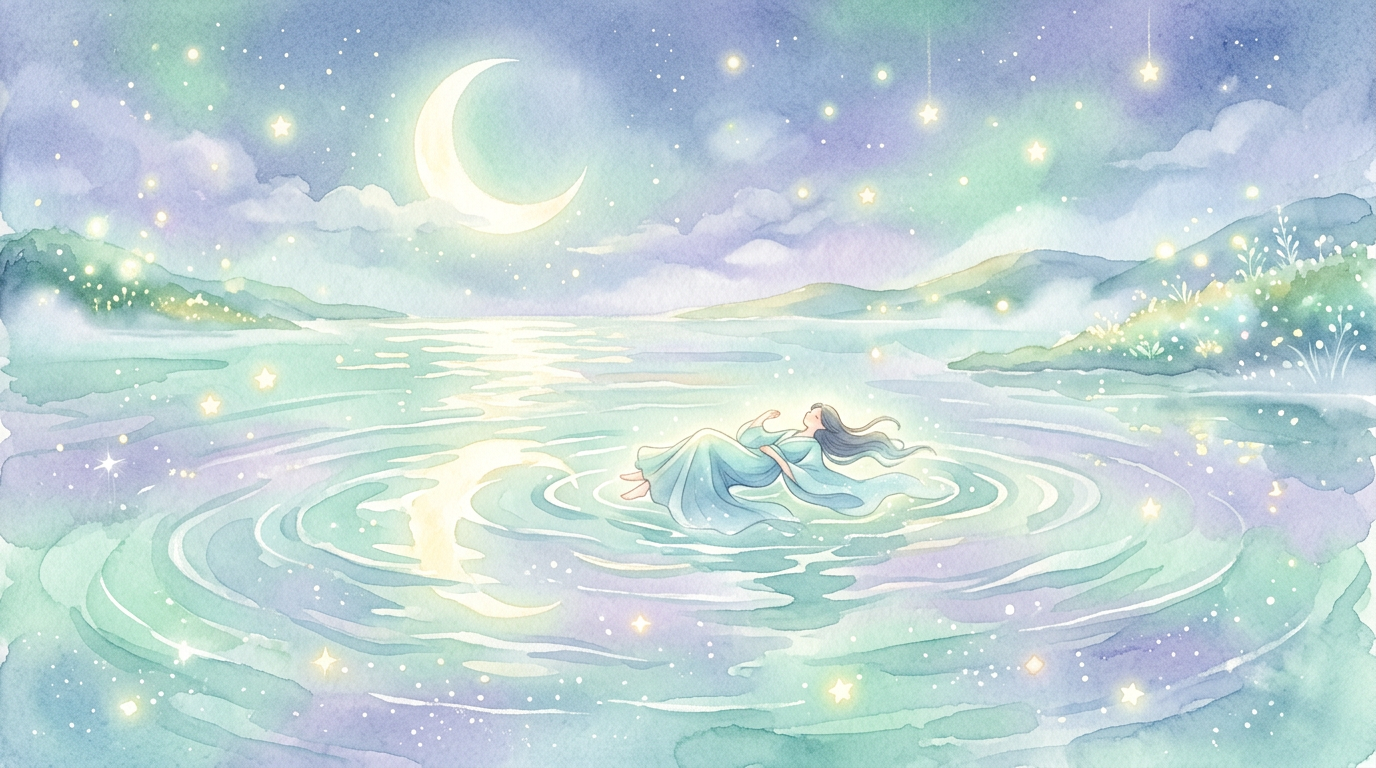
Water is one of the most common things people dream about — and two of history's most serious dream scholars, separated by nearly two thousand years, both thought that was worth paying attention to. Here's what they actually said.
So what does water actually mean in a dream?
According to Carl Jung in Man and His Symbols (1964), water is one of the commonest symbols of the unconscious. That's the Jungian framework in a nutshell: when water shows up in your dream, it's pointing inward — toward the deep, largely hidden part of the psyche that sits below everyday awareness. Calm or stormy, shallow or unfathomably deep, the water's character reflects something about that inner world. Jung wasn't saying your dream is a weather forecast for your life; he was saying it's a map of your mind.
Which, honestly? Makes a lot of sense the next time you wake up drenched in metaphorical sweat after dreaming of a tidal wave.
What did the ancient world make of it?
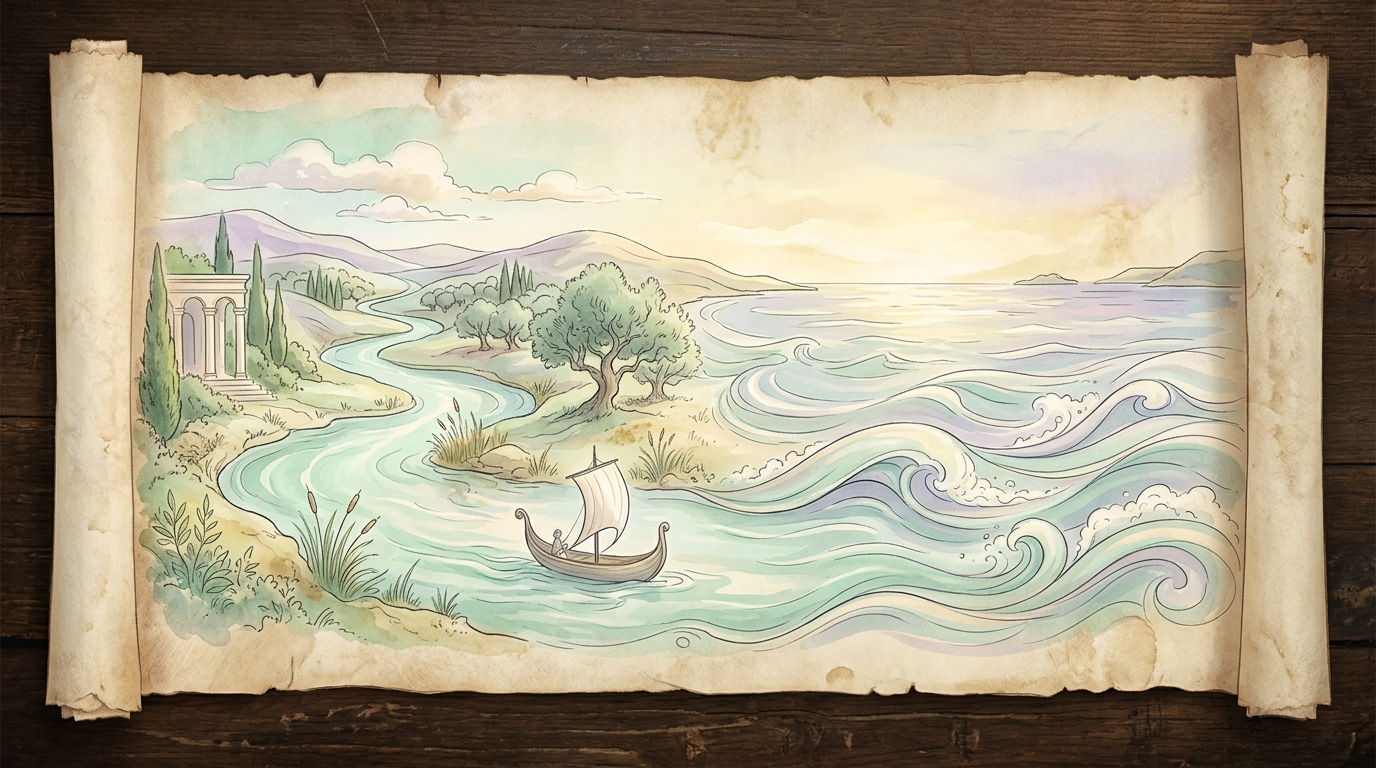
Long before Jung, a Greek writer named Artemidorus of Daldis was compiling the ancient world's most thorough dream manual. His Oneirocritica (2nd century CE) included specific classical readings of rivers, floods, and the sea in dreams. Where Jung's approach is psychological and symbolic, Artemidorus worked within a tradition that treated dreams as potentially meaningful omens — reading the specific qualities of the water (a river versus the open sea, a gentle current versus a flood) as carrying distinct significance. It's a reminder that humans have been puzzling over watery dreams long enough to write entire books about them.
Why does water keep showing up across such different traditions?
Two thinkers, two completely different eras and frameworks, and water is central to both. Jung's approach in Man and His Symbols (1964) is rooted in depth psychology — water symbolizes the unconscious because it's vast, it moves, it has things living in it you can't see from the surface. Artemidorus, in the Oneirocritica (2nd century CE), was working from a classical tradition of dream interpretation that catalogued water in its many forms — rivers, seas, floods — each carrying its own reading. The overlap isn't a coincidence; it suggests that something about water as a dream image has felt significant to human beings for a very long time.
What do you do with any of this?
Both Jung and Artemidorus would agree that context matters enormously. A placid lake and a roaring flood are not the same image. According to Jung's framework in Man and His Symbols (1964), the specific quality of the water — its movement, its clarity, how it feels — is part of what the symbol is communicating about the unconscious. Artemidorus similarly distinguished between different types of water bodies and conditions in the Oneirocritica, rather than treating all water dreams as one thing.
So if you dreamed of the ocean last night: notice whether it was calm or churning, whether you were floating or drowning, whether it felt like freedom or threat. That texture is the whole point. Neither source is offering a fortune cookie — they're offering a framework for reflection. And that's exactly how to use them.
- Carl Jung, Man and His Symbols (1964) — foundational text presenting water as one of the commonest symbols of the unconscious in Jungian psychology.
- Artemidorus of Daldis, Oneirocritica (2nd century CE) — classical dream manual recording ancient Greek readings of rivers, floods, and the sea in dreams.
This article is offered for cultural reflection and historical curiosity only, not as psychological advice or prediction of any kind.
Lunaple's dream journal tools help you track patterns, spot recurring symbols, and reflect on what your sleeping mind keeps returning to. No guesswork — just you, your dreams, and a little cosmic company.
Explore Dream ToolsFor entertainment purposes only. Not a substitute for professional, medical, legal, or financial advice.
← Back to the Journal