

According to Encyclopaedia Britannica, Mercury retrograde happens three times in 2026 — and knowing the actual windows is genuinely more useful than the vague dread. Here they are, plus the real reason it happens at all.
So when exactly does it happen in 2026?
Encyclopaedia Britannica gives us three windows to circle on the calendar:
- February 26 – March 20
- June 29 – July 23
- October 24 – November 13
Three rounds. Roughly three weeks each. Spread across the year like the universe's version of a pop quiz. Now you know — no more being blindsided.

Wait — is Mercury actually moving backward?
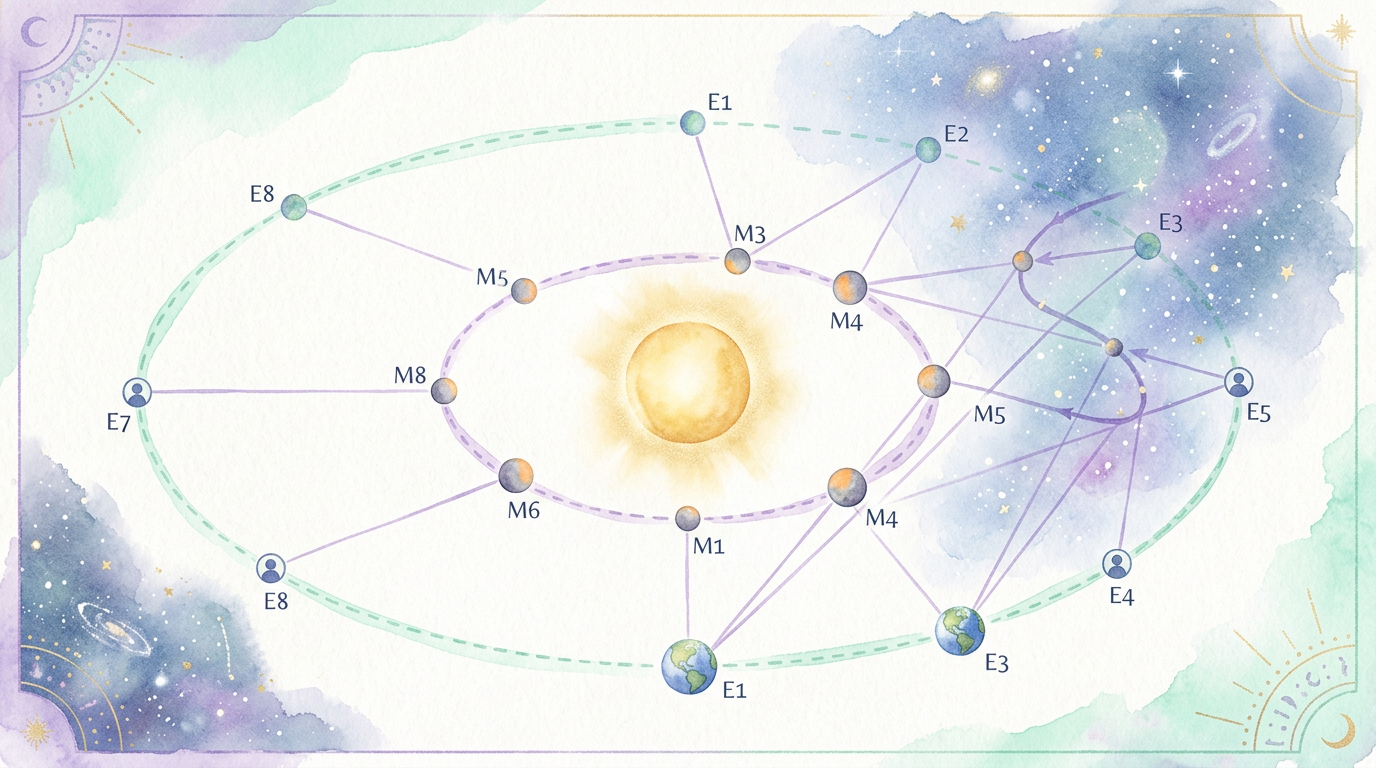
Hard no. According to NASA StarChild, Mercury doesn't reverse direction at all. What's happening is an optical illusion created by the way Mercury and Earth move around the sun at different speeds. Because Mercury is closer to the sun, it travels faster along its orbit. When it laps Earth — or appears to from our vantage point — Mercury seems to drift backward against the backdrop of stars. It's the same effect as when a faster car passes you on the highway and, for a moment, the slower car beside you looks like it's rolling in reverse. You're not moving backward. Neither is Mercury. It's all about perspective.
NASA StarChild frames this as a straightforward matter of orbital mechanics, not cosmic mischief. Which, honestly, is either reassuring or a little anticlimactic depending on your relationship with astrology.

So what do I actually do with this information?
The astronomy is settled science. The cultural meaning — the idea that these windows are worth paying attention to, reflecting on, or treating as a prompt to slow down — is a tradition, not a prediction. Think of it as a recurring invitation to check in rather than a warning label.
Either way, you've got the dates. February 26, June 29, October 24. Put them in your phone. Tell your group chat. And next time someone says "ugh, Mercury must be in retrograde," you can be the one who actually knows when it is.
- Encyclopaedia Britannica, "When is Mercury in retrograde in 2026?" — source for the three 2026 retrograde windows: February 26–March 20, June 29–July 23, and October 24–November 13.
- NASA StarChild (starchild.gsfc.nasa.gov), "What is Mercury retrograde?" — source for the astronomical explanation of Mercury's apparent retrograde motion as an optical effect of orbital speeds.
This article is offered for cultural reflection and general interest, not as prediction or advice of any kind.
Now that you've got the dates locked in, Lunaple can help you explore what each retrograde window might mean for your chart — your way, at your pace.
Explore Your ChartFor entertainment purposes only. Not a substitute for professional, medical, legal, or financial advice.
← Back to the Journal