

Mercury is not doing a U-turn. According to NASA, retrograde motion is a full-on optical illusion — the planet keeps cruising forward on its orbit, no reversal required. And yet here we all are, blaming it for the situationship implosion of 2024. Relatable, honestly.
Okay but what is actually happening up there?
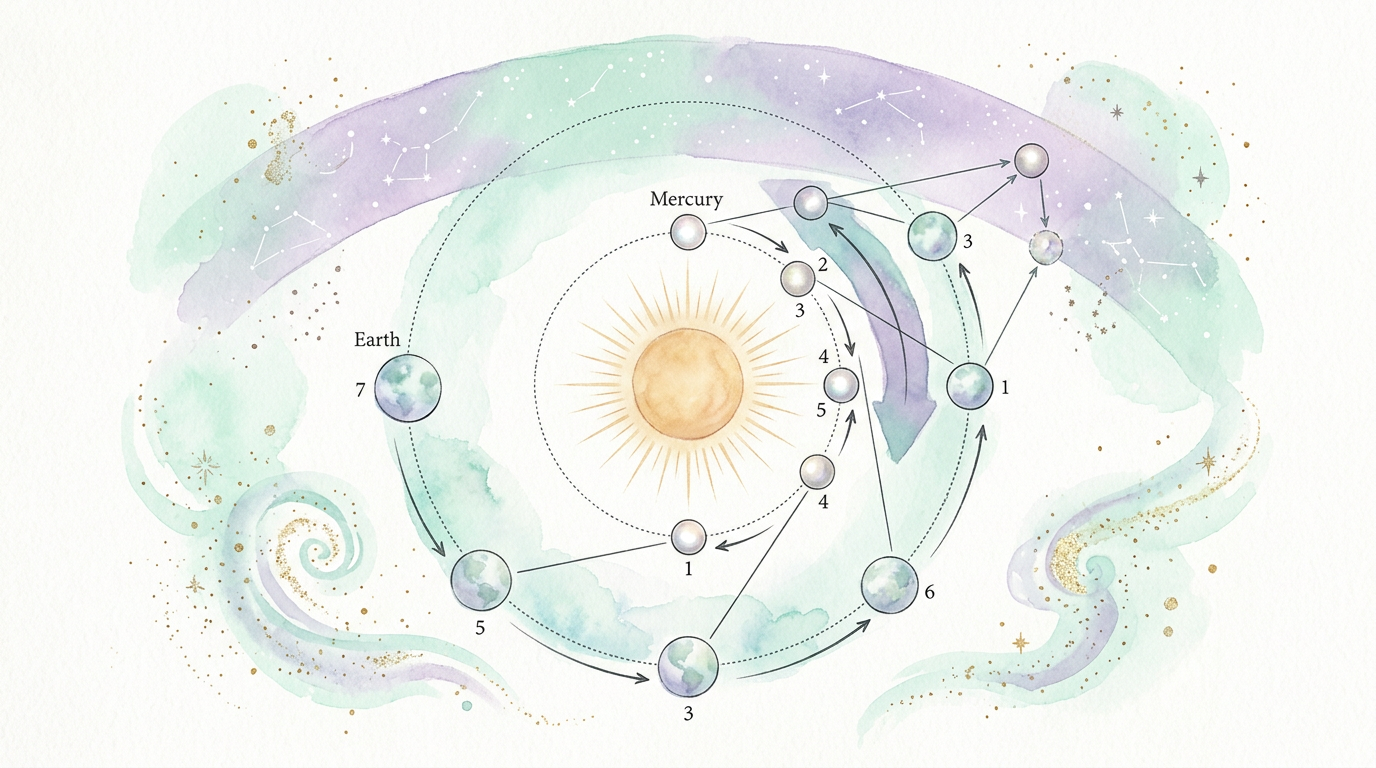
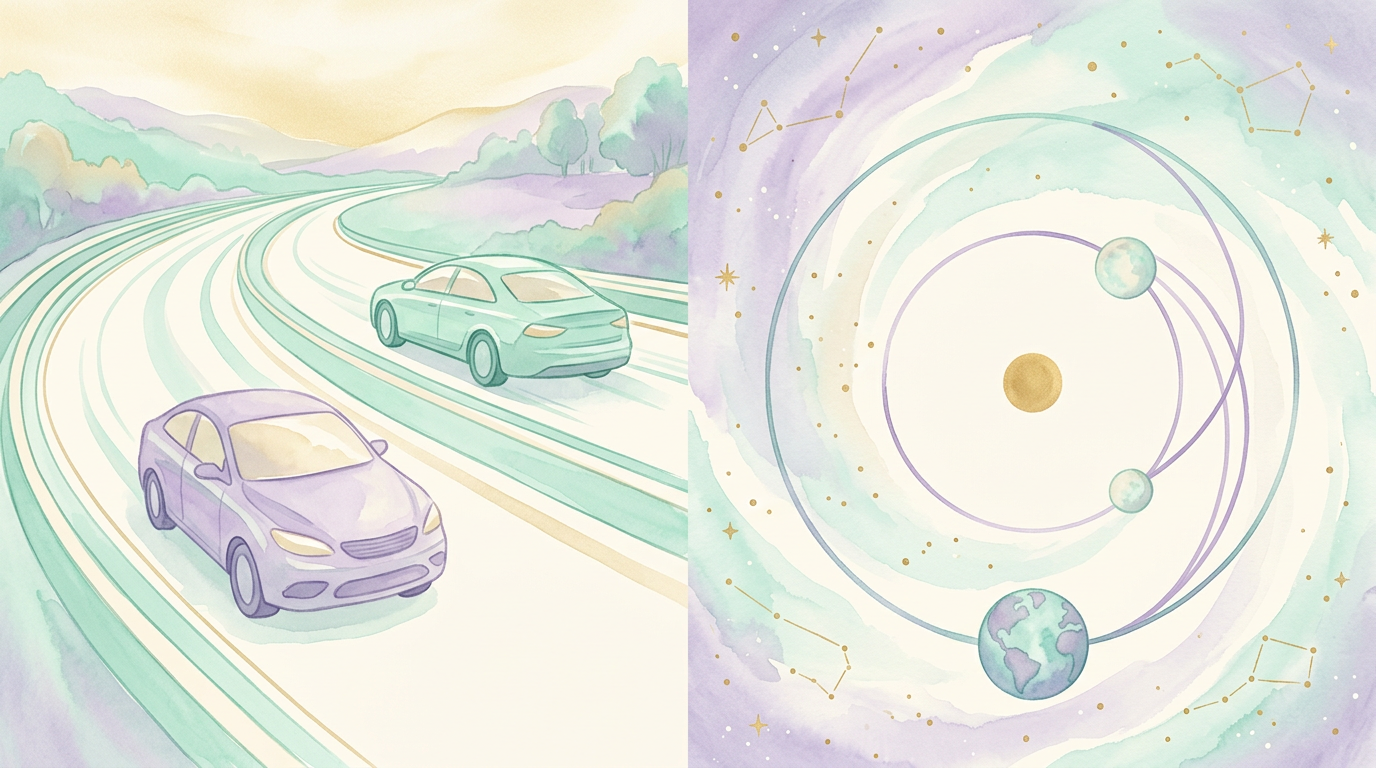
Here's the real science, and it's genuinely cool. As NASA's StarChild resource explains, retrograde motion is an optical illusion caused by planets orbiting the Sun at different speeds — not by any planet literally reversing direction. Think of it like passing a slower car on the highway: for a moment, that other car appears to drift backward even though it's still moving forward. Same vibe, just in space.
The Planetary Society adds the specifics: Mercury appears to move backward in our sky three or four times a year, because Mercury zips around the Sun much faster than Earth does. When Mercury laps us (or we lap it, depending on where each planet is in its orbit), the geometry of the two moving objects creates that apparent backslide against the backdrop of distant stars. Nobody is going backward. It's all perspective.
So why did we make it a whole personality?
The astronomy is settled. The cultural story is way more interesting. Humans have always looked for patterns — especially when things go sideways. A text gets misread, a flight gets delayed, an ex slides back into your DMs. If those things cluster around a named, trackable event, the brain wants to connect the dots. Mercury retrograde gives that instinct a very convenient hook.
It also happens a lot. The Planetary Society confirms those three to four retrograde windows per year, which means roughly a quarter of the calendar year carries the label. Cast a wide enough net and you'll catch something every time.
None of that makes it prophecy — it's folklore in real time, a shared cultural story we're all writing together. Which, honestly? Is kind of beautiful. Blaming Mercury is a way of saying "this period feels chaotic and I want to acknowledge that with other people." That's community. That's coping. That's extremely human.

Should you actually change your behavior during retrograde?
That's entirely up to you. What the science — per NASA and the Planetary Society — tells us is that Mercury's apparent motion is a predictable, geometric fact of orbital mechanics. What you do with that information is your call. Some people use the retrograde window as a prompt to slow down, reread emails twice, and avoid signing big contracts. Is Mercury making those things go wrong? No. Is using a recurring cosmic event as a mindfulness cue a bad idea? Also no.
Think of it less as a warning from the universe and more as a recurring calendar reminder that chaos is normal, and you've survived every single retrograde so far. That's a pretty solid track record.
- NASA StarChild, "What is Mercury retrograde?" (starchild.gsfc.nasa.gov) — explains that retrograde motion is an optical illusion caused by planets orbiting the Sun at different speeds, not a literal reversal of direction.
- The Planetary Society, "What does 'Mercury in retrograde' actually mean?" (planetary.org) — confirms Mercury appears to move backward three or four times a year and explains the orbital mechanics in plain terms.
This article is offered for cultural reflection and entertainment only — not as astronomical advice or prediction of future events.
Retrograde or not, your birth chart is always in motion. Explore your placements with Lunaple and see what the sky looked like the moment you arrived.
Read My ChartFor entertainment purposes only. Not a substitute for professional, medical, legal, or financial advice.
← Back to the Journal