
Here's the thing about the Hope Diamond's infamous curse: the documented ownership history is so genuinely unhinged that nobody needed to make anything up — and yet, according to the Smithsonian National Museum of Natural History, someone absolutely did anyway.
So what's actually documented?
The Smithsonian's own records of the Hope Diamond's ownership chain are the primary source here, and they are a lot. The gem passed through the hands of collectors, royalty, and dealers across centuries before landing — as these things tend to — with a jeweler who knew a good story when he saw one.
In 1911, according to the Smithsonian, the stone was sold to Evalyn Walsh McLean, an American heiress whose life was, to put it gently, not a smooth ride. The Smithsonian documents her as one of the diamond's most famous owners, and her acquisition of it is one of the most well-recorded chapters in the gem's long, strange journey.
Wait — a Cartier sales pitch?
Here's where it gets delicious. The "curse" narrative that most people know today wasn't ancient folklore whispered across centuries. It was, by wide historical account, a marketing frame — the kind of story a very good salesperson attaches to a very expensive object to make it irresistible. The Smithsonian's history of the diamond documents the ownership chain that made this framing so easy to sell: a lineage dramatic enough that a little extra mythology practically wrote itself. Whether you call that genius or audacious depends entirely on your feelings about the jewelry industry.
Evalyn Walsh McLean, for her part, reportedly loved the stone and wore it constantly — which is either proof the curse was nonsense, or proof she was the most unbothered woman alive. Possibly both.
And then it went… in the mail?
This is the part that lives rent-free in my head. After decades of royal courts, high-society drama, and legendary ownership, the Hope Diamond's final journey to its permanent home was decidedly unglamorous. According to the Smithsonian National Museum of Natural History, Harry Winston donated the diamond to the Smithsonian on November 10, 1958 — and sent it by registered mail, in plain packaging.
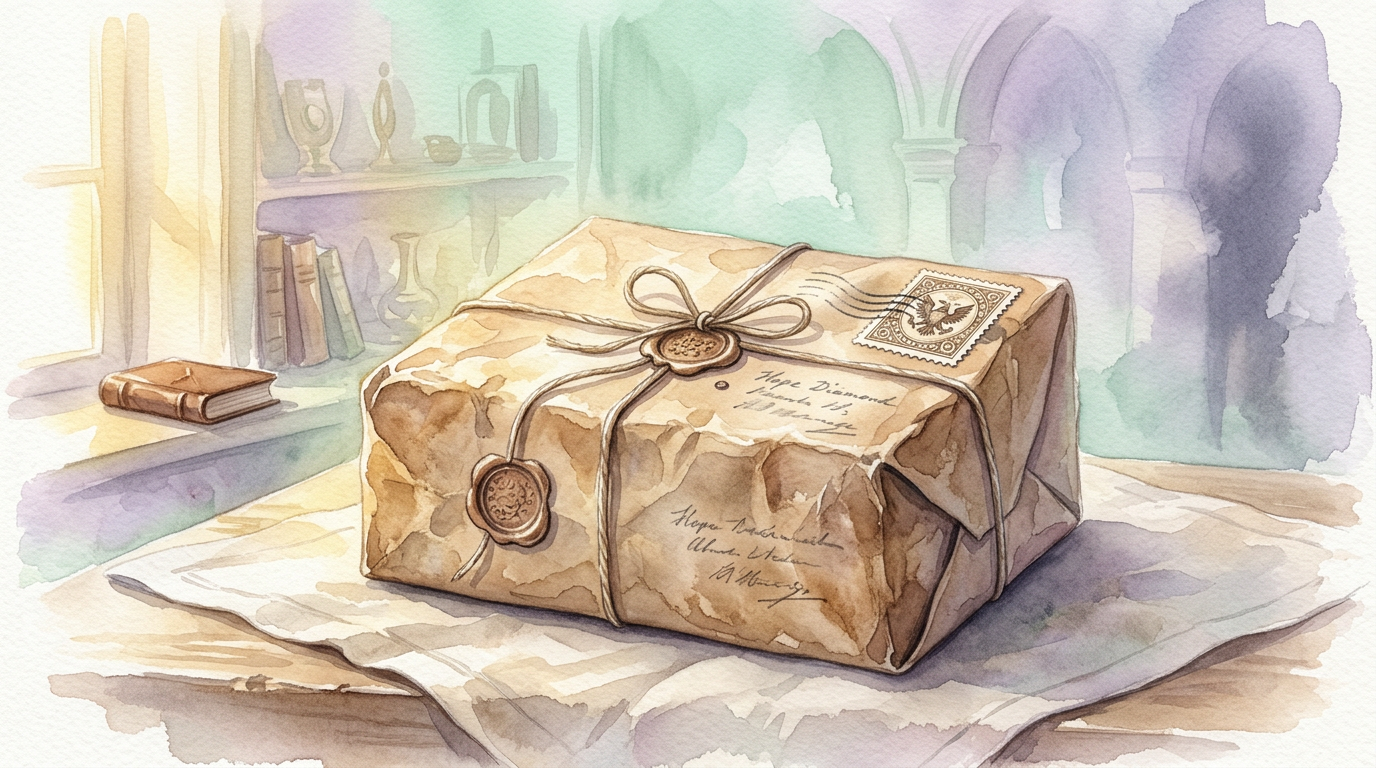
A plain brown package. For one of the most famous gemstones on Earth. The postal insurance on that package must have been a conversation.
So is the curse "real"?
The Smithsonian presents the Hope Diamond's history as exactly that — a history. A documented ownership chain, a 1911 sale, a 1958 donation. What the curse is, really, is a piece of folklore layered over a genuinely dramatic set of real events. Folklore does that — it finds the cracks in a true story and fills them with meaning. Whether the Hope Diamond is cursed is a question for your own imagination. What it definitely is, per the Smithsonian, is one of the most traveled, most storied, and most dramatically mailed gemstones in recorded history.
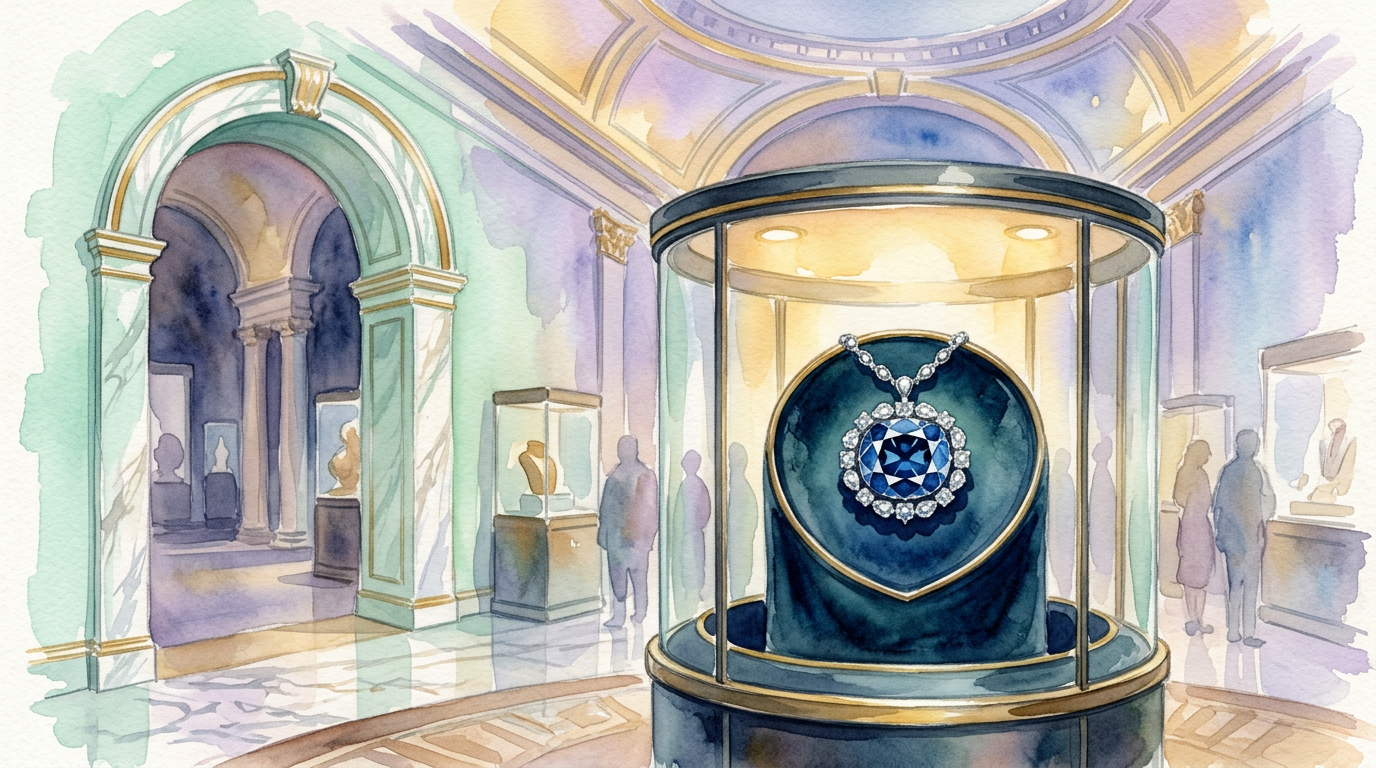
It's been sitting at the Smithsonian ever since. Unbothered. Possibly smug.
- Smithsonian National Museum of Natural History, "History of the Hope Diamond," naturalhistory.si.edu [museum]. Source for the documented ownership history, the 1911 sale to Evalyn Walsh McLean, and the November 10, 1958 donation to the Smithsonian by Harry Winston, sent by registered mail in plain packaging.
This article is offered for cultural reflection and entertainment only, not as prediction or factual endorsement of any supernatural claims.
If the Hope Diamond's wild history has you thinking about fate, legacy, and what the universe might be trying to tell you, Lunaple is here for that conversation. Explore your own chart and see what stories are written in your stars.
Explore Your ChartFor entertainment purposes only. Not a substitute for professional, medical, legal, or financial advice.
← Back to the Journal