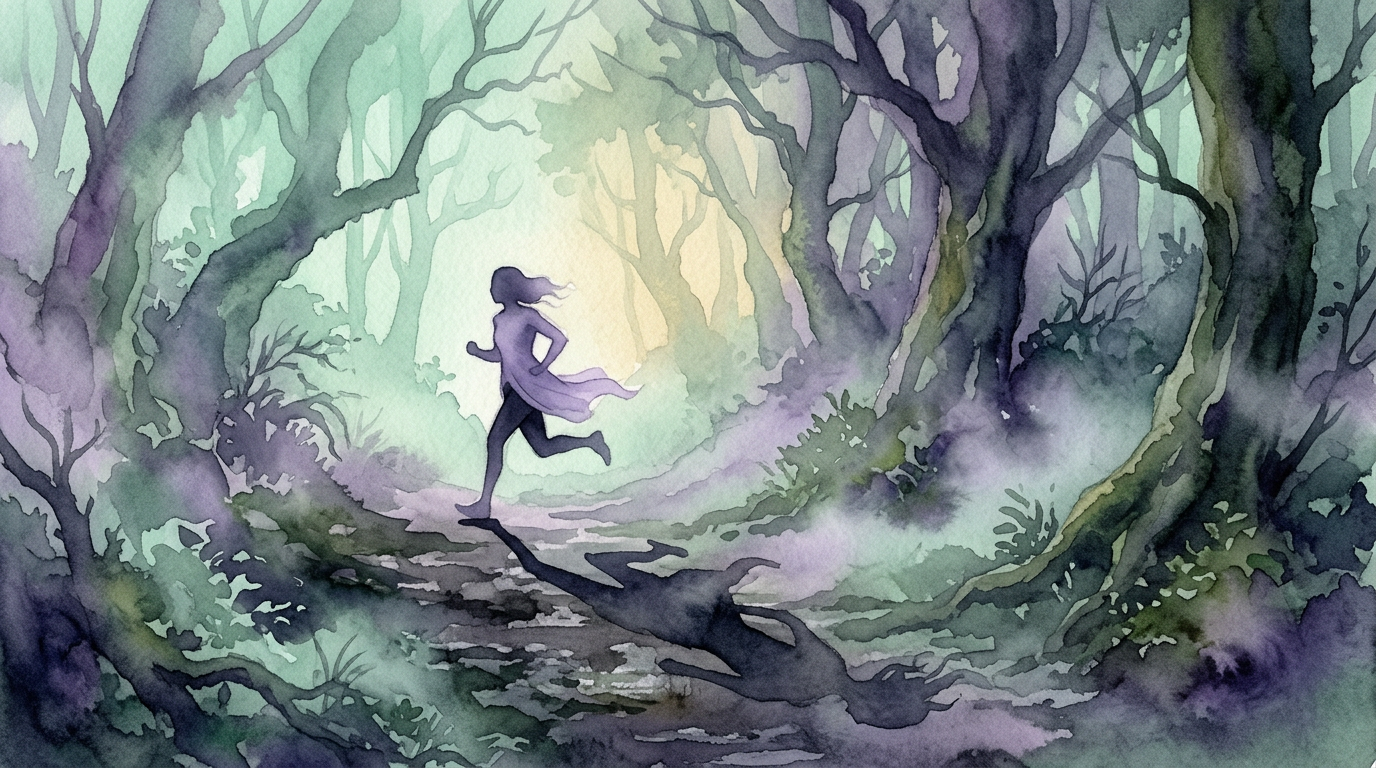
You wake up heart-pounding, sheets twisted, absolutely certain something was right behind you — and then you're just lying in your bedroom at 7 a.m. like a normal person. According to Carl Jung's Man and His Symbols (1964) and the ancient dream manual Oneirocritica by Artemidorus of Daldis (2nd century CE), that chase scene your brain keeps replaying is worth paying attention to — not as a prophecy, but as a mirror.
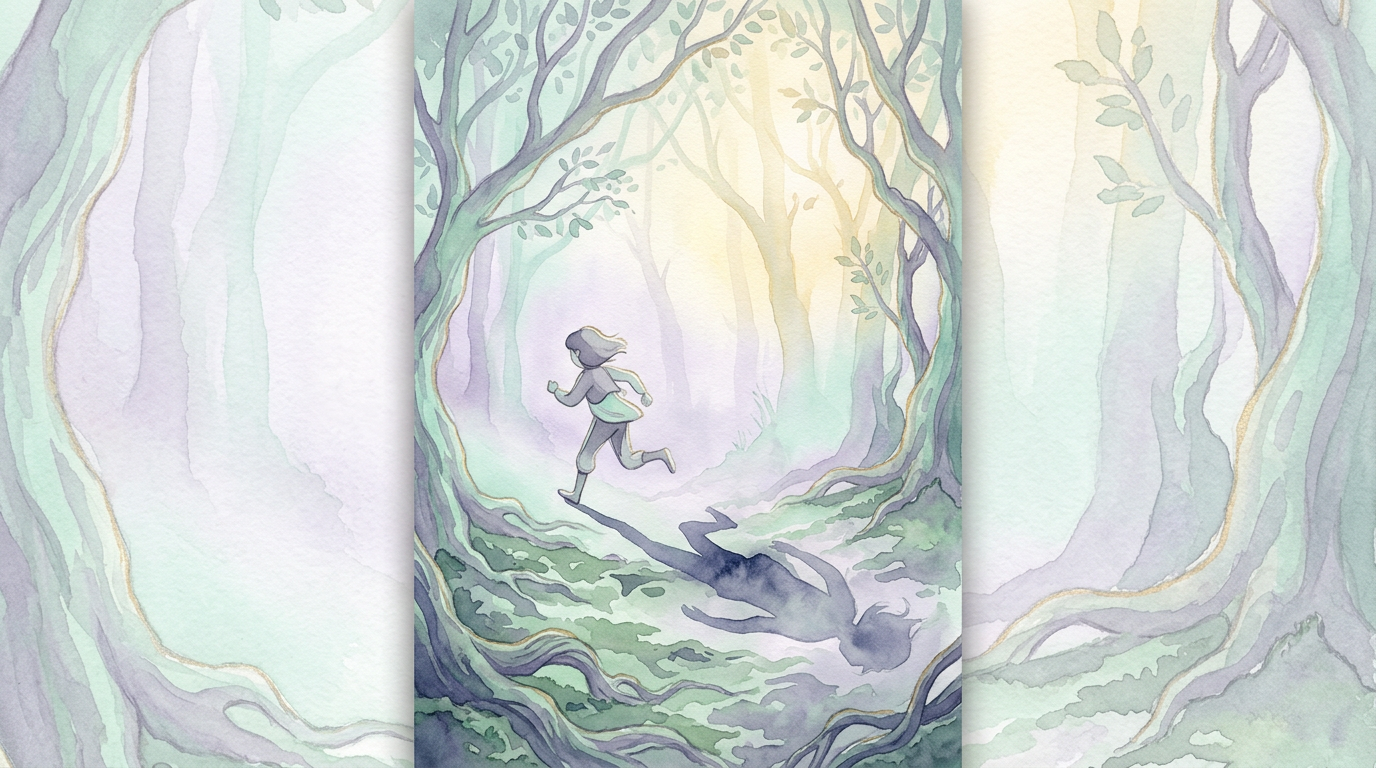
So… what exactly is chasing me?
Carl Jung had a very specific answer to this. In Man and His Symbols, he described the shadow — the parts of yourself you've pushed away, rejected, or refused to look at — as a force that pursues you in dreams. Not a monster from outside, but a piece of you that won't stay buried. The thing gaining on you in the dark? Jung's framework suggests it's disowned: a feeling you've been avoiding, a quality you've denied in yourself, something you'd rather not claim.
Which is honestly a lot to process before coffee.
The shadow, in Jung's view, doesn't chase you to destroy you — it chases you because it wants to be integrated, acknowledged, brought into the light. The dream isn't a threat. It's an invitation you really didn't ask for.
What did people think before Jung?
Long before Jungian psychology existed, people were losing sleep over pursuit dreams and trying to figure out what they meant. Artemidorus of Daldis, writing his Oneirocritica in the 2nd century CE, approached dream interpretation as a serious, careful practice — and crucially, he insisted that the meaning of any dream, including one involving fear or pursuit, had to be weighed against the specific circumstances of the dreamer's own life.
In other words: there's no one-size-fits-all answer. The same dream could mean something entirely different depending on who you are and what's going on around you. Artemidorus wasn't handing out universal verdicts — he was reading dreams the way a thoughtful friend reads a situation, with full context required.
Okay but what do I actually do with this?
Both traditions, separated by nearly two millennia, agree on one thing: the chase dream is asking you to pay attention. Jung's shadow framework, as laid out in Man and His Symbols, suggests turning around — metaphorically — and asking what it is you've been running from in your waking life. Artemidorus's approach, meanwhile, reminds us to look at the full picture: your life, your mood, your circumstances, not just the dream image in isolation.
Neither of them is telling you your future. They're both, in their own way, asking you to look inward.

So next time you bolt awake from a chase dream, maybe don't just scroll your phone until your heart rate drops. Ask yourself: what have I been avoiding lately? What part of me am I not ready to face? The shadow, Jung tells us, is patient. It will absolutely lap you again tomorrow night if you don't.
- Carl Jung, Man and His Symbols (1964) — foundational text on the shadow as the disowned parts of the self that pursue us in dreams.
- Artemidorus of Daldis, Oneirocritica (2nd century CE) — ancient framework for reading pursuit and fear in dreams, always interpreted in relation to the dreamer's individual life and circumstances.
This article is offered for cultural reflection and personal curiosity, not as psychological advice or prediction of any kind.
Lunaple's dream and astrology tools are built for exactly this kind of self-reflection — no running required. Come take a look.
Explore LunapleFor entertainment purposes only. Not a substitute for professional, medical, legal, or financial advice.
← Back to the Journal