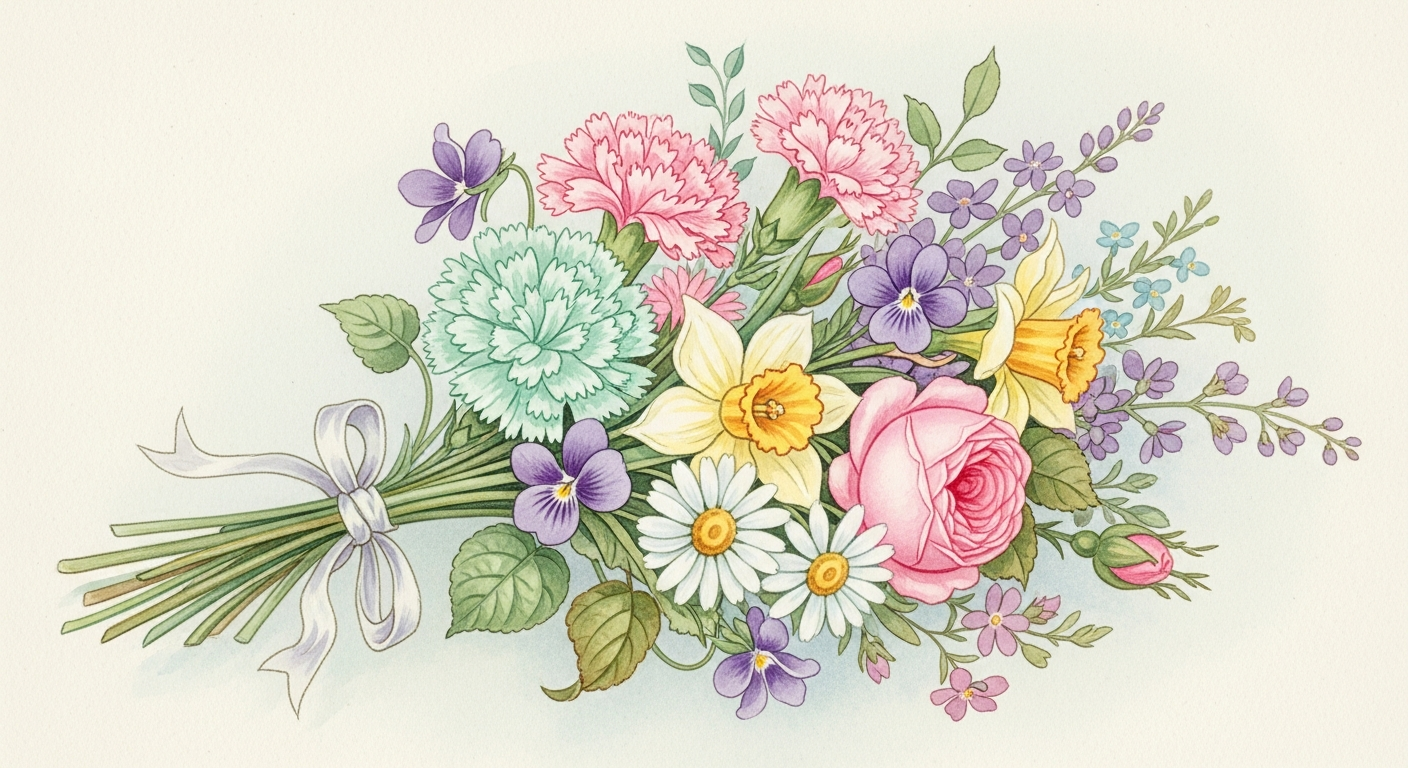
Here's a small, lovely secret hiding in plain sight: you have a flower. Not one you picked — one that picked you, assigned by the month you were born. And in the 1800s, that flower wasn't just decoration. It was a message.
Imagine you couldn't say what you felt out loud. Too forward, too improper, too much. So instead, you tucked a single bloom into a bouquet — and the person who received it read it. That was floriography, the Victorian "language of flowers," and for a few decades it turned gardens into love letters. Let's open yours.
The secret code: how flowers sent messages
In the 19th century, flowers were given a whole vocabulary. A red tulip was a declaration of love; a yellow one, hopeless love. The way a flower was handed to you — upright or upside down, with your right hand or your left — could flip its meaning entirely. People kept little dictionaries to decode the bouquets arriving at their doors.
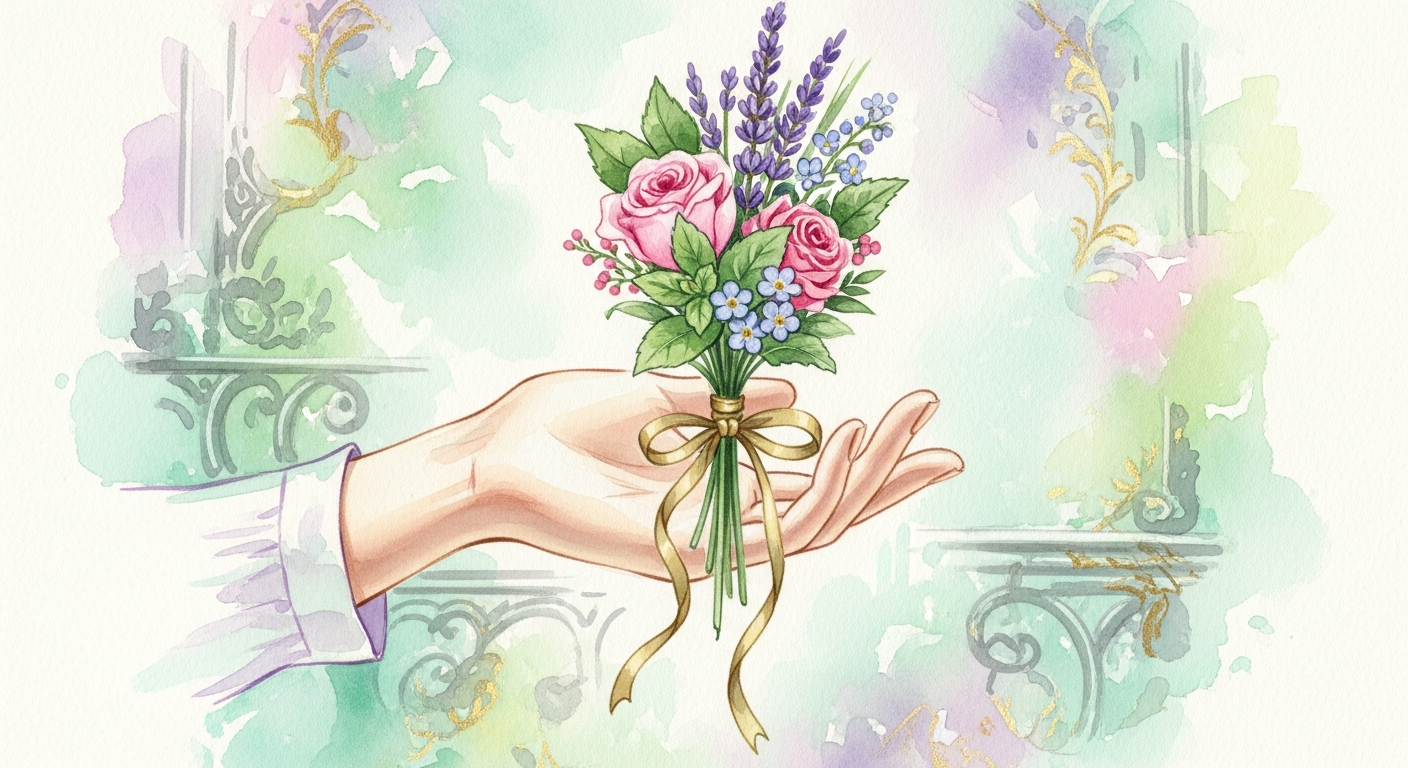
The most beloved of these was Kate Greenaway's Language of Flowers, published in 1884 and illustrated with her famous soft, dreamy figures. It was one of the last great books of the Victorian floriography craze — the gentle close of an era that had begun decades earlier with Charlotte de Latour's 1819 Le langage des fleurs. By World War I, the fashion had quietly faded. But Greenaway's little dictionary survives, and we can still read straight from it.
Your birth flower, month by month
Here's the traditional birth-month flower list (the one florists and the Old Farmer's Almanac still use), paired with the exact meaning Greenaway gave each bloom. Some are tender. A few are gloriously blunt. All are quoted directly from her 1884 book — no inventing here.
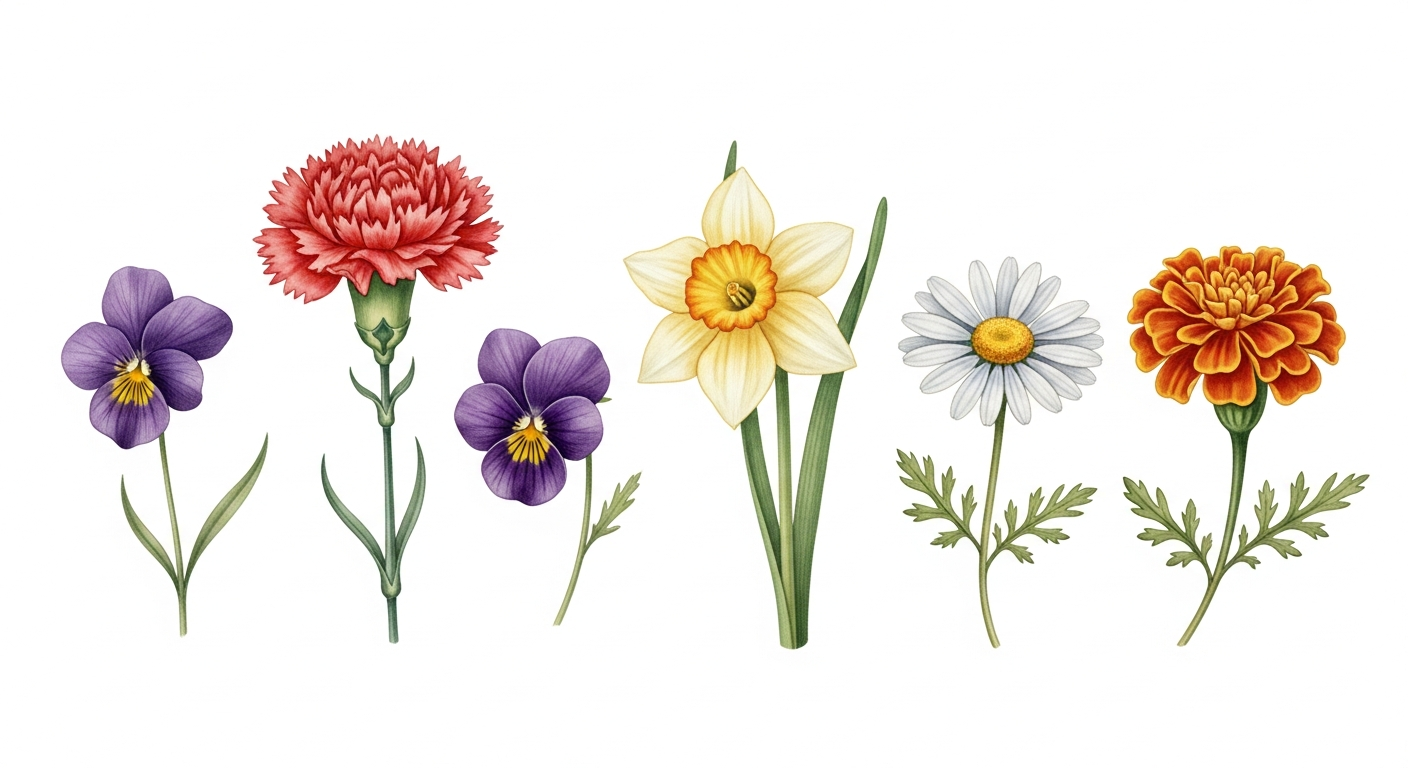
- January — Carnation: the deep red carnation meant "Alas! for my poor heart." A love almost too heavy to carry.
- February — Violet: "Modesty." Sweet, shy, lowering its eyes.
- March — Daffodil: March's bright trumpets have long stood for new beginnings.
- April — Daisy: "Innocence." Exactly as gentle as it looks.
- May — Lily of the valley: "Return of happiness." Possibly the loveliest message on this whole list.
- June — Rose (and honeysuckle): honeysuckle meant "Generous and devoted affection" — devotion that gives and gives.
- July — Larkspur: "Lightness. Levity." A playful, unserious heart.
- August — Gladiolus: long carrying strength of character and sincerity in the floriography tradition.
- September — Aster: the China aster meant "Variety. Afterthought." A second look, a change of mind.
- October — Marigold: here's a twist — Greenaway gave the marigold "Grief." Beautiful, golden, and quietly sad.
- November — Chrysanthemum: the red chrysanthemum simply said "I love." No hedging.
- December — Narcissus / Holly: the narcissus meant "Egotism" (yes, after the myth), while holly stood for "Foresight."
That's the surprise so many people miss: your birth flower wasn't always the sweet little compliment you'd expect. A Victorian could hand someone marigolds and mean grief; a single deep-red carnation confessed a heartbroken kind of love. The flowers told the truth even when people couldn't.
What yours says about your season
None of this is a horoscope, and it can't tell you who you are. But there's something quietly moving about knowing that the bloom tied to your birthday once carried words — that for a whole generation, a flower could say "return of happiness," or "I love," or "alas, for my poor heart," when a voice wasn't allowed to.
So next time someone asks your sign, you can offer something rarer: your flower, and the message it used to send. It's a small, romantic piece of history — and it's been yours all along.
If a birthday flower can carry a secret meaning, imagine what the numbers in your birth date have been quietly spelling out.
Decode Your NumbersFor entertainment purposes only. Not a substitute for professional, medical, legal, or financial advice.
← Back to the Journal