
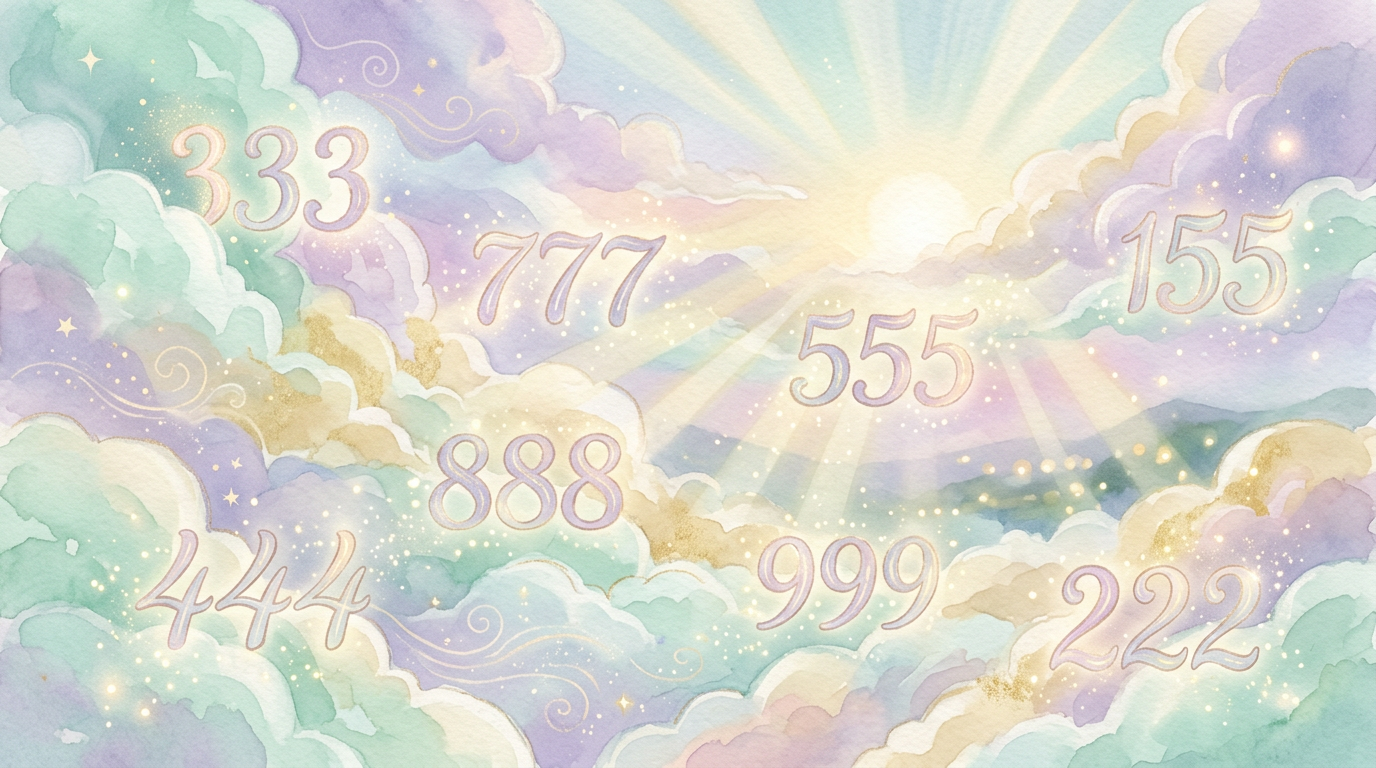
If you've ever screenshot a clock showing 11:11 and sent it to your group chat with zero explanation — same. But here's the thing nobody tells you: the idea that repeating numbers are messages from angels is a very recent invention, not ancient wisdom. And knowing that actually makes it more interesting, not less.
So… who actually started this?
The documented origin is straightforward: Doreen Virtue's book Angel Numbers 101, published by Hay House in 2008, is the source that popularized the modern angel numbers concept. That's it. That's the receipt. We're not talking ancient Egypt, medieval mystics, or a lost manuscript — we're talking a book that came out the same year the App Store launched. The idea spread fast because, well, the internet also came out around then (roughly).
This doesn't make the practice meaningless — cultural ideas don't need to be old to resonate. But it's worth being clear-eyed: when someone says 333 is a "timeless sign from the universe," what they're really drawing on is a framework that's about 15 minutes old in the grand scheme of human history.
Wait, but where does the number stuff come from?
Here's where it gets a little more layered. The angel numbers concept borrows its single-digit meanings from an older numerology tradition — specifically the digit-reduction practice that developed in the early 20th century. That tradition assigns qualities and significance to the numbers 1 through 9, and you get to a single digit by adding the digits of a larger number together until you land on one. Angel number readings essentially take those single-digit meanings and apply them to the repeated-digit sequences you spot on clocks, license plates, and receipts.
So the scaffolding has some age on it — early 20th century numerology is at least a century old — but the specific idea of angels sending you coded messages through triple digits? That architecture is Virtue's 2008 construction, built on top of that older foundation.
Does knowing this ruin the magic?
Honestly? Only if you need your magic to be ancient to count. Plenty of meaningful practices are modern inventions — that doesn't make the reflection they prompt any less real. Noticing a repeating number and pausing to ask what's on my mind right now? is a perfectly valid mindfulness move, whether or not an angel sent it.
The honest framing — the one that holds up — is this: angel numbers are a contemporary New Age lens for self-reflection, rooted in a 20th-century numerology tradition and named and packaged in 2008. Use them as a prompt, not a prophecy. The universe may or may not be texting you through your microwave clock, but you are definitely the one deciding what the message means.
- Doreen Virtue, Angel Numbers 101, Hay House, 2008 — cited as the documented, recent origin of the modern angel numbers concept.
- Numerological digit-reduction tradition (early 20th century) — the older numerology practice that angel number readings borrow their single-digit meanings from.
This article is offered for cultural reflection and personal curiosity, not as prediction or spiritual advice.
Lunaple's numerology readings use the same digit traditions as a starting point — but make them personal to you. Give it a try.
Explore Your NumbersFor entertainment purposes only. Not a substitute for professional, medical, legal, or financial advice.
← Back to the Journal